Nana Banana
In true feline style, cats took their time in deciding when and where to forge enduring bonds with humans, a journey far more recent and geographically distinct than previously assumed. New scientific evidence challenges long-held beliefs, pushing back the timeline of feline domestication by several millennia and shifting its origin point from the Middle East to ancient North Africa. This revelation reshapes our understanding of one of humanity’s most cherished animal relationships, portraying cats not as early agricultural allies, but as later, more discerning partners.
For decades, the prevailing theory suggested that the domestication of the domestic cat (Felis catus) began around 10,000 years ago in the Fertile Crescent, specifically the Levant, coinciding with the dawn of agriculture. The idea was that as early human settlements began storing grain, they attracted rodents, which in turn attracted wildcats, leading to a mutually beneficial relationship. However, groundbreaking research, based on a comprehensive study of ancient cat bones, paints a very different picture.

According to this new scientific evidence, the pivotal shift from a solitary wild hunter to a pampered, internet-dominating pet happened much more recently – only a few thousand years ago – and importantly, in a different part of the world: northern Africa. Professor Greger Larson of the University of Oxford, a leading figure in ancient DNA studies, highlighted the stark contrast: "They are ubiquitous, we make TV programmes about them, and they dominate the internet. That relationship we have with cats now only gets started about 3.5 or 4,000 years ago, rather than 10,000 years ago." This revised timeline positions cat domestication significantly later than that of dogs, which are believed to have been tamed some 15,000 to 30,000 years ago.
The researchers painstakingly analyzed DNA extracted from cat bones discovered at numerous archaeological sites spanning Europe, North Africa, and Anatolia. By precisely dating these ancient remains and comparing their genetic signatures with the diverse gene pool of modern domestic cats, scientists were able to reconstruct the evolutionary journey of Felis catus. The findings unequivocally show that all modern domestic cats are descended from the same species: the African wildcat (Felis lybica), a subspecies primarily found across Africa and parts of the Middle East.
This meticulous genetic detective work revealed that the domestication process did not commence with the first agricultural societies in the Levant. Instead, the evidence strongly suggests that it was a distinctly Egyptian phenomenon, occurring several millennia later. "Instead of happening in that area where people are first settling down with agriculture, it looks like it is much more of an Egyptian phenomenon," Prof. Larson explained.

This discovery resonates powerfully with our historical knowledge of the land of the pharaohs. Ancient Egyptian society famously revered cats, immortalizing them in countless artworks, sculptures, and religious texts. Cats were considered sacred animals, often associated with deities like Bastet, the goddess of home, fertility, and protection. The practice of mummifying cats, sometimes adorned with precious jewels, underscores their profound cultural and spiritual significance in ancient Egypt. It is easy to envision a scenario where the pragmatic benefits of rodent control offered by wildcats in burgeoning Egyptian granaries intertwined with a growing spiritual reverence, fostering a unique environment conducive to domestication. The cats, in turn, found a consistent food source and a safer environment, allowing a more tolerant and eventually dependent relationship to blossom. This commensal relationship – where one species benefits and the other is largely unaffected or even benefits – gradually deepened into true domestication.
Once these African wildcats, now domestic cats, became integrated into human life in Egypt, their journey across the globe began. Prized for their exceptional pest control abilities, they were invaluable companions for sailors. As "ship cats," they helped protect vital food stores from rats and mice on long voyages, effectively hitchhiking their way across continents and oceans. This maritime dispersal was crucial to their global spread.
Cats only reached Europe relatively late, around 2,000 years ago, much later than previously thought. They traveled primarily with the Roman Empire, accompanying legions and settlers as they expanded their dominion. From Europe, their journey continued eastward along the ancient trade routes of the Silk Road, eventually making their way into China and beyond. Today, the domestic cat is one of the most widespread mammalian species on Earth, found in virtually every corner of the world, with the notable exception of Antarctica. Their adaptability and their unique, somewhat independent nature have allowed them to thrive alongside humans in diverse environments.
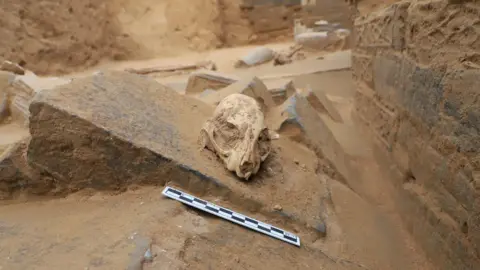
Adding another fascinating twist to the narrative of feline-human interaction, the scientists uncovered evidence of a completely different wild cat species that briefly befriended humans in China, long before the arrival of the African wildcat’s descendants. These were leopard cats (Prionailurus bengalensis), small, beautifully spotted wild felines native to Asia. Archaeological finds, including the skull of a leopard cat in a Han-dynasty tomb in Xinzheng City, Henan Province, China, indicate that these creatures lived in human settlements for approximately 3,500 years. This period roughly coincides with the domestication of the African wildcat in Egypt, suggesting parallel, independent developments in human-feline relationships.
Professor Shu-Jin Luo of Peking University in Beijing described this early human-leopard cat relationship as "essentially commensal," meaning the two species coexisted harmlessly. "Leopard cats benefited from living near people, while humans were largely unaffected or even welcomed them as natural rodent controllers," she noted. Unlike their African counterparts, however, leopard cats never fully underwent the process of domestication. They maintained their wild instincts and continue to live as wild animals across Asia today. It’s possible that their inherent wildness, coupled with the eventual arrival and greater adaptability of the domestic Felis catus via the Silk Road, prevented them from becoming fully domesticated pets.
Curiously, the leopard cat’s legacy endures in the world of domestic felines. In a modern twist, these small wild cats have recently been crossed with domestic cats to produce the distinctive Bengal cat breed, recognized in the 1980s. This hybrid breed, known for its striking spotted coat and energetic personality, serves as a living link to that ancient, unfulfilled partnership between humans and leopard cats.
The profound implications of this research extend beyond merely dating feline companionship. It highlights the nuanced and often indirect pathways to domestication, suggesting that cats largely "self-domesticated," drawn to human settlements by the abundance of prey (rodents) rather than being actively sought out and tamed by humans for specific tasks, as dogs likely were. Their independent nature, so characteristic of modern house cats, appears to be deeply ingrained in their evolutionary history. The shift from a wild predator to a cherished companion was not a swift, deliberate act, but a gradual, opportunistic dance, largely on the cat’s terms.
This comprehensive re-evaluation of feline domestication underscores the dynamic and complex history shared between humans and the animal kingdom. The research, published across two prestigious journals, Science and Cell Genomics, offers a richer, more accurate narrative for our beloved feline companions, revealing them as latecomers to the domestic scene, with a story as intriguing and independent as the cats themselves.




 Roy Suryo
 atisusanti
 Nakalama John