Nakalama John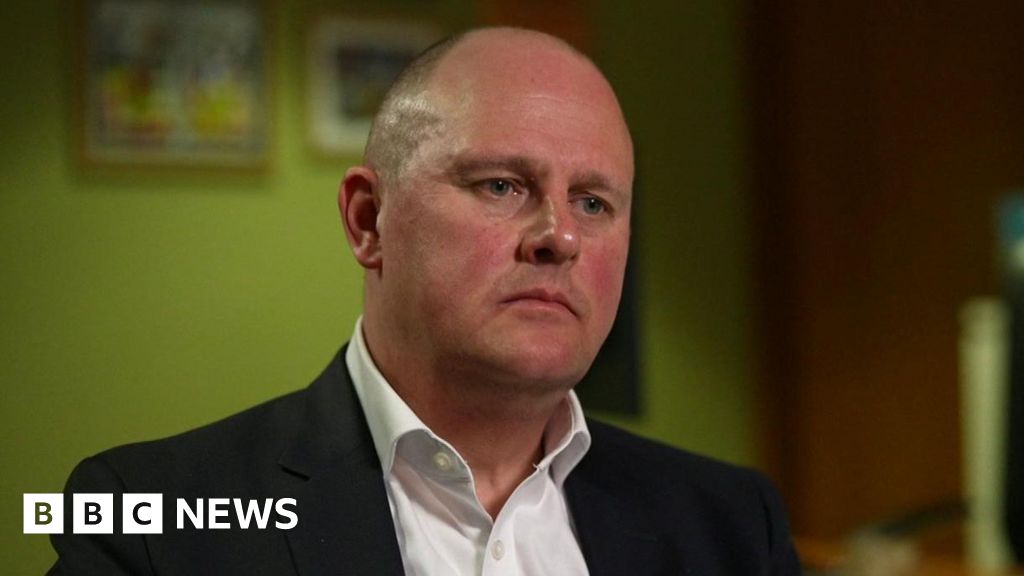
Nowak’s intervention specifically urged the government, and implicitly the Labour opposition, not to prematurely rule out the option of rejoining a customs union with the EU. Such a move, he argued, would be a critical step in lowering existing barriers to trade with the UK’s largest and most crucial market. This call comes at a pivotal moment, as Labour leader Sir Keir Starmer has consistently articulated a desire to "reset" relations with Brussels, yet has firmly ruled out rejoining both the EU’s single market and its customs union. Starmer’s rationale for this unwavering position is rooted in a fear that re-entry into these core EU structures would necessitate the scrapping of recently negotiated trade agreements with significant global partners such as the United States and India, thereby undermining the UK’s independent trade policy. Indeed, Labour’s electoral manifesto explicitly ruled out signing up to the existing EU customs union, aiming to draw a clear distinction from previous calls for closer alignment.
However, the unified front within Labour on this issue appears to be showing cracks, or at least a nuanced internal debate. In recent times, senior cabinet ministers within a prospective Labour government, including Health Secretary Wes Streeting and Deputy Prime Minister David Lammy, have been observed "dancing along the edges" of these established red lines. While stopping short of directly advocating for a customs union, their public comments have increasingly lamented what they perceive as the economic damage inflicted by Brexit and have extolled the virtues and potential benefits of fostering significantly closer relations with the European bloc. This internal pressure was further underscored earlier this month when a cohort of 13 Labour MPs broke ranks to back a Liberal Democrat bill. This proposed legislation aimed to compel the government to initiate negotiations on establishing a bespoke customs union with the EU, signaling a growing appetite within parts of the party for a more flexible and pragmatic approach to post-Brexit arrangements.
The concept of a customs union itself is a highly contentious one in British politics. Fundamentally, it would involve the elimination of tariffs, or taxes, on goods traded between the UK and the EU, significantly reducing bureaucratic hurdles and streamlining cross-border commerce. Proponents, like Nowak, argue this would dramatically ease the flow of goods, reduce costs for businesses and consumers, and provide much-needed stability for key industrial sectors. Nowak pointed to the struggles of industries such as aerospace, automotive, and steel, all of which heavily rely on frictionless trade with Europe, stating, "having a good deal with Europe is essential." He directly linked the current "bad Brexit deal" to soaring supermarket prices, asserting that the government "should rule nothing out" and "should look at every option for our relationship with the European Union up to and including a customs union."
Conversely, critics of rejoining a customs union, predominantly found within the Conservative Party and Reform UK, vehemently oppose such a move. They argue it would severely curtail the UK’s sovereign ability to strike bespoke global trade deals, a central tenet of the "benefits of Brexit." Under a customs union, the EU would typically levy a common external tariff on all goods originating from outside the customs union area, and the UK would be expected to conform to these common standards and tariffs, effectively ceding control over a significant aspect of its trade policy. This, they contend, would undermine the very essence of taking back control and the economic opportunities afforded by an independent trade policy.
Beyond the specific question of a customs union, Nowak’s broader message to the government revolved around the urgent need to address the persistent cost of living crisis. He emphasized, "2026 really needs to be the year when the government gets to grips with the cost of living crisis." The TUC General Secretary articulated a comprehensive vision for how the government must act on a wide range of fronts to genuinely improve people’s financial well-being, warning of a significant political price for inaction. He referenced compelling research from the Joseph Rowntree Foundation, which indicated a concerning trend: voters who experience financial insecurity are abandoning Labour at a higher rate than those who feel more financially stable. The TUC itself commissioned polling that painted a stark picture of economic hardship, revealing that one in five people were reportedly skipping meals, and a sobering one in three anticipated their financial situation to worsen in the near future. While acknowledging and praising some government initiatives already announced, such as lifting the two-child benefit cap, Nowak insisted that far more comprehensive action was required.
Nowak, who assumed the leadership of the TUC in 2023, represents a formidable collective of 47 trade unions, boasting a combined membership exceeding five million people. His voice carries significant weight, and his message to the government is unequivocal: there must be no backsliding on the full and timely implementation of the newly enacted Employment Rights Act. This landmark legislation is designed to significantly bolster workers’ protections, granting access to statutory sick pay and paternity leave from the very first day of employment, and introducing crucial new protections for pregnant women and new mothers. However, many of its key measures are not slated for immediate implementation, and a notable point of contention arose in November when Labour scaled back its initial commitment to give all workers the right to claim unfair dismissal from their first day on the job, opting instead for a six-month qualifying period. The Conservatives, for their part, have consistently argued that the act will impose undue burdens on businesses and ultimately lead to job losses. Nowak, however, strongly asserted that these new rights would directly contribute to boosting living standards by "making work pay" and by enhancing employment security. He further advocated for the removal of any cap on penalties that large employers might face if they attempted to obstruct or prevent unions from organizing within their workplaces, reinforcing the TUC’s commitment to strengthening collective bargaining.
In response to these calls, a government spokesperson affirmed its awareness that "there is more to do to help families with the cost of living." They highlighted various Budget measures aimed at alleviating financial pressure, including cuts to energy bills, a freeze on rail fares and prescription fees, and an increase in the national living wage. Regarding workers’ rights, the spokesperson reiterated: "With the passing of the Employment Rights Act, we will transform workers’ rights for the 21st Century with a clear commitment to implement this in full and on time."
The current political landscape also formed a crucial backdrop to Nowak’s comments. With Labour reportedly trailing Reform UK in recent opinion polls, the TUC leader offered strategic advice, cautioning against attempts to "get on the same pitch" as Reform on issues such as immigration. "I don’t think you can out-Reform Reform," he stated, suggesting that such an approach would be futile. Instead, he argued that the core issue lies in the perception among many, particularly those at the "economic sharp end" in low-paid employment, that "change hasn’t come, or come quickly enough." While acknowledging that Reform’s message might appear to offer a "simple answer" to many, Nowak firmly placed the onus on the mainstream political establishment: "My job isn’t to tell union members they have voted the wrong way. The responsibility is on the government to demonstrate that mainstream politics can deliver the change people want."
This sentiment of discontent is not exclusively funneling towards Reform UK. The recent election of Andrea Egan, a left-wing candidate, as the leader of Unison, the country’s largest union, further illustrates the widespread desire for a change of direction from the government and, for some, a change of Labour leader. Supporters of the incumbent, Christina McAnea, reportedly felt that her perceived closeness to the Labour leadership had hindered her chances in the election. Reflecting on the broader political climate, Nowak observed, "You only have to look at the opinion polls – the prime minister is struggling personally too." He concluded with a clear challenge to the Labour leadership: "If the government can deliver on improving living standards, then I think the polls will look after themselves. A Labour government is always at its best when it is ambitious and on the front foot." His words serve as a potent reminder that for the TUC, economic justice and improved living standards are inextricably linked to the UK’s relationship with Europe and the fundamental rights of its workers, issues that will define the political battleground in the years to come.

 Roy Suryo
 atisusanti

 Nana Banana