Nana Banana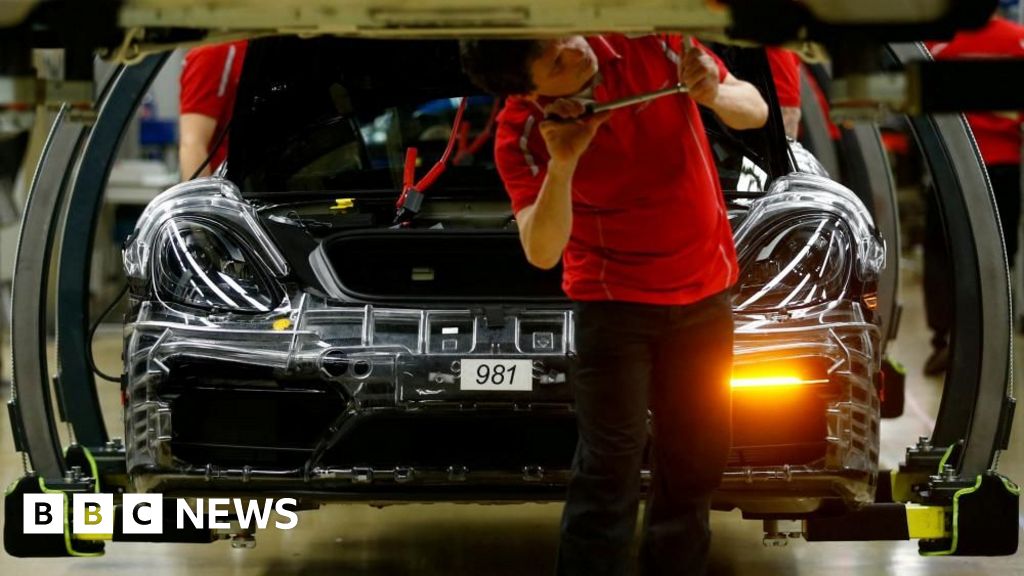
The European Commission has significantly revised its ambitious proposals to completely ban the sale of new petrol and diesel vehicles across the bloc by 2035, introducing a crucial element of flexibility after intense lobbying from powerful automotive industry players, particularly in Germany. Originally, the legislative framework stipulated that all new vehicles sold from 2035 onwards must be "zero-emission." However, the updated plan now dictates that 90% of new cars sold from that date will need to meet the zero-emission standard, creating a pathway for a limited continued presence of conventional internal combustion engine (ICE) vehicles.
This adjustment means that the remaining 10% of new car sales could encompass traditional petrol or diesel cars, along with hybrid models. The compromise reflects a delicate balance between the EU’s commitment to climate targets and the economic realities and technological challenges faced by its automotive sector. Critics argue that this dilution risks undermining the critical transition towards electric vehicles and could leave the EU vulnerable in the fiercely competitive global automotive landscape, especially against rivals rapidly advancing in EV technology.
A key driver behind the Commission’s softened stance has been persistent pressure from car manufacturers. The European carmakers association, ACEA, has vociferously argued that current market demand for electric vehicles (EVs) remains too low to justify an absolute ban. Sigrid de Vries, director general at ACEA, underscored the urgency for "flexibility" for manufacturers, stating, "2030 is around the corner, and market demand is too low to avoid the risk of multi-billion-euro penalties for manufacturers." These penalties typically refer to fines levied against carmakers who fail to meet increasingly stringent EU-wide average CO2 emission targets for their new vehicle fleets. Failure to comply can result in substantial financial burdens that directly impact profitability and investment capacity.
De Vries further elaborated on the industry’s perspective, highlighting the need for "breathing space" to sustain jobs, foster innovation, and secure vital investments. She pointed out that significant time and coordinated policy efforts are required to build out the necessary charging infrastructure and implement robust fiscal and purchase incentives to truly accelerate EV market penetration. Without these supportive measures, a precipitous shift to 100% zero-emission vehicles, she argued, would be economically unsustainable for many manufacturers.
Beyond the 90/10 split, the revised plan also introduces other notable provisions. Carmakers will now be expected to integrate low-carbon steel, preferably sourced within the EU, into the vehicles they produce. This directive aligns with the EU’s broader green industrial strategy, aiming to decarbonise heavy industries and promote sustainable supply chains. Furthermore, the Commission anticipates an increased uptake of biofuels and so-called e-fuels. These synthetic fuels are produced by capturing carbon dioxide from industrial processes or directly from the air and combining it with hydrogen, often generated using renewable electricity. The expectation is that these alternative fuels will help compensate for the additional emissions generated by the continued sale of petrol and diesel vehicles, providing a theoretical carbon-neutral option for ICE cars, though the lifecycle emissions and energy efficiency of e-fuels remain a subject of debate among environmentalists.
Opponents of the move, particularly environmental groups, have reacted with alarm. The green transport group T&E warned that this concession could severely impede the EU’s progress towards decarbonising its transport sector. They specifically cautioned the UK against mirroring the EU’s decision by weakening its own ambitious plans to phase out conventional cars under the Zero Emission Vehicles (ZEV) Mandate. Anna Krajinska, T&E UK’s director, asserted, "The UK must stand firm. Our ZEV mandate is already driving jobs, investment and innovation into the UK. As major exporters we cannot compete unless we innovate, and global markets are going electric fast." Her comments underscore the belief that a clear and unwavering policy framework is essential for attracting investment and fostering innovation necessary for global competitiveness in the rapidly evolving automotive industry.
The debate also highlights a division within the car manufacturing industry itself. While ACEA and some German manufacturers pushed for concessions, others like Volvo have expressed strong disappointment. Volvo, which has aggressively pursued an all-electric strategy, stated it had "built a complete EV portfolio in less than 10 years" and was prepared to go fully electric, using hybrids only as a transition. The Swedish carmaker argued that if it can successfully pivot away from petrol and diesel vehicles, other companies should similarly be capable of doing so. Volvo’s statement reflected a concern that "weakening long-term commitments for short-term gain risks undermining Europe’s competitiveness for years to come," advocating instead for a "consistent and ambitious policy framework, as well as investments in public infrastructure" to deliver benefits for customers, climate, and Europe’s industrial strength.
Conversely, German automotive giant Volkswagen welcomed the European Commission’s draft proposal on new CO2 targets, describing it as "economically sound overall." Volkswagen specifically praised the prospective special support for small electric vehicles and the increased flexibility for CO2 targets for passenger cars by 2030, alongside adjustments for light commercial vehicles. The company viewed the "opening up the market to vehicles with combustion engines while compensating for emissions" as a pragmatic approach that aligns with current market conditions, indicating their readiness to leverage e-fuels or other compensatory measures.
Beyond the immediate industry impact, the decision has broader ramifications for investment and policy stability. Colin Walker, head of transport at the Energy and Climate Intelligence Unit (ECIU) think tank, emphasised that "stable policy" is crucial for giving companies the confidence to invest in vital charging infrastructure and manufacturing capabilities. He cited the example of Sunderland, where government policy led to Nissan choosing the location to build its original electric Leaf, and more recently, the latest Nissan EV models, securing jobs for years to come. Such long-term policy certainty, he argued, prevents "jeopardising investments."
Fiona Howarth, chief executive of Octopus Electric Vehicles, echoed these concerns, warning that any reduction in the UK’s EV goals due to changes in Brussels would send a "damaging signal to investors, manufacturers and supply-chain partners." Many of these entities, she noted, have already invested heavily in the transition, making decisions "on the assumption the UK would stay the course." This highlights the significant risk of policy U-turns, which can erode trust and deter future investment in critical green technologies and infrastructure.
The EU’s original 2035 ban was a cornerstone of its "Fit for 55" package, a comprehensive set of legislative proposals aimed at reducing the bloc’s net greenhouse gas emissions by at least 55% by 2030, compared to 1990 levels. The watering down of this specific target underscores the political complexities and economic pressures inherent in such ambitious climate policies. While the Commission maintains its overall commitment to decarbonisation, this compromise demonstrates the formidable power of industry lobbying and the challenges of achieving consensus among diverse member states with varying economic interests and industrial capacities. The decision now sets a new trajectory for Europe’s automotive sector, one that balances environmental aspirations with pragmatic considerations, but which will undoubtedly remain a subject of intense scrutiny and debate as 2035 approaches.




 George Anjay
 Ramos Leo
 Roy Suryo
 atisusanti
 Nakalama John