George Anjay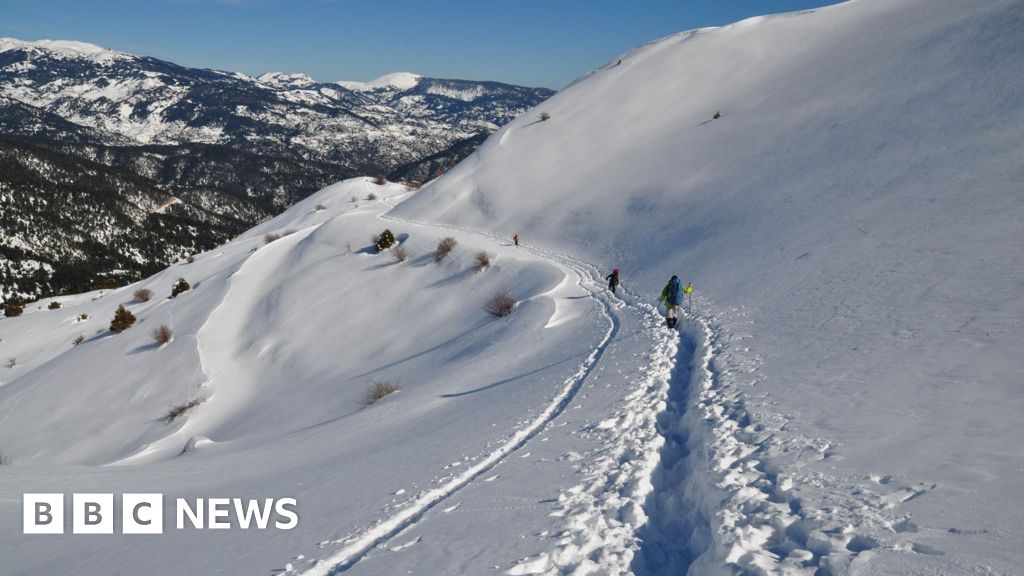
Four hikers, their festive Christmas Day plans tragically cut short, have been discovered deceased after succumbing to a powerful avalanche in the formidable Vardousia Mountains, a rugged and remote region in central Greece. The grim discovery was made on Friday evening, bringing a somber conclusion to a large-scale and intensive search operation that had been underway in the mountainous terrain of Fokida. Greek state broadcaster ERT confirmed the devastating news, reporting that the bodies of three men and one woman were found, buried beneath the snow’s unforgiving embrace.
The discovery was made by dedicated fire service teams who located the victims partially entombed in snow on a steep and notoriously inaccessible slope. The site of the tragedy was situated near the summit of Korakas peak, a formidable elevation reaching approximately 2,000 meters (6,561 feet) above sea level. Rescue officials, their voices heavy with the weight of their grim task, confirmed that the group had been violently swept away by the sheer force of a sudden and catastrophic avalanche. Initial assessments by authorities indicate that the ill-fated hikers had commenced their ascent under seemingly favorable weather conditions. However, the capricious nature of high-altitude mountain environments meant that these conditions deteriorated with alarming speed, exacerbated by the extreme altitude and the inherently challenging topography of the area.
Vasilis Vathrakogiannis, a spokesperson for the Hellenic Fire Service, provided crucial details to the BBC, explaining that the alarm was initially raised by a concerned friend of the three male hikers. This friend became worried after the group failed to return at their anticipated time, sparking immediate fears for their safety. "Weather conditions were extremely difficult, with low temperatures and poor visibility," Vathrakogiannis stated, underscoring the immense challenges faced by the rescue teams. He elaborated that these severe atmospheric conditions severely hampered the effectiveness of aerial search assets, including drones and a helicopter, making it exceedingly difficult for them to detect any signs of the missing individuals.
It was ultimately a tenacious fire service ground team that located the bodies of the three men and the woman. The woman was identified as a friend of one of the male hikers, and it was revealed that she had not originally been expected to participate in the climb, adding another layer of poignancy to the unfolding tragedy. The Vardousia Mountains, renowned for their breathtaking beauty, are also recognized as one of Greece’s most demanding mountaineering destinations. This is particularly true during the winter months, when the harsh conditions can prove unforgiving, testing even the mettle of the most seasoned and experienced climbers. The unforgiving nature of the terrain, coupled with the unpredictable weather, creates a perilous environment where even minor miscalculations can have fatal consequences.
Haris Asariotakis, who led the Hellenic Rescue Team mission at the scene, confirmed that meticulous preparations were already underway to safely recover the bodies. The remote and treacherous location of the discovery presented significant logistical hurdles for the retrieval operation. Authorities confirmed that rescue teams began their arduous approach to the site in the early hours of Saturday morning. The extreme distance from the nearest accessible road necessitated the urgent request for a helicopter to assist in the transportation of the bodies, contingent on the prevailing weather conditions allowing for safe flight operations. The process of bringing the victims down from the mountain was expected to be a complex and delicate undertaking, requiring specialized equipment and skilled personnel.
The Vardousia Mountains, often referred to as the "Greek Alps," boast a rugged and dramatic landscape characterized by steep peaks, deep gorges, and dense forests. Their remote nature, while appealing to experienced mountaineers seeking solitude and a challenge, also means that rescue operations can be significantly more complicated and time-consuming compared to more accessible areas. The specific peak, Korakas, is known for its exposed ridges and the potential for rapid weather changes, making it a particularly hazardous ascent, especially during winter. The avalanche that claimed the lives of the four hikers is believed to have occurred on a slope that had accumulated a significant amount of snow, creating a precarious snowpack susceptible to sudden release.
The meteorological conditions leading up to the incident are a critical focus of the ongoing investigation. While the hikers initially set out in favorable weather, the rapid onset of adverse conditions is a common hazard in mountainous regions. Factors such as increasing wind speed, falling temperatures, and decreasing visibility can transform a manageable hike into a life-threatening ordeal in a matter of hours. The altitude of 2,000 meters exacerbates these effects, with thinner air and more extreme temperature fluctuations. The combination of these factors likely contributed to the rapid deterioration of the situation for the group.
The Hellenic Fire Service and the Hellenic Rescue Team, both highly trained and dedicated organizations, deployed their most experienced personnel and specialized equipment for the search and rescue operation. The use of drones equipped with thermal imaging capabilities and helicopters was crucial in the initial stages of the search, attempting to cover vast and difficult terrain. However, as Mr. Vathrakogiannis explained, the severe weather conditions significantly limited their effectiveness, forcing a greater reliance on ground teams who had to navigate the treacherous snow-covered slopes on foot. The sheer scale of the search operation, involving multiple agencies and a considerable number of personnel, underscores the seriousness of the situation and the commitment to locating the missing individuals.
The confirmation of the woman’s identity as a friend of one of the male hikers raises questions about the composition of the group and their intended itinerary. It is not uncommon for groups of friends to undertake challenging hikes together, but the detail that she was not initially expected to participate suggests a spontaneous decision or a last-minute change of plans. This element adds a human dimension to the tragedy, highlighting the bonds of friendship and the shared pursuit of adventure that ultimately led to this devastating outcome.
The recovery of the bodies is a delicate and emotionally charged phase of the operation. The remoteness of the location and the challenging terrain mean that the process will be conducted with the utmost care and respect for the deceased. The involvement of specialized mountain rescue units, equipped to handle such sensitive operations, is paramount. The logistical challenges of transporting the bodies from the high-altitude, inaccessible slope to a more accessible location will require careful planning and execution, further emphasizing the demanding nature of this rescue mission.
The Vardousia Mountains, while a draw for adventurous spirits, serve as a stark reminder of the inherent risks associated with mountaineering, especially in winter. The unpredictable nature of avalanches, triggered by a combination of snowpack instability, temperature fluctuations, and external factors, poses a constant threat to those who venture into such environments. This tragic incident serves as a somber reminder of the power of nature and the importance of thorough preparation, accurate weather forecasting, and a deep respect for the challenges that these majestic, yet formidable, landscapes present. The full extent of the investigation into the circumstances surrounding the avalanche and the hikers’ final hours will undoubtedly shed further light on this heartbreaking event.
Additional reporting by Kostas Koukoumakas.

 Nana Banana
 atisusanti
 Nakalama John