Roy Suryo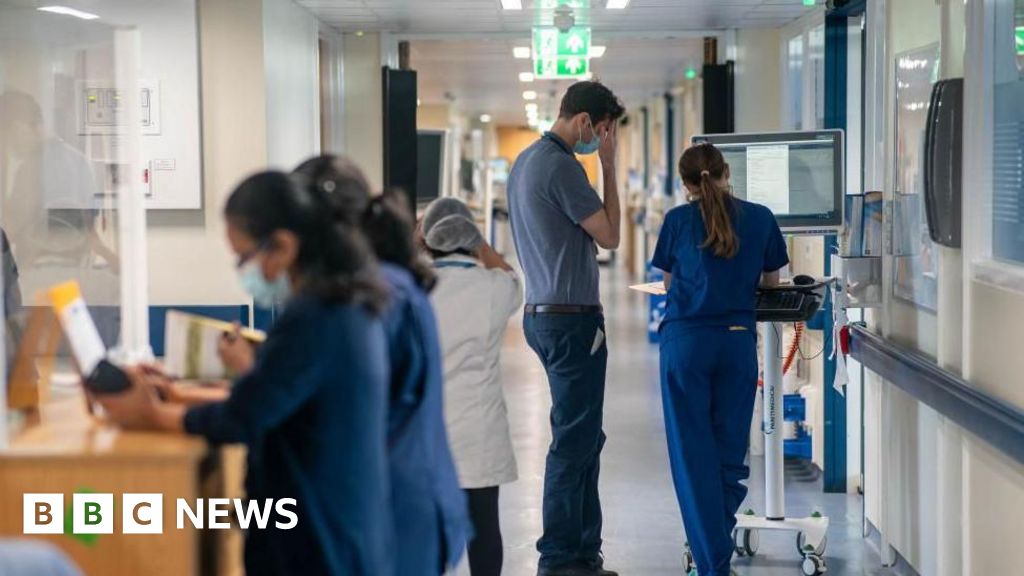
A mounting influx of end-of-life patients occupying hospital beds is precipitating a crisis that could significantly compromise the delivery of timely and effective treatment for other acutely ill individuals, particularly as the winter season intensifies existing pressures on the National Health Service. This stark warning was delivered to a gathering of senior regional NHS leaders in Sussex, who were briefed on the escalating challenges during an internal online meeting.
A consultant specializing in palliative care painted a grim picture of an impending "crisis" during the session, a recording of which has been reviewed by the BBC. The consultant, affiliated with the University Hospitals Sussex NHS Trust, articulated the agonizing dilemmas faced by hospital managers. These dilemmas are starkly exemplified by the distressing reality of some patients requiring end-of-life care being accommodated in the undignified and inappropriate setting of A&E corridors. This bleak assessment is not an isolated concern and is likely to resonate across other NHS regions grappling with escalating winter pressures, which invariably exacerbate the difficulty of securing vital hospital beds for patients in urgent need of acute medical intervention.
The University Hospitals Sussex Trust encompasses several key healthcare facilities, including Worthing Hospital, Royal Sussex County Hospital, St Richard’s Hospital in Chichester, and Princess Royal Hospital in Haywards Heath. The critical meeting also included the participation of medical professionals and administrative officials from the East Sussex Healthcare NHS Trust, which operates Conquest Hospital in Hastings and Eastbourne District General Hospital. Representatives from community health services also attended, underscoring the multi-faceted nature of the problem. The consultant’s presentation, delivered on November 4th, was titled "Palliative and End of Life Care in Sussex," a title that tragically reflects the gravity of the situation.
During her presentation, the consultant highlighted the severe strain on local hospices, which are reportedly struggling to accommodate patients requiring specialized end-of-life care. This scarcity of dedicated hospice beds creates a bottleneck, forcing more patients into acute hospital settings. Furthermore, the consultant expressed significant concern about the lack of clarity regarding the availability and adequacy of community support for patients being discharged home, leaving families and individuals uncertain about the level of care they can expect outside of the hospital environment.
"I am really worried that patients who have treatable conditions are not going to be able to get into hospital and be treated because there are so many end-of-life patients in hospital beds," the consultant stated with palpable concern. This statement underscores a critical trade-off: the allocation of finite hospital resources, particularly bed capacity, to patients requiring ongoing end-of-life care may directly impede the admission and treatment of individuals with conditions that are amenable to cure or significant improvement with prompt medical intervention.
The consultant elaborated on the difficult decisions being made, revealing a shift in prioritization for patient transfers. "We are no longer putting patients on the waiting list for transfer who are just straightforward dying," she explained, indicating that the focus has narrowed to only those with complex needs. This pragmatic but heartbreaking adjustment signifies the extent to which hospital capacity is being stretched.
The ethical and practical quandaries of providing palliative care in A&E departments were also brought into sharp focus. The consultant described the agonizing choice faced by clinicians: "do you admit them for corridor care or do you turn them round, put them in the back of the ambulance where they may die on the way home." This grim dichotomy highlights the desperate measures being considered when appropriate facilities and capacity are unavailable. The consultant further argued that the current situation is characterized by "lots of patients in hospital who don’t need to be there, lots of patients with complex needs who don’t have their needs met" within the acute hospital setting, suggesting a systemic misallocation of resources and a failure to provide appropriate care in the most suitable environments. Her concluding remarks offered a somber assessment of the trajectory: "We’ve all known this crisis is coming – it is getting worse and worse."
In response to these alarming revelations, a spokesperson for the NHS in Sussex affirmed the commitment to providing "the best possible, high-quality palliative and end-of-life care." They emphasized the provision of "a range of places for compassionate, person-centred care – and importantly, where possible, in settings out of hospital, such as community settings, and our hospices." The spokesperson acknowledged that "Emergency care services across Sussex remain under significant pressure," but assured that "staff continue to work incredibly hard to make sure patients can receive the care they need at our hospitals, and across all our health and care services." They also highlighted "robust partnership work in place over the winter period to support individual care plans, and to ensure that people are in the right NHS service for their needs."
However, the Royal College of Emergency Medicine (RCEM) echoed the concerns, identifying delayed discharges as a pervasive and significant challenge across the entire NHS. The RCEM pointed to a critical deficit in social and community care provisions as a primary driver for patients requiring end-of-life care and support being unable to leave hospital. Dr. Ian Higginson, President of the RCEM, expressed the college’s profound worry: "We are worried about the number of patients who need end-of-life care who end up in emergency departments, and then hospitals, because the dedicated services they need are not available." He poignantly added, "Patients who would prefer to be at home may end up in our corridors, which are not the right places for anyone, let alone those who are at the end of their lives."
The crisis is not confined to Sussex. An anonymous NHS clinician, speaking to the BBC, described a deeply concerning pattern that has become "increasingly routine across multiple regions." This clinician lamented, "End-of-life care delivered in emergency departments, corridors, ambulances, or via unsupported discharges home has become increasingly routine across multiple regions. What is particularly striking is the recurring pattern: hospital beds occupied by dying patients who should never be there and limited or delayed access to hospice or community care." This testimony from the frontline reinforces the systemic nature of the problem.
The NHS Confederation, representing a broad spectrum of NHS leaders, identified hospitals as the "default option" when community and social care services are either under immense pressure or entirely unavailable. Rory Deighton, director of the Confederation’s acute network, stressed that "The solution is not about asking hospitals alone to absorb more pressure – it is about investing across the whole system." This call for a systemic approach highlights the interconnectedness of health and social care and the need for comprehensive investment beyond hospital walls.
Adding to the growing chorus of concern, community services are also reporting significant strain, and hospices are issuing stark warnings about a looming funding crisis. Toby Porter, Chief Executive of Hospice UK, articulated the sentiment that "While hospital can be the right place for some, a busy ward just isn’t the right place for most people who die." He further explained that "Hospices across the country want to provide more care in the community but this year we’ve seen it cut back because of funding pressures. And that is having a knock-on effect in hospitals." This indicates a vicious cycle where underfunded community and hospice services are forcing patients into acute care, thereby exacerbating the very pressures they are struggling to alleviate. The interconnectedness of these services means that a crisis in one area inevitably cascades and amplifies problems in others, creating a significant threat to the overall capacity and quality of care provided by the NHS, especially during peak demand periods like winter. The situation demands urgent attention and a coordinated, well-funded response that addresses the root causes of this escalating end-of-life care crisis.



 Nana Banana
 atisusanti
 Nakalama John
 George Anjay