
 Roy Suryo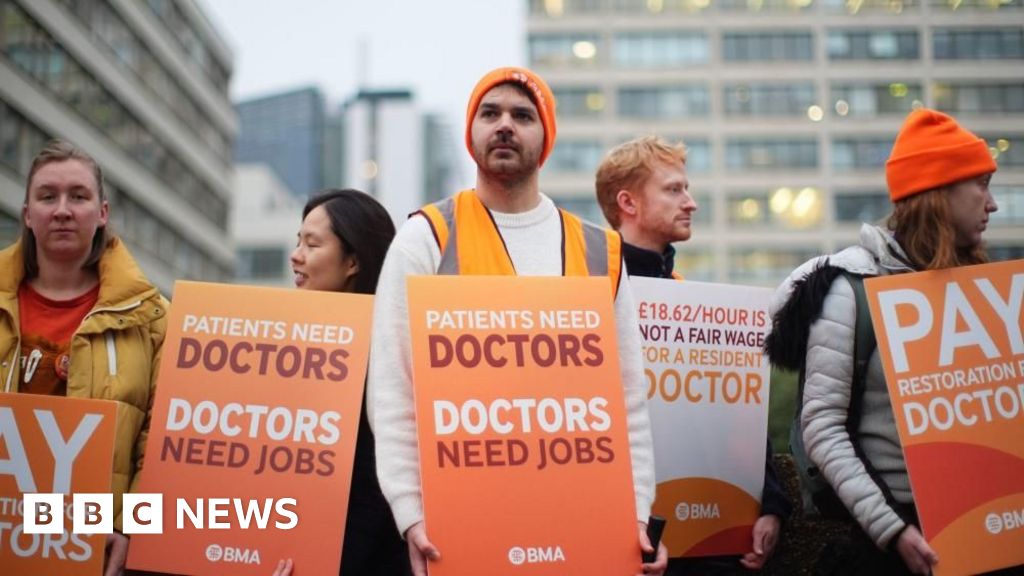
A potential breakthrough has emerged in the escalating dispute between the British Medical Association (BMA) and the government, with ministers presenting a fresh deal that could avert the planned five-day strike by resident doctors in England, scheduled to commence on Wednesday, December 17th. The doctors’ union has agreed to put this latest offer to its members for consideration over the coming days. Should the BMA membership endorse the proposal, the disruptive industrial action, which threatened to significantly impact patient care across the NHS, could be formally called off. This eleventh-hour development signifies a critical juncture, offering a glimmer of hope for a resolution to a protracted conflict that has already seen several periods of intense industrial action.
At the heart of the government’s revised offer lies a commitment to a "rapid expansion of specialist training posts." This addresses a significant point of contention for resident doctors, who have expressed deep concerns about the limited availability of these crucial career progression pathways. The proposal also includes provisions for covering out-of-pocket expenses, such as exam fees, which represent a tangible financial burden on doctors undertaking further qualifications. These concessions, particularly the focus on training opportunities, are seen as a direct response to the BMA’s persistent advocacy for improved career development and recognition within the medical profession.
However, it is crucial to note that the current offer notably omits any promises of additional pay increases. Health Secretary Wes Streeting has remained resolute on this stance, emphasizing that resident doctors – the new designation for junior doctors – have already benefited from substantial pay rises, reportedly amounting to nearly 30% over the past three years. This firm position from the government suggests that the negotiations have reached a point where further concessions on pay are unlikely, shifting the focus towards non-monetary benefits and structural improvements within the NHS training system. The BMA, while acknowledging the progress made on training, has clearly articulated that the issue of pay restoration remains a core concern for its members.
Adding a significant structural reform to the package, the government has pledged to introduce emergency legislation. This legislative action is designed to empower the NHS to prioritize doctors who have undergone their education and gained experience within the UK for speciality training posts. These are the very roles that resident doctors progress into during their third year of training. The urgency of this measure is underscored by the intense competition observed in the current year’s recruitment cycle for these positions. A staggering 30,000 applicants vied for a mere 10,000 available posts, a stark illustration of the demand and the challenges faced by aspiring specialists. This situation has also raised concerns about the parity of assessment for both UK-trained doctors and those who have qualified and worked abroad, with current rules stipulating that all applicants must be judged on the same criteria. The proposed legislation aims to streamline this process and ensure a more equitable pathway for UK-trained doctors.
Furthermore, the offer includes a commitment to increase the overall number of speciality training posts by 4,000. This represents a substantial investment in the future medical workforce, with the first tranche of 1,000 new posts slated to become available from next year. This expansion is intended to not only alleviate the current bottleneck in specialist training but also to ensure a more robust pipeline of consultants and senior medical professionals for the NHS in the years to come. The BMA will now embark on a crucial period of consultation with its resident doctor members across England to gauge their reaction to this comprehensive offer.
The immediate next step involves an online survey for BMA members, which is set to close on Monday, December 15th. The results of this survey will be instrumental in determining the BMA’s next course of action. If the survey indicates that the offer is deemed sufficient by a majority of members to call off the impending strike, a formal referendum will be initiated. This referendum will provide members with the opportunity to thoroughly consider the detailed terms of the offer and make a collective decision on whether to accept it and bring the current dispute to an end. The BMA has emphasized that this process allows for careful deliberation, ensuring that any decision reflects the considered will of its membership.
Conversely, if the survey results suggest that the offer is not perceived as adequate to warrant the cancellation of the strikes, the planned industrial action will proceed as scheduled next week. This highlights the BMA’s commitment to democratic decision-making and its reliance on the collective voice of its members in navigating such critical negotiations. The outcome of the survey will therefore be closely watched by both the government and the public, as it will dictate whether the NHS faces further disruption or finds a path towards resolution.
Dr. Jack Fletcher, chairman of the BMA’s resident doctors committee, acknowledged the significance of the current offer, attributing it directly to the resolve of thousands of resident doctors. "This offer is the result of thousands of resident doctors showing that they are prepared to stand up for their profession and its future," Dr. Fletcher stated. He further emphasized the instrumental role of strike action in achieving this point in the negotiations, asserting, "It should not have taken strike action, but make no mistake: it was strike action that got us this far." Dr. Fletcher highlighted that the government has been compelled to acknowledge the gravity of the issues at hand and has responded with concrete measures concerning training numbers and prioritization.
However, Dr. Fletcher was unequivocal in his assessment of the offer’s limitations. "However, this offer does nothing to restore pay for doctors, which remains well within the government’s power to do," he concluded, underscoring that the core issue of pay parity and restoration remains unresolved. This sentiment reflects a broader concern within the medical profession regarding the perceived erosion of pay and the impact this has on recruitment and retention. While the current offer addresses crucial aspects of career progression and professional development, the absence of any movement on pay represents a significant point of divergence that will likely continue to be a focal point for future discussions, should the current dispute be resolved. The coming days, therefore, are pivotal in determining the immediate future of industrial relations within the NHS and the continuity of vital medical services.



 Nana Banana
 atisusanti
 Nakalama John
 George Anjay