George Anjay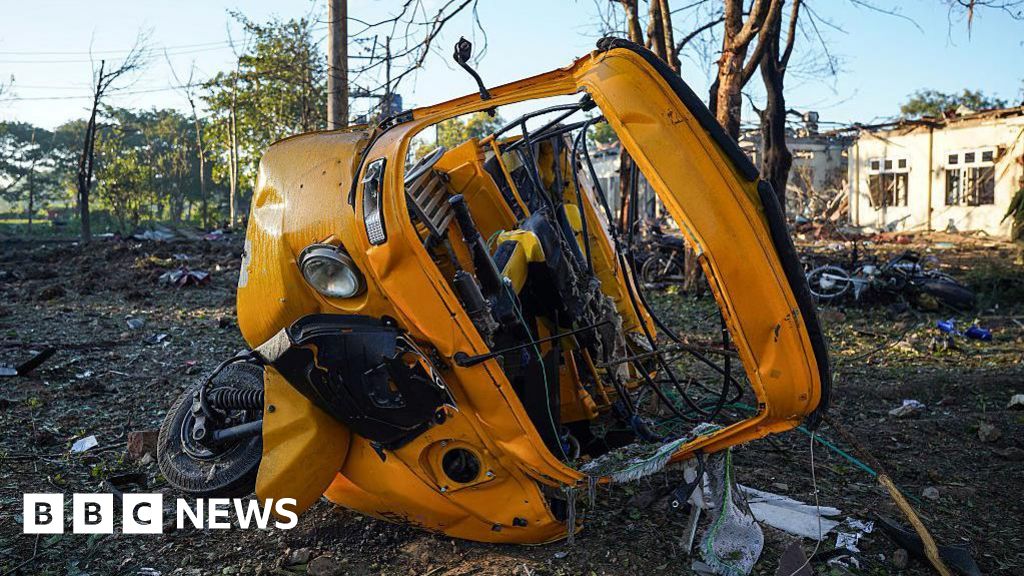
At least 34 people have been confirmed dead and dozens more are critically injured following a devastating military air strike that targeted a hospital in the western town of Mrauk-U, Rakhine state, on Wednesday night. The attack, which occurred around 21:00 local time, has sent shockwaves through a nation already grappling with widespread conflict and human rights abuses since the military seized power in a coup in February 2021. Ground sources and the Arakan Army, one of the most potent ethnic armed organizations resisting the junta, have provided grim accounts of the unfolding tragedy, with the latter stating that the majority of those killed were patients receiving care within the hospital.
The hospital is situated in Mrauk-U, a historically significant city that has become a focal point of the intensifying conflict in Rakhine state. This region is largely controlled by the Arakan Army (AA), a powerful ethnic militia that has been at the forefront of the resistance against the ruling military regime. The current civil war, triggered by the 2021 coup, has already claimed thousands of lives and displaced millions, pushing the country into a deepening humanitarian crisis. In recent months, the Myanmar military has significantly escalated its aerial offensive, deploying advanced weaponry and tactics in a desperate bid to reclaim territory lost to ethnic armies. This escalation includes the alarming use of paragliders to drop bombs on perceived enemies, a tactic that raises serious concerns about indiscriminate targeting.
As of Thursday, the Myanmar military junta has remained conspicuously silent on the hospital strike, offering no official comment or acknowledgment of the incident. This silence comes at a particularly sensitive time, as the nation braces for its first general election since the coup, scheduled to take place later this month. While the junta has not addressed the specifics of the Mrauk-U attack, pro-military accounts circulating on social media platforms, particularly Telegram, have attempted to deflect blame, asserting that the strikes were not intentionally aimed at civilian infrastructure or populations.
However, these claims are starkly contradicted by the testimony of Khaing Thukha, a spokesperson for the Arakan Army. He unequivocally stated to the BBC that the overwhelming majority of the casualties were indeed patients within the hospital. "This is the latest vicious attack by the terrorist military targeting civilian places," Thukha asserted, emphasizing that the military "must take responsibility" for its actions and the deliberate bombing of civilians. The Arakan Army’s health department has corroborated this, detailing that the strike killed 10 patients immediately upon impact and left many others severely wounded.
Disturbing images believed to be captured in the aftermath of the strike have begun to circulate widely on social media. These photographs depict extensive damage to the hospital complex, with missing roofs, shattered hospital beds, and a chaotic scene of debris strewn across the grounds. The visual evidence strongly suggests a deliberate and destructive attack on a vital civilian facility.
The protracted and bloody conflict between the junta and various ethnic armed organizations has been a defining characteristic of Myanmar’s post-coup reality. For a period, the military lost control of more than half of the country’s territory, a significant blow to its authority. However, recent reports indicate a shift in momentum, attributed in part to a substantial influx of advanced technology and military equipment from key international allies, namely China and Russia. This bolstered military capability appears to have enabled the junta to launch a more aggressive campaign, marked by a surge in airstrikes and heavy bombardment, leading to significant territorial gains.
This is not an isolated incident of civilian targeting. Earlier this year, a similar tragedy unfolded when an army-operated motorized paraglider dropped two bombs on a crowd participating in a religious festival, resulting in the deaths of over 20 people. These recurring attacks underscore a pattern of disregard for civilian lives and international humanitarian law.
The repression under the junta extends beyond the battlefield, with civil liberties shrinking dramatically since the coup. Rights groups estimate that tens of thousands of political dissidents, activists, and perceived opponents of the regime have been arrested and detained. The impending general election, announced by the junta for December 28th, is being presented by the ruling military as a path towards political stability and a return to democratic normalcy. However, this narrative is widely contested by critics and international observers.
Many believe the election will be neither free nor fair, serving primarily as a tool for the junta to manufacture a veneer of legitimacy for its continued rule. Tom Andrews, the United Nations’ special rapporteur on the human rights situation in Myanmar, has unequivocally labeled the upcoming vote as a "sham election." In the weeks leading up to the scheduled poll, the junta has intensified its crackdown on any form of dissent or opposition. Civilians accused of attempting to disrupt the election process have been arrested, including one individual reportedly detained for sending anti-election messages on Facebook. Furthermore, the junta announced on Monday that it is actively searching for 10 activists involved in anti-election protests.
In response to the junta’s orchestrated election, ethnic armies and various opposition groups have collectively pledged to boycott the polls, viewing them as illegitimate and an attempt to legitimize an oppressive regime. The political landscape remains deeply fractured, with a significant portion of the population and its armed representatives refusing to participate in a process they deem a charade. Adding to the atmosphere of intimidation, at least one election candidate in central Myanmar’s Magway Region was reportedly detained by an anti-junta group, highlighting the volatile and dangerous environment in which the election is being conducted. The hospital strike in Mrauk-U, therefore, serves as a grim reminder of the brutal realities faced by civilians caught in the crossfire of Myanmar’s ongoing civil war, occurring against the backdrop of a deeply flawed electoral process.


 Nana Banana
 atisusanti
 Nakalama John