
 atisusanti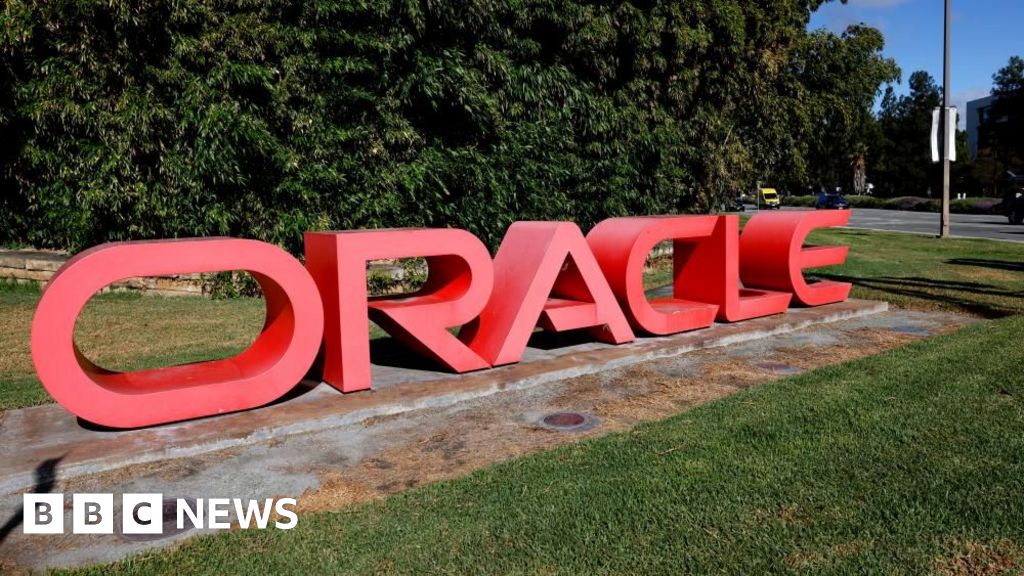
Shares of cloud computing giant Oracle experienced a significant downturn, plunging over 10% in after-hours trading on Wednesday. This sharp decline followed the company’s latest earnings report, which revealed revenues that fell short of Wall Street’s projections, casting a shadow over the burgeoning excitement surrounding artificial intelligence. While Oracle announced a robust 14% year-over-year revenue increase, with a remarkable 68% surge in its AI-focused Oracle Cloud Infrastructure (OCI) business, this performance failed to assuage growing anxieties about a potential AI bubble.
The company reported revenues of $16.06 billion for the three months ending in November, a figure that fell slightly below the $16.21 billion anticipated by market analysts. This revenue miss, though perhaps minor in absolute terms, has been amplified by the intense scrutiny currently directed at the technology sector, particularly concerning AI investments. Oracle Cloud Infrastructure (OCI) serves as the backbone for many leading AI technology developers, and their escalating demand for Oracle’s AI infrastructure had previously propelled the company’s stock to new heights in the preceding fall. However, Wednesday’s results demonstrated that even substantial growth in this critical area could not entirely dispel persistent fears of an overvalued AI market.
A pivotal development that had significantly boosted Oracle’s profile was its September agreement with OpenAI, the creator of the highly popular ChatGPT. This landmark contract, valued at an astonishing $300 billion over five years, involves OpenAI purchasing substantial computing power from Oracle. The announcement of this deal had a meteoeric effect on Oracle’s market valuation, briefly elevating its chairman and chief technology officer, Larry Ellison, to the status of the world’s richest man. Despite this seemingly groundbreaking partnership, Oracle’s stock has since shed approximately 40% of its value from its peak three months ago, although it remains up by more than a third since the beginning of the year.
In a statement accompanying the earnings release, Ellison adopted a measured and cautious tone, acknowledging the dynamic nature of AI technology. "There are going to be a lot of changes in AI technology over the next few years and we must remain agile in response to those changes," he stated. Significantly, Ellison also appeared to distance Oracle from an over-reliance on any single chip supplier, a subtle jab at Nvidia, the dominant designer of advanced AI chips. He articulated a policy of "chip neutrality," asserting that Oracle would procure chips from any manufacturer to meet the diverse needs of its clientele. "We will continue to buy the latest GPUs from Nvidia, but we need to be prepared and able to deploy whatever chips our customers want to buy," Ellison declared, emphasizing flexibility and customer-centricity in their infrastructure strategy.
However, Oracle’s deep involvement in multiple AI infrastructure arrangements has fueled concerns among investors about the possibility of "circular financing" deals. This practice involves companies financing the purchases of their own products and services, raising questions about the sustainability and true economic rationale behind such arrangements. Jacob Bourne, an analyst at Emarketer, commented on the implications of Oracle’s earnings in the context of these broader market dynamics. "Oracle’s earnings arrive as investors weigh whether its massive OpenAI partnership might mean overexposure with a customer currently in the spotlight over profitability concerns," Bourne noted, highlighting the scrutiny faced by OpenAI and, by extension, its key infrastructure providers.
Bourne further elaborated on the pressures Oracle is facing, pointing to the increasing scrutiny surrounding the significant debt the company has accumulated to fund the expansion of its data center infrastructure. This aggressive expansion, while necessary to support the burgeoning AI demand, represents a substantial financial commitment that investors are now carefully evaluating. Colleen McHugh, a consultant for the investment platform Wealthify, echoed these sentiments, framing Oracle’s stock movement as a predictable reaction to the prevailing market sentiment. "The big questions being asked are whether tech stocks are overvalued and will the AI bubble burst, and given this the share price movement was not surprising," she told the BBC’s Today programme. McHugh added, "It’s telling us that many of these tech stocks are priced for absolute perfection, and when there’s a revenue miss – which was a small revenue miss to be fair by Oracle yesterday – they do get penalised."
Despite the prevailing bearish sentiment on Oracle’s stock, some market observers believe the negative reaction is unwarranted. Cory Johnson, Chief Market Strategist at Epistrophy Capital Research, presented a more optimistic view, describing the quarter as "nothing but a great quarter for Oracle." He emphasized that the 14% revenue growth represents an acceleration, a positive indicator in a competitive market. Johnson also highlighted the substantial value of Oracle’s recent contract wins, noting that, excluding the OpenAI deal, the company has secured an impressive $385 billion in contracts over the past six months. He further pointed out that these new clients include industry giants like Meta and Nvidia, underscoring the broad appeal and strategic importance of Oracle’s offerings. "But AI sentiment is so bad right now, that’s seen as a bad thing for Oracle," Johnson observed, suggesting that the market’s current mood is disproportionately impacting the perception of Oracle’s performance.
The company’s aggressive expansion strategy has involved significant financial maneuvers. In September, Oracle raised a record $18 billion through a massive bond sale, one of the largest debt issuances ever recorded in the technology sector. This substantial influx of capital is intended to fuel the construction and expansion of data centers, crucial for supporting the compute-intensive demands of AI workloads. While Oracle’s shares had experienced a significant surge following the September announcements, the recent revenue miss is likely to amplify concerns among already cautious investors. The combination of its substantial OpenAI partnership, which carries its own inherent risks and scrutiny, and its aggressive AI spending, now appears to be weighing more heavily on investor sentiment.
Beyond its core technology business, the Ellison family, known for their significant political contributions as supporters of former US President Donald Trump, has also been making notable investments in the media landscape. They recently acquired Paramount and have been spearheading a bid to take over another major Hollywood studio, Warner Brothers Discovery. These diversification efforts, while indicative of a broader business strategy, add another layer of complexity to the financial narrative surrounding the Ellison empire, further contributing to the intense scrutiny on the family’s financial activities and their impact on Oracle’s market perception. The confluence of these factors – a revenue miss, persistent AI bubble fears, substantial debt accumulation, and ambitious diversification – has created a challenging environment for Oracle’s stock, despite its underlying growth in the critical AI infrastructure sector.



 Roy Suryo
 Nana Banana
 Nakalama John
 George Anjay