George Anjay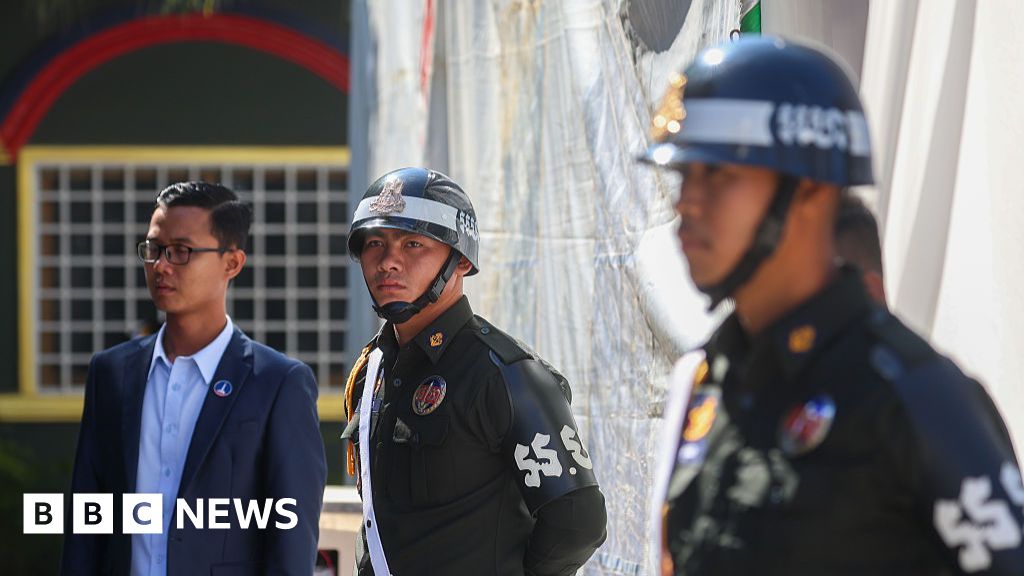
Thailand and Cambodia have agreed to an immediate ceasefire, the defence ministers of both countries announced in a joint statement, marking a crucial, albeit tentative, step towards de-escalating the protracted and deadly border conflict. The agreement, which took effect at noon local time (05:00 GMT) on Saturday, mandates both sides to freeze their current front lines, a critical concession that aims to pave the way for the safe return of nearly one million civilians displaced by almost three weeks of intense and attritional clashes. The pact, brokered after days of intensive diplomatic engagement with significant encouragement from both China and the United States, also includes a commitment to remove landmines, a persistent and lethal threat in the contested border region.
A significant element of the agreement stipulates that once the ceasefire has held for 72 hours, 18 Cambodian soldiers, who have been held by Thailand since July, will be released, a move intended to foster goodwill and demonstrate tangible progress. Thailand’s Defence Minister, Natthaphon Narkphanit, described the ceasefire as a crucial test of the "other party’s sincerity," underscoring a palpable sense of caution and a need for verifiable adherence. He explicitly stated, "Should the ceasefire fail to materialise or be violated, Thailand retains its legitimate right to self-defence under international law," a clear warning against any future breaches. Thailand had initially shown reluctance to accept the ceasefire, citing the improper implementation of the previous truce and expressing resentment over what they perceived as Cambodia’s attempts to internationalize the conflict.
Notably, this ceasefire agreement saw the conspicuous absence of US President Donald Trump, a key figure in the negotiation of the previous fragile peace, though the US State Department remained actively involved. The previous ceasefire agreement, negotiated earlier in July and later suspended by Thailand in November, had collapsed dramatically, reigniting fresh clashes and undermining diplomatic efforts. Both nations have engaged in a war of words, each blaming the other for the breakdown of the earlier truce. The Thai army asserted that its troops were merely responding to Cambodian fire in Thailand’s Si Sa Ket province, an engagement that resulted in the injury of two Thai soldiers. Conversely, Cambodia’s defence ministry vehemently denied these claims, stating that Thai forces initiated the aggression in Preah Vihear province and that Cambodia exercised restraint, refraining from retaliation.
The fighting had continued unabated throughout December. In a significant escalation on Friday, Thailand carried out further air strikes deep inside Cambodian territory. The Royal Thai Air Force reported that its forces had targeted a Cambodian "fortified military position" after ensuring that civilians had been evacuated from the area. However, Cambodia’s defence ministry countered these assertions, labeling the strikes as "indiscriminate attacks" that deliberately targeted civilian homes, highlighting the starkly different narratives and the significant humanitarian cost of the conflict. The effectiveness and longevity of the current ceasefire are intrinsically linked to the political will of both nations, particularly as nationalist sentiments have been severely inflamed in both countries.
Cambodia, in particular, has borne a heavy burden in this conflict, having sustained substantial losses in terms of soldiers and military equipment. The nation has been pushed back from previously held positions along the border and has suffered extensive damage from Thai air strikes. These grievances, coupled with the ongoing humanitarian crisis, could present formidable challenges to achieving a lasting and sustainable peace. The roots of the territorial dispute stretch back over a century, but tensions escalated significantly earlier this year following an incident where a group of Cambodian women sang patriotic songs at a disputed temple, an act that was perceived as provocative by Thailand.
The current wave of intense fighting began in earnest in May with the death of a Cambodian soldier during a border clash. This was followed by five days of fierce fighting in July along the shared border, resulting in the deaths of dozens of soldiers and civilians and the displacement of thousands more. Following intensive diplomatic interventions, including the involvement of Malaysia and President Trump, a fragile ceasefire was negotiated and formally signed in late October. This agreement, dubbed the "Kuala Lumpur Peace Accords" by President Trump, mandated the withdrawal of heavy weaponry from the disputed region and the establishment of an interim observer team to monitor compliance. However, this accord was suspended by Thailand in November after Thai soldiers were injured by landmines, with Thai Prime Minister Anutin Charnvirakul declaring that the "security threat had not actually decreased." The current ceasefire, therefore, faces the daunting task of overcoming the lingering distrust and the deep-seated animosities that have characterized this long-standing border dispute. The commitment to dialogue, coupled with genuine efforts to address the underlying issues of border demarcation and historical grievances, will be paramount in ensuring that this latest cessation of hostilities translates into a lasting peace for the people of Thailand and Cambodia. The international community will be watching closely to see if this fragile truce can withstand the pressures of nationalism and the complex geopolitical landscape of Southeast Asia. The humanitarian imperative to allow displaced populations to return to their homes and begin the arduous process of rebuilding their lives remains a central focus, underscoring the urgency of a sustained and effective peace.


 Nana Banana
 atisusanti
 Nakalama John