George Anjay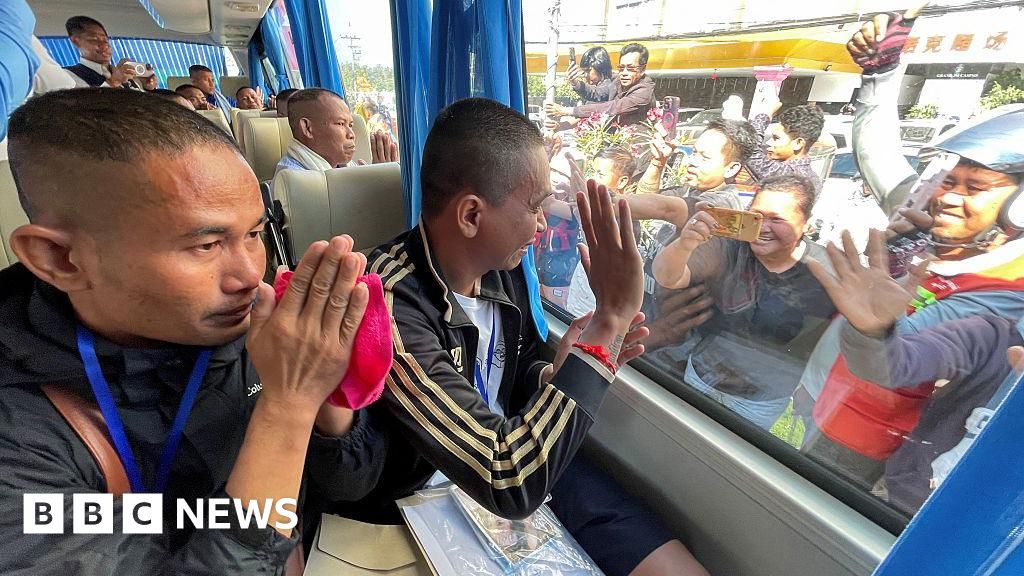
Thailand has released 18 Cambodian soldiers, held captive since July during a period of escalating border skirmishes, a move that signifies a critical step towards de-escalating the long-simmering territorial dispute between the two Southeast Asian nations. The handover, which occurred over a symbolic border crossing, was initially postponed due to Thai accusations of ceasefire violations by Cambodia, but ultimately proceeded following sustained diplomatic engagement, notably from China, which has a vested interest in regional stability. The release addresses a key demand from Cambodia, whose government had framed the soldiers’ captivity as a significant point of contention, fueling nationalist sentiment within the country. This development comes in the wake of renewed and intense fighting that erupted early this month, displacing nearly a million people and underscoring the fragility of previous peace efforts. The Saturday ceasefire agreement stipulated an immediate cessation of hostilities, a freeze on troop movements at current front lines, a ban on reinforcements, and the safe return of displaced civilians.
The 18 Cambodian soldiers, notably attired in civilian clothing to perhaps mitigate any perception of continued military confrontation, were met by a crowd of well-wishers as they were escorted across the border checkpoint and formally handed over to Cambodian authorities. Their prolonged detention since July, a period marked by deadly clashes, had become a potent symbol of the unresolved conflict and a significant impediment to diplomatic progress. The Thai foreign ministry, in a statement on Wednesday, characterized the release as a "demonstration of goodwill," expressing a hope for reciprocal actions from Cambodia to foster a more constructive relationship. Cambodia, in turn, confirmed the return of its troops, with its defense ministry articulating an optimistic outlook, stating its "remains hopeful" that this gesture will contribute to the cultivation of "mutual trust and confidence" between the two nations.
The immediate implementation of the soldier release, a stipulated term of the ceasefire requiring handover within 72 hours, faced a day’s delay. Thailand voiced strong objections, accusing Phnom Penh of breaching the truce by deploying over 250 unmanned aerial vehicles into Thai airspace on Sunday. This accusation highlighted the deep-seated mistrust that persists despite the overarching desire for peace. Nevertheless, and crucially, the latest ceasefire appears to be holding, suggesting that the diplomatic efforts to solidify the truce are gaining traction.
The territorial disagreements between Thailand and Cambodia are deeply rooted, with historical disputes dating back over a century. However, tensions escalated significantly earlier this year, ignited by an incident involving a group of Cambodian women singing patriotic songs at a disputed temple complex. This seemingly minor cultural expression became a flashpoint, leading to a fatal clash in May in which a Cambodian soldier was killed. The situation then deteriorated dramatically in July, when five days of sustained and intense fighting along the shared border resulted in numerous casualties among both soldiers and civilians. The scale of displacement during this period was substantial, forcing thousands to flee their homes in fear of the escalating violence.
In the aftermath of the July fighting, the two countries managed to negotiate a fragile ceasefire, which was formally signed in October. This initial peace accord was notably brokered by then-US President Donald Trump, underscoring the international attention drawn to the conflict. However, this fragile peace proved short-lived, collapsing when fresh tensions erupted early this month. Both sides engaged in reciprocal accusations, each blaming the other for the breakdown of the July agreement and the subsequent resurgence of hostilities. The recent release of the Cambodian soldiers represents a crucial attempt to rebuild the shattered trust and reignite the stalled peace process.
The ongoing border dispute is intrinsically linked to the demarcated boundary, which has been a source of contention for decades. The contested areas are often sparsely populated but hold significant symbolic and, in some instances, economic importance. Historical maps and colonial-era agreements have been cited by both sides, leading to protracted negotiations and a lack of definitive resolution. The proximity of the disputed territories to significant cultural and religious sites, such as the Preah Vihear temple, has further inflamed nationalistic sentiments and made the issue politically sensitive in both countries. The presence of ethnic minority groups along the border, often caught between the competing claims of the two states, adds another layer of complexity to the conflict.
The military engagements, while not on the scale of full-blown warfare, have been characterized by the use of small arms, artillery, and, more recently, aerial reconnaissance. The deployment of unmanned aerial vehicles by Cambodia, as alleged by Thailand, points to a potential modernization of military capabilities and a shift in tactics, further complicating the dynamics of the conflict. The human cost of these clashes has been immense, with families torn apart, livelihoods destroyed, and a pervasive sense of insecurity gripping the border communities. The displacement of nearly a million people signifies a humanitarian crisis that requires urgent attention and long-term solutions.
The role of regional powers and international organizations in mediating the dispute has been significant, though often met with mixed success. While China’s diplomatic intervention in facilitating the soldier release is a positive development, its broader influence on resolving the underlying territorial claims remains to be seen. The Association of Southeast Asian Nations (ASEAN), as a regional bloc, has a mandate to promote peace and stability, but its effectiveness in resolving bilateral disputes can be constrained by the principle of non-interference in the internal affairs of member states. The United States, having previously brokered a ceasefire, continues to monitor the situation, advocating for a peaceful resolution.
The current ceasefire, if it holds, offers a critical window of opportunity for sustained diplomatic engagement and the resumption of substantive negotiations. The release of the Cambodian soldiers serves as a tangible demonstration of intent and a potential catalyst for building goodwill. However, the deep-seated historical grievances and the complex interplay of nationalistic sentiments, political considerations, and military posturing mean that a lasting peace will require more than just a cessation of hostilities. It will necessitate a comprehensive approach that addresses the root causes of the dispute, fosters mutual understanding, and ensures the protection and well-being of the communities living in the border regions. The path ahead remains challenging, but the successful exchange of prisoners offers a flicker of hope for a more peaceful future between Thailand and Cambodia. The international community will be watching closely to see if this fragile truce can be transformed into a durable peace.


 Nana Banana
 atisusanti
 Nakalama John