Nakalama John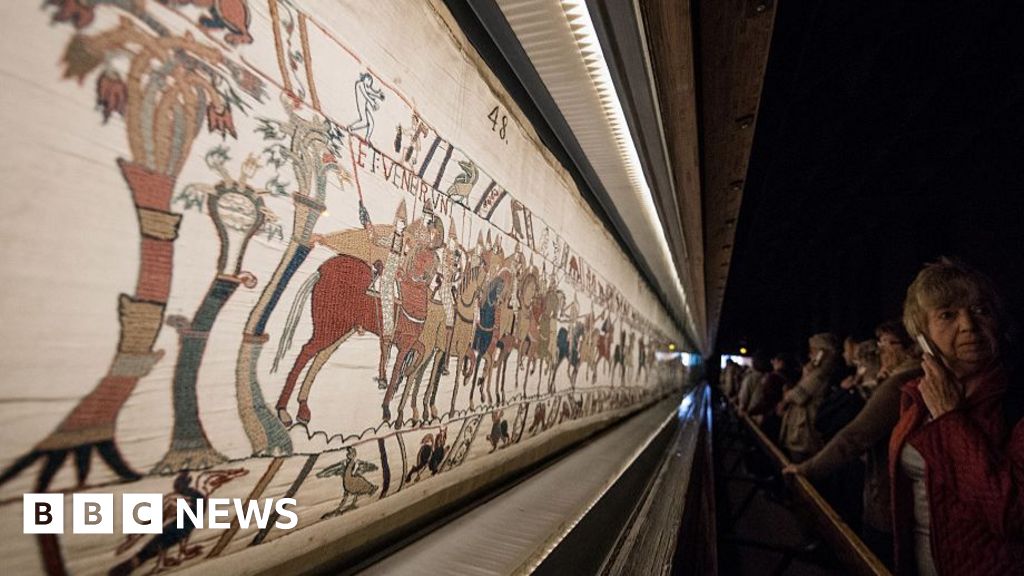
The UK Treasury is poised to underwrite the insurance for the Bayeux Tapestry, a monumental medieval embroidery, against any potential damage during its highly anticipated loan to the British Museum next year, with the indemnity scheme valued at an estimated £800 million. This unprecedented move marks a significant moment in Anglo-French cultural relations, as the nearly 1,000-year-old artefact, depicting the dramatic events leading up to and including the Battle of Hastings in 1066, prepares for its first journey across the English Channel in almost a millennium. The 70-meter-long narrative masterpiece will travel from its permanent home in Bayeux, France, to London as part of a landmark agreement between the two national governments.
The intricate logistics of the artefact’s transit, its period in secure storage, and its eventual display within the British Museum’s prestigious Sainsbury Exhibitions Gallery will all be meticulously covered under the UK Government Indemnity Scheme (GIS). This crucial scheme provides a robust safety net, protecting loaned cultural objects from eventualities such as loss or damage, thereby circumventing the prohibitive costs of commercial insurance premiums that would otherwise render such ambitious international exhibitions unfeasible. A spokesperson for the Treasury underscored the vital role of the long-standing GIS, stating that without it, "public museums and galleries would face a substantial commercial insurance premium, which would be significantly less cost effective." The scheme, established in 1980, has been instrumental in facilitating countless high-value loans, enabling the British public to access world-class art and historical treasures that might otherwise remain unseen, a notable past example being Vincent van Gogh’s iconic 1888 work, The Bedroom, displayed at the National Gallery. Annually, the GIS is estimated to save UK museums and galleries approximately £81 million compared to the expense of securing commercial insurance, proving its immense value to the nation’s cultural sector.
However, the impending move is not without its share of apprehension. A number of French art experts have voiced serious concerns regarding the extremely delicate condition of the almost millennia-old work, suggesting it may be too fragile to withstand transportation. These expert opinions highlight the inherent risks associated with moving such an ancient and irreplaceable textile, which is highly susceptible to vibrations, changes in humidity, and temperature fluctuations. Despite these warnings, French officials have robustly denied that the tapestry is in an unsuitable state for travel, presumably relying on extensive conservation assessments and state-of-the-art transportation methodologies. The sheer scale and age of the tapestry demand extraordinary precautions, involving highly specialized crates, climate-controlled environments, and continuous monitoring by conservators throughout its journey and exhibition.
The Treasury has confirmed that it has already received an initial valuation for indemnifying the Bayeux Tapestry, which has been provisionally approved. This meticulous valuation process is a standard but critical step for objects of such immense historical and cultural significance, ensuring that all potential risks are thoroughly assessed and accounted for. The formal confirmation of the loan remains contingent upon the receipt and final approval of the definitive valuation. According to reports from the Financial Times, citing unnamed officials familiar with the negotiations, this final valuation is estimated to hover around the £800 million mark. When approached for comment by the BBC, the Treasury did not dispute this substantial figure, indicating its likely accuracy and reflecting the tapestry’s unparalleled artistic, historical, and monetary worth.
The Bayeux Tapestry is scheduled to grace the British Museum’s Sainsbury Exhibitions Gallery from September of next year, continuing its display until July 2027. This extended loan period is strategically timed to coincide with extensive renovation works at its permanent home, the Bayeux Museum in Normandy, ensuring that the precious artefact remains accessible to the public during its usual exhibition closure. Comprising a remarkable 58 individual scenes, depicting a staggering 626 characters, and featuring 202 horses, this colossal masterpiece is not technically a tapestry but rather an elaborate embroidery crafted with wool yarn on linen cloth. Its intricate narrative provides a unique visual chronicle of a profoundly contested era in Anglo-French relations, detailing the Norman Conquest when William the Conqueror successfully seized the English throne from the Anglo-Saxon King Harold Godwinson, thereby inaugurating the first Norman king of England and forever altering the course of British history. As such, it is not merely a work of art but a vital primary historical document, offering a partisan yet invaluable perspective on one of the most pivotal events in European history.
Beyond its intrinsic value, the loan of the Bayeux Tapestry symbolizes a profound act of cultural diplomacy between France and the United Kingdom, particularly significant in the current geopolitical climate. This grand gesture of cultural exchange will be reciprocated, with the British Museum preparing to loan several highly significant items to France. Among these treasures are the 7th-century Anglo-Saxon artefacts discovered at the Sutton Hoo burial site in Suffolk, a collection that has revolutionized our understanding of early medieval England’s wealth and sophistication, and the exquisite 12th-century Lewis chess pieces, a celebrated hoard of intricately carved walrus ivory and whalebone chessmen found on the Isle of Lewis in Scotland, renowned for their expressive details and historical significance. These reciprocal loans underscore a shared heritage and a commitment to fostering cross-cultural understanding and appreciation.
The temporary return of the Bayeux Tapestry to English soil, albeit nearly a millennium after the events it depicts, holds immense symbolic weight. It offers an unparalleled opportunity for British audiences to engage directly with a foundational narrative of their nation’s history, seen through the eyes of the conquerors. The exhibition is expected to draw vast numbers of visitors to the British Museum, generating significant cultural and economic benefits for London and the wider UK. The meticulous planning, the substantial financial commitment from the Treasury, and the collaborative spirit between two nations highlight the extraordinary importance placed on this ancient textile, not just as a relic of the past, but as a living testament to shared history and an enduring symbol of cultural exchange. The world eagerly awaits the moment this embroidered epic finally takes its place on display, bridging centuries and nations through its timeless narrative.




 Roy Suryo
 atisusanti

 Nana Banana