 atisusanti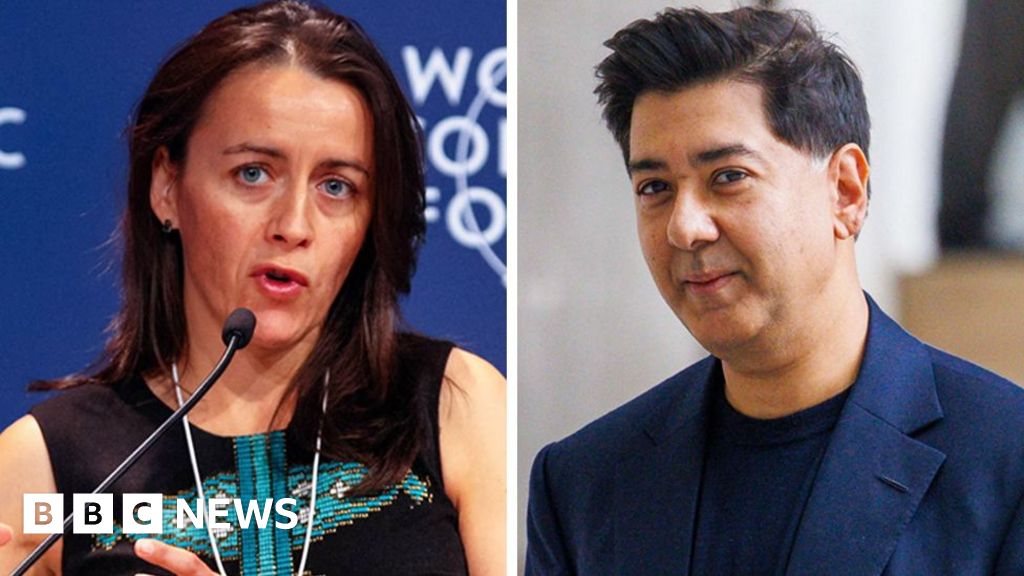
Two prominent British campaigners, alongside three European figures, have been denied visas to enter the United States, with the State Department alleging their actions aimed to "coerce" American tech platforms into suppressing free speech. The individuals, identified as Imran Ahmed, the head of the Centre for Countering Digital Hate (CCDH), and Clare Melford, CEO of the Global Disinformation Index (GDI), were specifically targeted by the Trump administration, which labelled them "radical activists" and imposed entry bans. The US government’s move, framed as a defense of American sovereignty against what it termed a "global censorship-industrial complex," has ignited a diplomatic firestorm, drawing condemnation from European leaders and a firm, albeit measured, response from the UK government.
Imran Ahmed, a former adviser to Labour minister Hilary Benn and whose organisation’s leadership includes a former chief of staff to Sir Keir Starmer, was accused by the US government of being a "collaborator" for the CCDH’s past engagement with the Biden administration. The CCDH itself states its mission is to advocate for government action against online hate speech and disinformation. The US Undersecretary of State, Sarah B Rogers, also leveled accusations against Clare Melford’s Global Disinformation Index, a non-profit established in 2018 to monitor the spread of disinformation. Rogers claimed the GDI used US taxpayer money "to exhort censorship and blacklisting of American speech and press." A spokesperson for the GDI vehemently denied these claims, describing the visa sanctions as an "authoritarian attack on free speech and an egregious act of government censorship," and a "immoral, unlawful, and un-American" attempt by the Trump administration to "intimidate, censor, and silence voices they disagree with."
The crackdown extended beyond the UK, with a French ex-EU commissioner and two senior figures from a Germany-based anti-online hate group also being denied entry. Thierry Breton, the former top tech regulator at the European Commission and described by the State Department as the "mastermind" behind the EU’s Digital Services Act (DSA), was among those targeted. The DSA, which imposes content moderation obligations on social media firms, has been a source of contention, with some US conservatives viewing it as an attempt to censor right-wing viewpoints, a claim vehemently denied by Brussels. Breton himself has had public clashes with Elon Musk, the owner of X (formerly Twitter), over the platform’s adherence to EU regulations. Notably, the European Commission recently imposed a €120 million fine on X for its "deceptive" blue tick badge system, which it deemed not to be "meaningfully verifying users." In response, Musk’s platform blocked the Commission from sharing advertisements. Reacting to the visa ban, Breton posted on X, "To our American friends: Censorship isn’t where you think it is."
The other individuals denied visas were Anna-Lena von Hodenberg and Josephine Ballon, CEOs of HateAid, a German organization that the State Department stated had assisted in enforcing the DSA. In a joint statement to the BBC, von Hodenberg and Ballon condemned the US action as an "act of repression by a government that is increasingly disregarding the rule of law and trying to silence its critics by any means necessary." They asserted, "We will not be intimidated by a government that uses accusations of censorship to silence those who stand up for human rights and freedom of expression."
European leaders have strongly condemned the US visa bans. French President Emmanuel Macron decried the travel restrictions as "intimidation and coercion aimed at undermining European digital sovereignty," while the EU’s foreign policy chief Kaja Kallas labelled the move as "unacceptable and an attempt to challenge our sovereignty." In contrast, the UK government, while acknowledging every country’s right to set its own visa rules, stated its "full commitment to upholding free speech" and its support for "laws and institutions which are working to keep the internet free from the most harmful content." This nuanced stance reflects the UK’s delicate position between its transatlantic alliance and its commitment to fundamental freedoms, particularly in the evolving landscape of digital regulation and content moderation.
The US justification for the visa denials, articulated by Secretary of State Marco Rubio, centered on the notion that these individuals and organizations were engaged in "extraterritorial overreach by foreign censors targeting American speech." Rubio explicitly stated that "President Trump has been clear that his America First foreign policy rejects violations of American sovereignty." This framing underscores a broader ideological battle, as articulated by the Trump administration, against what it perceives as foreign interference in the internal affairs of the United States, particularly concerning the governance and regulation of major technology platforms. The designation of these individuals as part of a "global censorship-industrial complex" highlights the administration’s perspective that international efforts to regulate online content, even those aimed at combating hate speech and disinformation, are fundamentally an infringement on American liberties and economic interests.
The controversy surrounding these visa denials brings into sharp focus the complex and often contentious international debate over free speech, censorship, and the regulation of online platforms. While the US government views these actions as a defense of its sovereignty and the principle of free expression, European leaders and the targeted individuals perceive them as an act of political retaliation and an attempt to stifle legitimate efforts to address harmful online content. The differing interpretations underscore the divergent approaches to digital governance on either side of the Atlantic, with the EU favoring a more proactive regulatory stance and the US often leaning towards self-regulation and a more robust defense of platform speech. The involvement of organizations like the CCDH and GDI, which actively campaign for greater accountability from tech giants, places them at the forefront of this ongoing global dialogue, making them, in the eyes of the US administration, targets in a larger geopolitical struggle over the future of the internet. The incident also raises questions about the potential for the US to use its immigration policies as a tool in broader diplomatic and ideological disputes, particularly concerning its relationship with major tech companies and the global push for platform accountability.




 Nana Banana
 Nakalama John
 George Anjay