George Anjay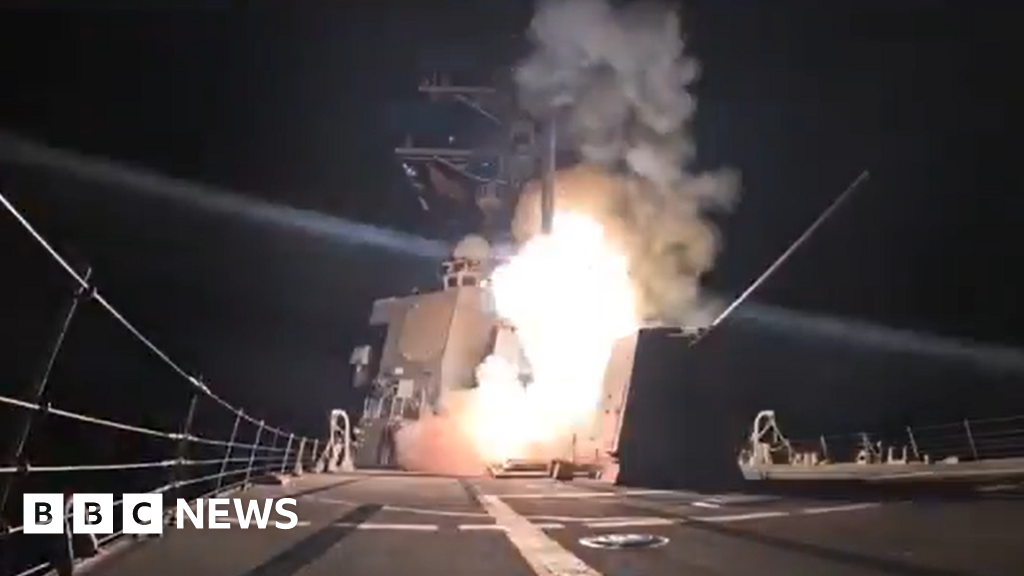
Jaroslav Lukiv and Sean Seddon
The United States has conducted targeted airstrikes against militant camps affiliated with the Islamic State (IS) group in Nigeria’s northwestern Sokoto state, a region where these extremist factions have been actively attempting to establish a significant operational presence. The US military confirmed the strikes, which targeted known IS enclaves in Sokoto, a state bordering Niger, and indicated in an initial assessment that the operation resulted in multiple fatalities among the militants. Former US President Donald Trump, in a statement released on Christmas Day, characterized the strikes as "deadly" and vehemently condemned the group, referring to them as "terrorist scum" who have "been targeting and viciously killing, primarily, innocent Christians."
However, Nigerian Foreign Minister Yusuf Maitama Tuggar offered a contrasting perspective, informing the BBC that the operation was a "joint operation" and emphatically stated that it "had nothing to do with a particular religion." Tuggar elaborated that the strikes were the culmination of meticulous planning that had been underway "for quite some time," leveraging intelligence provided by the Nigerian government. He did not rule out the possibility of further operations, emphasizing that the timing of the strikes, which occurred late on Thursday, was dictated by operational necessity rather than any religious observance. "It could be any other day – it is to do with attacking terrorists who have been killing Nigerians," he asserted.
For years, the Nigerian government has been engaged in a protracted struggle against a spectrum of jihadist organizations, including the notorious Boko Haram and various factions aligned with the Islamic State. Historically, this conflict has been concentrated in the country’s northeastern regions, hundreds of miles distant from Sokoto state. The recent US intervention in the northwest signals a potential shift in the operational theater of these extremist groups and the international response to their growing influence.
Residents in the vicinity of the strikes described the terrifying experience. Haruna Kallah, a resident of Jabo village in Sokoto state, recounted to the AFP news agency, "We heard a loud explosion which shook the whole town and everyone was scared." Another local, Umar Jabo, shared with BBC News, "Everyone thought it was a plane. It crashed in fields," an account corroborated by social media footage depicting onlookers filming the fiery aftermath of the strike in a rural area. However, Umar Jabo also refuted the notion that IS fighters were present or killed in Jabo, stating, "Here in Jabo, we live peacefully, and there is no conflict between us and Christians."
This incident occurs against a backdrop of persistent US criticism of the Nigerian government’s handling of religious freedom and its efforts to protect Christian communities from jihadist violence. The Trump administration had previously designated Nigeria as a "country of particular concern," a classification that carries implications for sanctions against nations deemed to be engaged in "severe violations of religious freedom." The US military had been formally directed in November to prepare for potential intervention in Nigeria, a directive that underscored growing US concerns about the security situation.
At that time, an advisor to Nigerian President Bola Tinubu had conveyed to the BBC that militants were indiscriminately targeting individuals "across faiths" and stressed the importance of any US military action being conducted in a collaborative manner. Nigeria, Africa’s most populous nation with an estimated 220 million people, is characterized by a roughly equal division between Christian and Muslim populations, making inter-religious harmony a critical component of national stability.
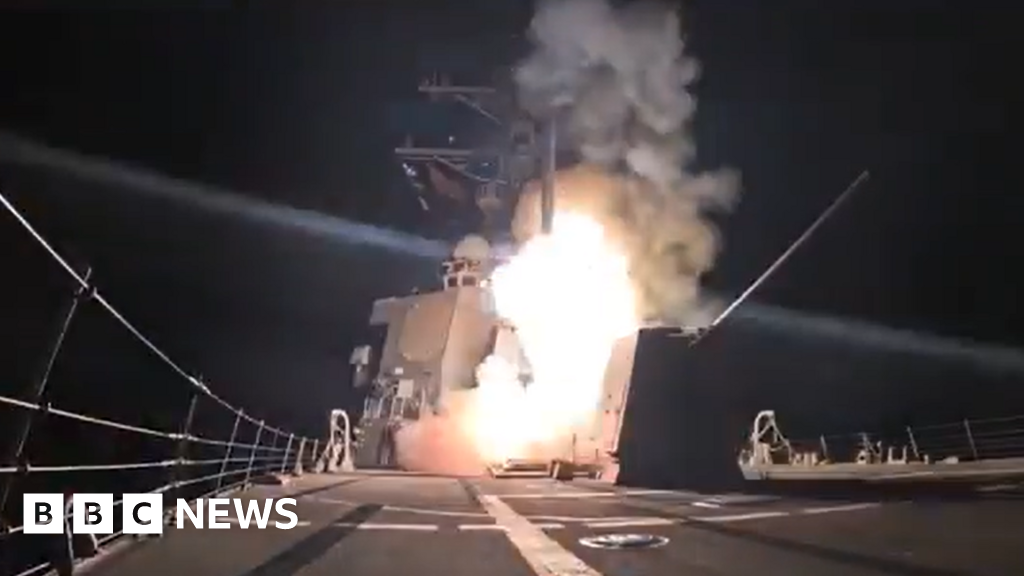
In his Christmas Day social media post, President Trump declared his commitment to "not allow Radical Islamic Terrorism to prosper." US Secretary of Defense Pete Hegseth expressed gratitude for the "Nigerian government support & cooperation" on X, formerly Twitter, and extended "Merry Christmas!" The Pentagon subsequently released a brief video that appeared to capture the launch of a missile from a naval vessel, visually underscoring the US military’s engagement.
The Nigerian foreign ministry issued a statement on Friday morning acknowledging the nation’s engagement in "security co-operation with international partners, including the United States of America, in addressing the persistent threat of terrorist and violent extremism." The statement further confirmed that this cooperation "has led to precision hits on terrorist targets in Nigeria by air strikes in the North West."
The insurgency waged by groups like Boko Haram and its IS-affiliated offshoots has inflicted immense suffering across northeastern Nigeria for over a decade, resulting in tens of thousands of deaths. According to Acled, an organization that monitors and analyzes political violence globally, the vast majority of victims in this conflict have been Muslims.
Bulama Bukati, a Nigerian human rights lawyer and conflict analyst, posited that the recent strikes likely targeted a comparatively new IS-aligned splinter group originating from the Sahel region, which has recently redeployed its fighters into Nigeria. He explained to BBC World Service that while the larger IS-linked entity, the Islamic State West Africa Province (ISWAP), operates primarily in the northeast, a smaller faction, locally known as Lakurawa, has been endeavoring to establish a foothold in Sokoto state. Bukati elaborated, "They started slipping into Nigeria in 2018 but over the past 18 months or two years they established camps in Sokoto state and Kebbi state. They have been launching attacks and imposing their social laws over people in Sokoto state over the past 18 months or so."
A local lawmaker, Bashar Isah Jabo, vehemently denied the presence of any IS or Lakurawa operatives in his village, emphasizing that the area targeted by the missile strike was situated less than 500 meters from a hospital. This proximity raises serious concerns about potential collateral damage and the precision of the strike.
Analysis by BBC Monitoring has indicated that pro-IS social media channels have been actively reporting on frequent US reconnaissance flights over Sokoto and the northeastern state of Borno, the stronghold of ISWAP. This suggests a heightened level of intelligence gathering and surveillance by the US in these critical regions.
These strikes in Nigeria represent the second significant US military intervention targeting the Islamic State in recent weeks. The previous week, the US announced a "massive strike" against IS in Syria, involving fighter jets, attack helicopters, and artillery that reportedly hit over 70 targets, with participation from Jordanian aircraft. That operation was launched in retaliation for the deaths of three Americans – two soldiers and a civilian interpreter – who were killed in an ambush. The dual interventions underscore a renewed US focus on combating IS and its affiliates across different theaters of operation.


 Roy Suryo
 Nana Banana
 atisusanti
 Nakalama John