
 Roy Suryo
Flu, a perennial winter threat that claims thousands of lives and strains healthcare systems annually, is currently a subject of considerable debate and varying public perception. While flu is a serious illness that should never be underestimated, the narrative surrounding this particular winter season has been marked by conflicting descriptions, ranging from "superflu" and "unprecedented" from official bodies like NHS England to more measured assessments from scientific experts who argue the current strain is not significantly out of the ordinary. This divergence has led to accusations of "crying wolf" and a questioning of the communication strategies employed by health authorities. So, what is truly happening with flu this winter, and are there genuine reasons for alarm or is the public discourse amplifying a less severe reality?
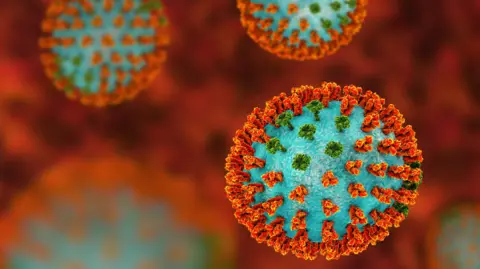
Concerns were initially high, as reported in early November, with predictions that this flu season had the potential to be the most severe in a decade. These anxieties stemmed from observations by scientists monitoring global influenza viruses. In June, they identified seven new mutations in a strain of influenza known as H3N2. This evolved variant, rapidly becoming the dominant form of H3N2, was designated subclade-K. The flu season commenced a month earlier than usual in the UK, fueling speculation that this mutated virus might possess an enhanced capacity for widespread transmission. Critically, by the time these mutations were identified, it was too late to reformulate the seasonal flu vaccine to specifically target them, adding another layer to the early concerns.

However, as the season has progressed, the reality has unfolded as a more typical flu season rather than the feared "superflu." Professor Christophe Fraser, who is analyzing viral spread at the Pandemic Sciences Institute at the University of Oxford, stated that the virus was "basically spreading at a very similar speed to previous years, it was towards the upper end, but it wasn’t an outlier." His team’s preliminary findings suggest that the mutations did indeed confer a slight advantage to the virus, allowing it to evade human immunity by an estimated 5-10% more than usual. It remains unclear whether this increased transmissibility affects all age groups equally or if it is more pronounced in children and young adults, who have historically experienced less flu and have been disproportionately affected this season.
Historically, H3N2 strains tend to pose a greater risk to the elderly, but there is currently no definitive evidence to suggest that this year’s virus is exhibiting greater severity than anticipated. Early analyses of the seasonal flu vaccine also indicate that its effectiveness is consistent with previous years, despite initial fears of a mismatch. Dr. Jamie Lopez Bernal, a consultant epidemiologist at the UK Health Security Agency (UKHSA), acknowledged the unusual aspects of the season, such as its early onset and the notable viral evolution. However, he concluded that "overall, in terms of the impact on the NHS and the impact on people’s health, we’re seeing a broadly typical flu season."
While there are suggestions that flu activity may already be reaching its peak, this assessment comes with considerable uncertainty. The upcoming Christmas period, a time of increased social gatherings, could potentially lead to a surge in infections, particularly among older and more vulnerable individuals. Furthermore, there are indications that a different influenza strain, H1N1, is gaining traction across Europe and could contribute to an increase in cases in the UK.

Despite these nuances, the public perception of the flu season has been significantly shaped by the language used in media reports and official statements. Statistical comparisons have been employed to portray an alarming picture, with one instance highlighting flu cases as "an incredible 10 times higher" than in 2023. While technically accurate in a specific context, this comparison was based on an earlier start to the season, akin to saying a train arrived in record time simply because it departed earlier, not because it traveled faster.
NHS England’s national medical director, Professor Meghana Pandit, contributed to the heightened concern by labeling the situation an "unprecedented wave of super flu." This terminology has drawn criticism, with the British Medical Association suggesting that flu has been used for scaremongering purposes, potentially coinciding with industrial action by resident doctors. The term "superflu" itself is not a scientifically recognized description, and the BBC’s health team has found no expert who deems it an accurate characterization.
Professor Fraser expressed his reservations about the term, stating, "I don’t think it’s a helpful term, there isn’t a particularly unusual set of symptoms, there’s no indication of it being associated with exceptional severity, exceptionally rapid spread or exceptional health impact." Similarly, Professor Nicola Lewis, director of the World Influenza Centre at the Francis Crick Institute and a leading flu scientist, commented that the virus is "not particularly unusual" and that she saw "no evidence" of it being "particularly different," concluding that "superflu wouldn’t be my description." Even Professor Jonathan Van-Tam, former deputy chief medical officer for England during the pandemic, expressed his confusion, posting, "I’m very unclear what is meant by the rather silly term of ‘superflu’."
The consistent use of escalating language to describe winter illnesses raises concerns about a potential "cry wolf" effect. Public health campaigns that encourage flu vaccination are vital for saving lives, and last winter alone, the jabs were estimated to have prevented approximately 100,000 hospital admissions. However, experts are beginning to question whether the heightened rhetoric, amplified since the COVID-19 pandemic, could erode public trust in official health advice. Previous winters have seen warnings of "tripledemics" (flu, Covid, RSV), which later expanded to "quademics" with the addition of norovirus. This year’s "superflu" label adds to a pattern of increasingly alarming descriptions.
Dr. Simon Williams, a researcher in psychology and public health at Swansea University, highlights the challenges posed by the "current language around every winter being ‘the worst’ in some way or another." He argues that this can lead to a desensitization, where the public becomes "numb" to the advice, diminishing its impact. Dr. Williams cautions against the "over-using the narrative that viruses will overwhelm the NHS" when, in reality, the healthcare system has not reached a point where it is unable to provide essential and emergency services. He advocates for a "fine balance" between raising awareness and avoiding "fear-messaging or being overly alarmist, which can backfire."
Virologist Professor Jonathan Ball of Nottingham University concurs with these concerns. He states, "I think it is a concern to use words like super flu, when we may one day experience a real super flu." He emphasizes the need for extreme caution in communicating with the public, warning of the risk of "cry wolf" scenarios. The current winter flu season, while presenting its unique characteristics, appears to be a complex interplay of evolving viral strains, early onset, and a communication landscape that has amplified concerns, leading to a divergence between scientific assessment and public perception.




 George Anjay
 Ramos Leo
 atisusanti
 Nakalama John