Roy Suryo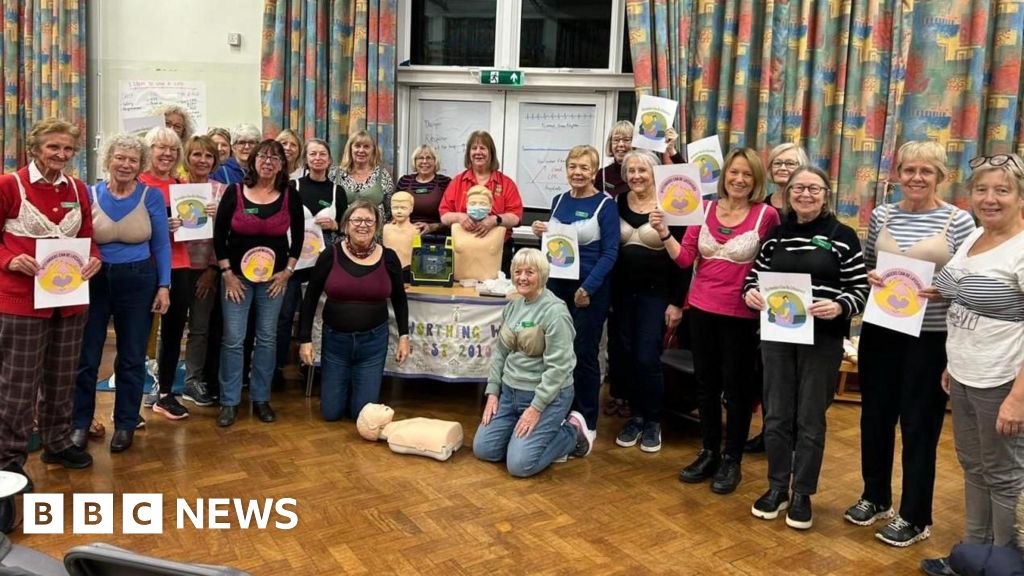
A dedicated first responder from Worthing is lending her voice and expertise to a vital campaign aimed at rectifying a significant gender disparity in life-saving emergency treatment during cardiac arrests. Research has starkly revealed that women are a staggering 27% less likely than men to receive cardiopulmonary resuscitation (CPR) from bystanders when they experience a cardiac arrest. Campaigners and medical professionals are pointing to a complex interplay of factors contributing to this alarming statistic, including societal stigma and a pervasive uncertainty surrounding the practicalities of removing a bra to apply a defibrillator pad, a crucial step in delivering an electrical shock to restore a normal heart rhythm.
The #BraOffDefibOn initiative, a grassroots movement that gained momentum in 2022, is at the forefront of this crucial awareness campaign. Its core mission is to elevate public understanding and foster a sense of normalcy around the straightforward, yet often overlooked, necessity of bra removal when administering defibrillation. By demystifying this aspect of emergency care, the campaign strives to ensure that women receive an equitable chance of survival, mirroring the outcomes experienced by men during these critical medical emergencies.
Sally Holmes, a highly active community first responder serving the Worthing area, has become a passionate advocate for this cause. In the current year alone, Ms. Holmes has conducted an impressive array of CPR training sessions, totaling 54 in number, and has successfully educated 1,165 individuals in the vital techniques of CPR and defibrillator use. Her commitment extends beyond mere instruction; she aims to empower individuals with the confidence and knowledge necessary to act decisively and effectively in the face of a life-threatening event.
"I am deeply passionate about equipping people with the confidence to perform CPR and to proficiently use a defibrillator, as these skills possess the profound potential to save a life," Ms. Holmes stated, emphasizing the immediate and tangible impact of accessible emergency medical training. She believes that by proactively teaching CPR and the correct application of defibrillator devices, the campaign is playing an instrumental role in dismantling deeply ingrained societal taboos and directly addressing the inequalities that persist in emergency medical care. The sessions she leads are designed not just to impart technical skills but also to build emotional resilience and overcome any hesitation individuals might feel in a high-pressure situation.
The #BraOffDefibOn campaign was conceived and driven by Jenny Legg, a dedicated learning and development professional who recognised the critical need for intervention. Ms. Legg articulates the campaign’s central message with a disarming simplicity that underscores its life-saving importance: "Removing a bra can genuinely make the difference between life and death." This straightforward statement encapsulates the stark reality that seemingly minor practical considerations can have profound, life-altering consequences.
The genesis of the #BraOffDefibOn campaign can be traced back to anecdotal evidence and growing concern within the emergency medical services community. Paramedics and first responders frequently encountered situations where hesitation or discomfort among bystanders delayed the crucial application of defibrillator pads to female patients. This delay, even if only for a matter of minutes, can significantly reduce the chances of survival from a sudden cardiac arrest. The campaign seeks to address this by normalizing the action and educating the public on its necessity.
Research commissioned by various health organisations has consistently highlighted the gender gap in bystander CPR. Studies have indicated that bystanders are more reluctant to touch women, particularly to remove clothing, compared to men. This reluctance is often attributed to societal norms and ingrained politeness, which can unfortunately translate into a fatal hesitation in emergency situations. The #BraOffDefibOn campaign directly confronts these societal barriers by framing the removal of a bra not as an act of immodesty, but as a critical medical intervention.

The training sessions led by Ms. Holmes in Worthing are a tangible manifestation of the campaign’s efforts. These sessions go beyond the standard CPR curriculum by specifically addressing the unique challenges that may arise when treating female cardiac arrest patients. Participants are encouraged to ask questions, voice their concerns, and practice the necessary steps in a supportive and non-judgmental environment. The use of bra-like garments during training simulations helps to desensitize individuals and build confidence in performing this action when it truly matters.
"It’s about making sure that everyone, regardless of gender, has the best possible chance of survival," Ms. Holmes reiterated. "When someone collapses, the immediate priority is to restart their heart. Any hesitation or awkwardness can cost precious seconds. We need to empower people to overcome these minor social barriers for the sake of a life." Her experience on the front lines has provided her with firsthand accounts of how crucial swift and decisive action is. She often recounts scenarios where a few moments of indecision could have had devastating consequences.
The campaign also aims to educate the public about the mechanics of defibrillators. Modern defibrillators are designed with integrated pads that are typically placed on the chest. While some individuals might worry about the difficulty of removing a bra, the pads are designed to be applied quickly, often over clothing if absolutely necessary, though direct skin contact is ideal for optimal conductivity. The #BraOffDefibOn message is that while full access is preferred, the immediate need for defibrillation overrides any potential embarrassment.
Jenny Legg’s vision for the campaign extends to advocating for increased public access to defibrillators and more widespread CPR training. She believes that by making these resources more readily available and by fostering a culture where immediate action is encouraged and normalized, the gender gap in cardiac arrest survival rates can be significantly reduced. The campaign’s presence on social media platforms has also been instrumental in disseminating its message, reaching a wider audience and sparking conversations about this often-unspoken issue.
The Worthing community has responded positively to Ms. Holmes’s training initiatives. Participants often express a newfound confidence and a greater sense of preparedness. Many comment on how the sessions have demystified the process of using a defibrillator and have made them more comfortable with the idea of intervening in an emergency. The focus on the #BraOffDefibOn aspect has been particularly impactful, prompting many women to consider their own preparedness and encouraging them to share the message with their female friends and family.
"We want to make it as easy as possible for people to help," Ms. Legg emphasized. "If someone is having a cardiac arrest, every second counts. We don’t want fear of awkwardness or uncertainty to be a barrier to saving a life. The #BraOffDefibOn message is simple: if you need to use a defibrillator on a woman, don’t hesitate. Remove the bra if necessary, apply the pads, and save a life." This direct and unambiguous messaging is crucial for cutting through any potential confusion or hesitation.
The long-term goal of the #BraOffDefibOn campaign is to see a measurable reduction in the gender disparity in cardiac arrest survival rates. By fostering greater awareness, providing accessible training, and normalizing essential emergency procedures, the campaign, championed by dedicated individuals like Sally Holmes in Worthing, is working towards a future where gender is no longer a factor in who receives life-saving treatment during a critical medical event. The initiative is a powerful reminder that even seemingly small societal barriers can have life-or-death consequences, and that addressing them head-on is a collective responsibility. The success of such campaigns hinges on continued public engagement, ongoing training efforts, and the unwavering commitment of individuals who understand the profound importance of every second in the fight for life.



 Nana Banana
 atisusanti
 Nakalama John
 George Anjay