
 Nana Banana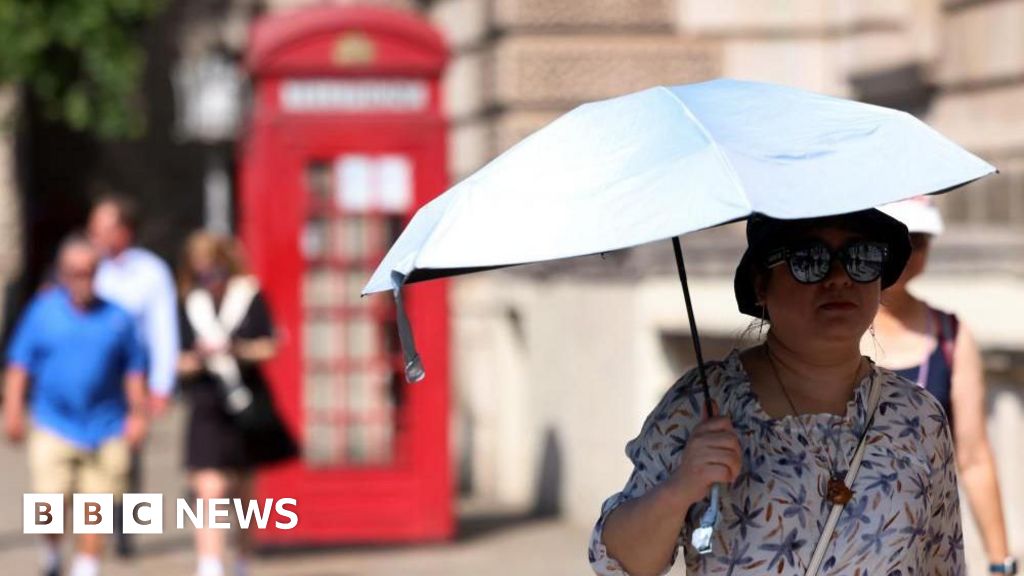
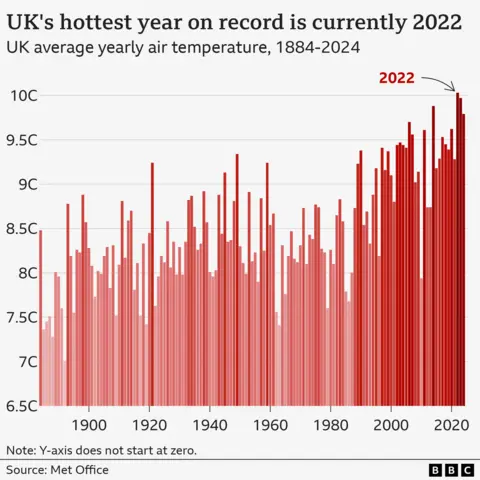
The United Kingdom is on the precipice of a grim new climate milestone, with the Met Office projecting that 2025 is set to become the warmest year since records began, underscoring a stark warning from a leading government climate adviser: "This is our future, encapsulated in data." The forecast, which points to an average UK air temperature of approximately 10.05C, marginally surpassing the 10.03C record set in 2022, serves as a powerful testament to the accelerating impact of human-caused climate change on the nation’s weather patterns.
Authored by climate researcher Mark Poynting, this alarming prediction is more than just a statistical anomaly; it signals a fundamental shift towards a "new normal" of escalating temperatures, demanding urgent attention to climate resilience and adaptation strategies. Professor Rachel Kyte, the UK’s special representative for climate, minced no words in her assessment, stressing the critical need for the country to prepare for these inevitable impacts. "Now the question is ‘how are we going to prepare ourselves and build our resilience to this?’" she challenged, highlighting the societal imperative to move beyond merely acknowledging the problem to actively mitigating its consequences.
The trajectory towards a record-breaking year for 2025 has been paved by a sustained period of warmth and a notable deficit in rainfall, particularly through the spring and summer months. This combination left vast swathes of the country vulnerable to severe droughts and an unprecedented surge in wildfires. While annual temperatures naturally fluctuate, the scientific consensus is unequivocally clear: the underlying driver of this rapidly warming trend in the UK is anthropogenic climate change.
"The pollution [carbon dioxide] we’ve put in for the last 20-30 years is now what is driving this warmth, and so not curbing emissions well enough means we’re going to continue to see these kinds of impacts," Prof Kyte elaborated. Her warning extends beyond immediate mitigation, advocating for substantial investment in "resilience" through enhanced nature-based solutions and robust infrastructure. "If we don’t invest in our adaptation now, it’s going to cost us way more," she cautioned, emphasizing the long-term economic and social ramifications of inaction.
The Met Office’s projections paint a sobering picture of a climate in rapid transformation. By the close of 2025, an astonishing statistic will emerge: all ten of the UK’s warmest years on record, dating back to the late 1800s, will have occurred within the last two decades. This concentrated cluster of record-breaking warmth vividly illustrates the speed and scale of climate change. Amy Doherty, a climate scientist at the Met Office, underscored this point, stating, "Anthropogenic [human-caused] climate change is causing the warming in the UK as it’s causing the warming across the world. What we have seen in the past 40 years, and what we’re going to continue to see, is more records broken, more extremely hot years […] so what was normal 10 years ago, 20 years ago, will become [relatively] cool in the future."
The Met Office’s methodology for this forecast involves leveraging observed temperatures up to 21 December and making a conservative assumption that the remaining days of the year will see conditions approximately 2C below the long-term December average, anticipating a slightly cooler Christmas period. While absolute certainty is impossible, this sophisticated modelling makes a record-breaking 2025 the most probable outcome. If confirmed, it would mark the sixth instance this century that the UK has established a new annual temperature record, following previous milestones in 2002, 2003, 2006, 2014, and 2022 – a frequency that is unprecedented in the historical record.
Mike Kendon, another climate scientist at the Met Office, highlighted the extraordinary nature of these shifts: "The changes we are seeing are unprecedented in observational records back to the 19th Century." He elaborated on the far-reaching implications, noting that prolonged periods of hotter days and nights pose significant health risks, particularly for elderly and vulnerable populations. The agricultural sector is also facing immense pressure, with farmers needing to reconsider traditional crop choices and adapt to altered growing seasons and water availability.
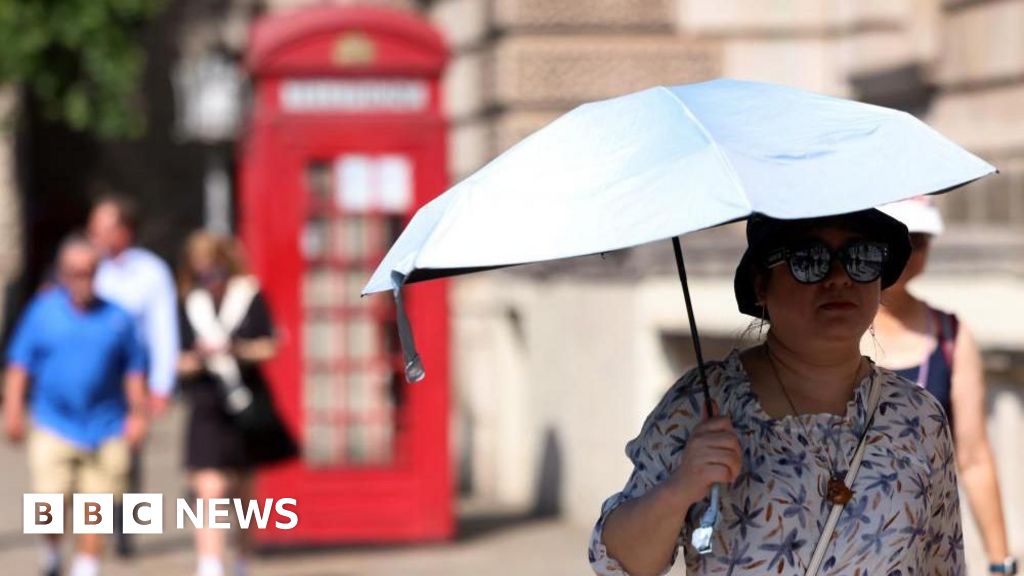
The relentless heat experienced throughout 2025 was a defining feature of the year. While the crisp air of late December might make those sweltering days seem a distant memory, both spring and summer were officially the UK’s warmest ever recorded. From March through August, every single month registered more than 2C above the long-term average observed between 1961 and 1990. Although peak temperatures of 35.8C did not reach the extreme highs of over 40C seen in July 2022, the year was characterized by repeated, prolonged hot spells. The UK Health Security Agency issued multiple heat-health alerts throughout the summer, reflecting the significant public health concern. Four distinct, albeit relatively short-lived, heatwaves swept across large parts of the country, placing considerable strain on public services and impacting daily life.
Compounding the challenges of soaring temperatures, spring and summer 2025 were also notably dry. Spring emerged as the UK’s sixth driest since 1836, exacerbating the effects of the persistent warmth by parching soils. This lack of rainfall, coupled with high evaporation rates, pushed extensive areas of the country into official drought conditions. Throughout the summer, the Environment Agency and Natural Resources Wales formally declared droughts across several regions in England and Wales, respectively. Even parts of eastern Scotland experienced "significant water scarcity," according to the Scottish Environment Protection Agency.
Recent rainfall has offered some respite, easing drought conditions in many areas, but water levels in some critical reservoirs and aquifers remain below average. Jess Neumann, associate professor of hydrology at the University of Reading, emphasized the gravity of the situation: "There’s a huge deficit to be made up, and there’s a huge implication, not just for people who are farming the land [and] growing food, but our rivers, our aquifers, our availability of drinking water." She further highlighted the immense difficulty communities face in adapting to the increasingly erratic swings between periods of intense drought and severe flooding, a phenomenon often referred to as "weather whiplash."
The prolonged dry and warm conditions provided fertile ground for wildfires, leading to a catastrophic year for blazes. By late April, the total area of the UK scorched by wildfires had already surpassed a new annual record, according to data from the Global Wildfires Information System, which dates back to 2012. The final tally for 2025 stands at over 47,100 hectares (471 sq km or 182 sq miles) burned, shattering the previous high of 28,100 hectares set in 2019. Andy Cole, chief fire officer at Dorset & Wiltshire Fire and Rescue Service, described responding to more than 1,000 wildfires in his region alone as an "unprecedented" challenge. "I’ve been doing this for over 20 years and we’ve seen a marked increase in the number of fires we’re having to deal with in the open," he told the Today programme, underscoring the growing operational burden on emergency services.
As the UK continues its warming trajectory, driven by humanity’s relentless greenhouse gas emissions, scientists anticipate an intensification of weather extremes. Dr Doherty reiterated this prognosis: "The conditions that people are going to experience are going to continue to change as they have in the last few years [with] more wildfires, more droughts, more heatwaves." However, the impacts are not confined to summer heat. "But also it’s going to get wetter in the winter half-year, so from October to March […] the rain that does fall will fall more intensely, and in heavier rain showers, causing that kind of flooding that we’ve been seeing this year as well," she added, outlining the dual threat of summer heat and winter deluges.
The UK’s experience with extreme heat in 2025 is not an isolated incident. Globally, the year is projected to be the second or third warmest ever recorded, according to the European Copernicus climate service, placing the national trends within a broader, concerning planetary context. This global backdrop, however, is complicated by a fragile international consensus on tackling climate change. Reports indicate that the United States and some other major fossil fuel-producing nations are reconsidering or rolling back their net-zero commitments. Such actions pose a significant challenge to collective efforts and could undermine the urgent, coordinated action required to avert the most catastrophic consequences of a rapidly warming world.
The call for enhanced adaptation and resilience within the UK is therefore more critical than ever. This includes developing more heat-resilient infrastructure, such as passive cooling in buildings and urban green spaces to combat the urban heat island effect. It also necessitates robust water management strategies, including sustainable drainage systems (SuDS) to manage intense rainfall and reduce flood risk, alongside widespread water conservation efforts. In agriculture, diversification of crops and adoption of drought-resistant farming techniques will be crucial. Furthermore, investing in nature, such as peatland restoration to reduce wildfire risk and enhance carbon sequestration, forms a vital part of a holistic approach. The financial implications of delaying these investments are immense, potentially leading to billions in disaster recovery costs, healthcare burdens, and economic disruption.
The additional reporting by Justin Rowlatt, Kate Stephens, and Zahra Fatima further emphasizes the breadth and depth of the climate challenge facing the UK. As the nation grapples with the reality of 2025 being its likely hottest year on record, the imperative to act decisively, both in curbing emissions and building a resilient future, has never been more pressing.


 George Anjay
 Ramos Leo
 Nakalama John

 atisusanti