Roy Suryo
"I just want to be able to do normal things and have a normal life and not have to worry," says 16-year-old Amber Woodward, a student from Abergele in north Wales, who lives with the constant anxiety of an allergic reaction triggered by plummeting temperatures. Her life has been significantly impacted since 2022, when she was diagnosed with cold urticaria, a rare condition that causes her skin to erupt in painful, itchy hives and swelling whenever the mercury drops below 12 degrees Celsius (53 degrees Fahrenheit). This allergy is so severe that even a brief exposure to cool air, such as a gust of wind on a summer day, can provoke a reaction. Amber, who is currently undertaking her A-levels, harbours a fragile hope that a new treatment involving antihistamine injections administered every four weeks might finally offer some respite from her debilitating symptoms. These reactions have not only led to her missing out on social engagements with friends but have also left her feeling deeply self-conscious about her appearance.

Amber’s struggle is compounded by the knowledge that there is no known cure for her condition, and the ever-present fear of a more severe reaction, such as anaphylactic shock, a risk that many individuals with cold urticaria face. This fear is not unfounded, as she has heard firsthand accounts from others suffering from the same ailment who have experienced such life-threatening episodes. The practicalities of living with cold urticaria are immense. Amber finds herself almost constantly wearing multiple layers of clothing, including leggings beneath her everyday attire, in an attempt to shield her skin from the cold. Despite these precautions, she often experiences a pervasive feeling of being scrutinised, as if "everyone is looking" at her whenever a breakout occurs. The implications of cold urticaria extend beyond mere discomfort. According to Anaphylaxis UK, the condition can be triggered by a variety of cold stimuli, including swimming and other water-based activities, as well as the consumption of cold foods and drinks. The charity further explains that the precise underlying cause of cold urticaria remains elusive, and its diagnosis and management can be exceptionally challenging due to the wide spectrum of symptom presentation among affected individuals.
The onset of Amber’s condition was marked by a distressing incident as she was walking home from her part-time job as a waitress. "I had bumps and was red all over my face, ears, legs and arms and was itchy," she recalls, describing the alarming rash that appeared. Initially, she suspected a reaction to something she had eaten, leading her to avoid food at home, only to experience another rash. When the symptoms recurred, she sought medical advice from her GP, who, without prescribing any medication, suggested her skin might be reacting to pollution. With Amber experiencing near-daily reactions, her mother, Dawn, became increasingly concerned. "She always made me wear double layers and she was always scared of what could happen because obviously we didn’t know much about it," Amber explains, highlighting the fear and uncertainty that permeated their household.
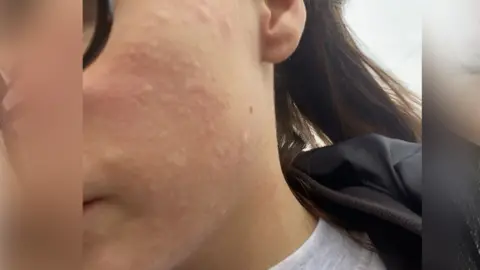
Driven by her mother’s worry and her own persistent symptoms, Amber took it upon herself to research her condition. It was during this personal investigation that she stumbled upon information about cold urticaria. This discovery prompted a referral to a dermatologist. The diagnosis, which came in 2023, initially came as a shock due to the rarity of the condition. However, this initial shock soon gave way to a profound sense of relief. "But I was kind of relieved that I had support, I was happy that someone actually believed me," she shared. Despite this validation, Amber’s symptoms have not responded favourably to conventional medication. A particularly challenging aspect of her condition is that she also develops hives and a rash after emerging from water, irrespective of the ambient temperature. This means that activities like swimming in a pool, showering, or even entering the sea can trigger a painful reaction.
The daily reality of living with cold urticaria often means Amber arrives at work and school with visible redness and hives, forcing her to decline invitations from friends. "When I go out, I always have a reaction – I walk about 20 minutes to the bus stop and I get a reaction," she states with a sigh. This social isolation is a significant burden for a teenager. "My friends are always out, and they’re always inviting me out, and I can’t really go out because of it, so I feel left out." Even simple outings require meticulous planning. "We have to plan around where we go. If it’s somewhere inside or at someone’s house that’s fine, but if it’s outside, then I can’t do it."

Despite the considerable challenges she faces, Amber remains steadfast in her optimism for the future. She expresses a fervent hope that increased research will lead to a better understanding of cold urticaria and the development of more effective treatments. "I’m hoping there’s going to be a lot more research going into this and hopefully there’s more medication out there for me," she says, her voice tinged with a longing for normalcy. Her ultimate aspiration is simple yet profound: "I just want to be able to go about my everyday things that other people can do." This desire for an unburdened existence underscores the significant, albeit invisible, impact that rare conditions like cold urticaria can have on the lives of young people. The visual evidence of her condition, captured in poignant photographs, shows her face dotted with red, itchy hives, and her thighs and knees similarly afflicted, serving as a stark reminder of the daily battle she faces against the very air she breathes.



 George Anjay
 Ramos Leo
 Nakalama John

 atisusanti