
 George Anjay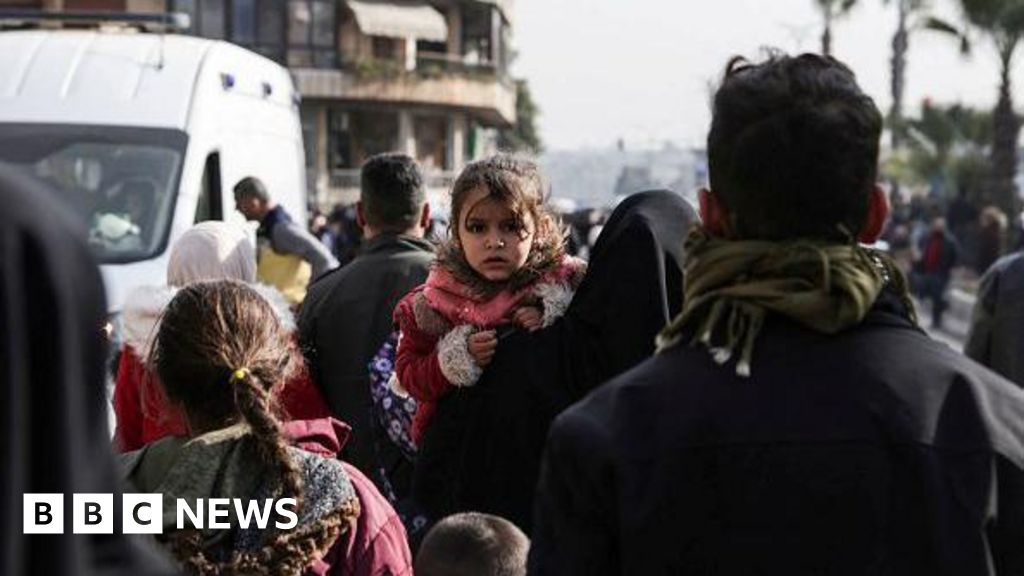
At least 12 people have reportedly been killed during two days of intense clashes between Syrian government forces and Kurdish fighters in the northern city of Aleppo, a city still reeling from years of brutal conflict. The escalating violence has triggered a fresh wave of displacement, with tens of thousands of civilians fleeing the Kurdish-majority neighborhoods of Sheikh Maqsoud and Ashrafieh. Syrian army units intensified shelling on Wednesday afternoon, designating the densely populated areas as "closed military zones," a move that has been met with condemnation from Kurdish authorities and international observers alike.
The Syrian government stated that the operation was a necessary response to alleged attacks by "armed groups" operating within these neighborhoods, asserting that the military action was "solely aimed at preserving security." However, the Kurdish-led Syrian Democratic Forces (SDF) militia alliance, which has consistently denied having any significant military presence within Aleppo’s city limits, vehemently rejected the government’s narrative. The SDF denounced the shelling as a "criminal attempt" by the government to forcibly displace the civilian population, echoing fears of a wider demographic shift in the strategically important city.
The human cost of the renewed fighting is starkly evident in the testimonies of those caught in the crossfire. One Aleppo resident, speaking to the BBC on Wednesday, described the situation as "terrible and awful," painting a grim picture of life under siege. "All my friends have left for other towns. Sometimes it is calm and suddenly war starts again," the resident recounted, highlighting the pervasive sense of fear and uncertainty that has gripped the city. The constant threat of renewed violence has made normal life impossible, forcing families to make agonizing decisions about their safety and future.
Samer Issa, a displaced man from Ashrafieh, shared his harrowing experience with the Reuters news agency, describing how he and his young children were forced to seek refuge in a mosque that had been hastily converted into a shelter. "The shelling intensified. We left because our children could no longer endure the hits and the shelling," he said, his voice thick with emotion. He described the situation as "heartbreaking," a sentiment echoed by countless others who have endured similar experiences of displacement and trauma. The images of families fleeing their homes, clutching meager belongings, are a stark reminder of the ongoing humanitarian crisis in Syria.
The current hostilities in Aleppo underscore the deeply entrenched challenges facing the government of President Ahmad al-Sharaa, who ascended to power a year ago following a successful rebel offensive that ultimately led to the ousting of Bashar al-Assad. The nation remains fractured, with various factions vying for control and influence. The fragile peace, or rather the uneasy truce, that has characterized the post-Assad era is constantly threatened by these internal power struggles.
In a significant development in March 2025, the Kurdish-led SDF, which controls a substantial swathe of northeastern Syria and commands a force of tens of thousands of fighters, had signed an agreement to integrate all its military and civilian institutions into the broader Syrian state apparatus. This accord was hailed by some as a crucial step towards national reconciliation and a unified Syria. However, the integration process has stalled, marred by mutual accusations and a lack of trust between the parties.
Both the Syrian government and the SDF have accused each other of actively attempting to undermine and derail the implementation of the integration agreement. The SDF, in particular, has expressed strong reservations about relinquishing the considerable autonomy it carved out during Syria’s protracted 13-year civil war. This autonomy was hard-won, largely through its instrumental role in assisting US-led forces in their campaign against the Islamic State (IS) group. The SDF fears that full integration would strip them of their hard-earned gains and leave them vulnerable to persecution.
The current stand-off in Aleppo carries the potential to exacerbate regional tensions and draw in external actors. Turkey, a key ally of the Syrian government, views the Kurdish militia that forms the backbone of the SDF as a terrorist organization due to its links with the Kurdistan Workers’ Party (PKK). Ankara has repeatedly expressed its concerns about the growing Kurdish influence along its southern border and has engaged in military operations in northern Syria to counter what it perceives as a threat to its national security. The clashes in Aleppo could provide Turkey with further justification for increased intervention, potentially leading to a wider proxy conflict.
The humanitarian implications of this renewed conflict are immense. Thousands of civilians, already displaced by years of war and economic hardship, are now on the move again, seeking safety and refuge in overcrowded camps or in neighboring towns and cities that are themselves struggling to cope with the influx of displaced populations. Access to essential services such as food, water, shelter, and medical care is severely limited, pushing many to the brink of survival. The international community faces a renewed call to action to provide humanitarian assistance and to mediate a de-escalation of the conflict.
The international community’s response has been largely one of concern, with calls for restraint and for the protection of civilians. However, concrete diplomatic efforts to resolve the underlying issues and to prevent further escalation have been limited. The complex web of alliances and rivalries in Syria makes any diplomatic solution a formidable challenge. The future of Aleppo, a city with a rich historical and cultural heritage, hangs precariously in the balance, its fate intertwined with the broader struggle for power and influence in a nation still grappling with the devastating consequences of prolonged conflict. The continued violence serves as a grim reminder that the road to lasting peace and stability in Syria remains long and arduous, fraught with deep-seated grievances and competing interests. The current clashes in Aleppo are not merely localized skirmishes but symptomatic of the unresolved political and security challenges that continue to plague the war-torn country.


 Ramos Leo
 atisusanti
 Nakalama John
 Roy Suryo