
 Nana Banana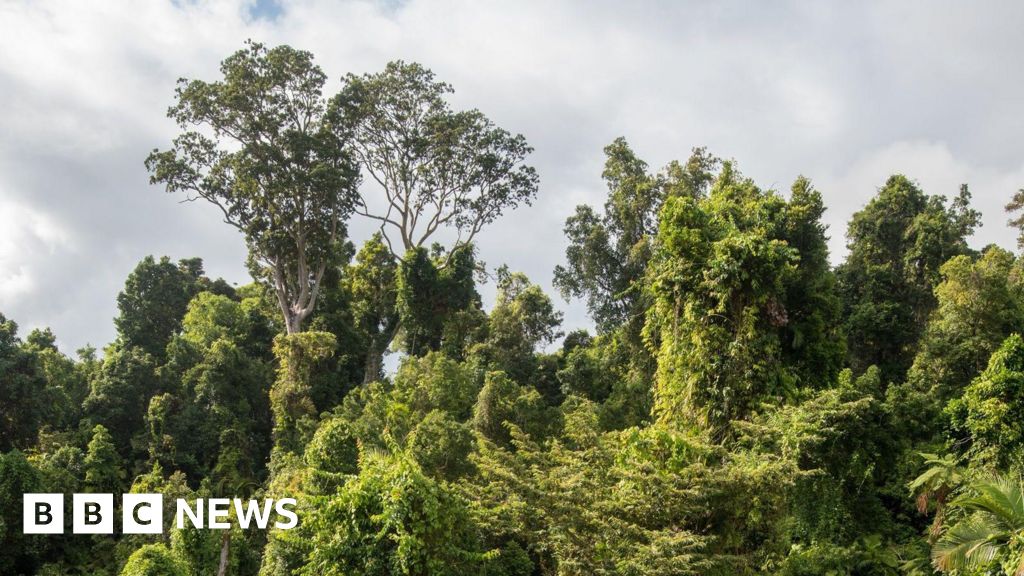
Australia’s vital tropical rainforests, renowned for their ancient ecosystems and unparalleled biodiversity, have reached a critical tipping point, becoming the first in the world to transition from vital carbon sinks to net carbon emitters. This alarming shift, unequivocally linked to the escalating impacts of climate change, was unveiled in a groundbreaking study published in the prestigious science journal Nature, sending ripples of concern through the global scientific community and policymakers alike.
For millennia, rainforests have been celebrated as nature’s most efficient carbon capture and storage systems, earning them the moniker "carbon sinks." These lush, verdant ecosystems naturally absorb vast quantities of atmospheric carbon dioxide (CO2) through photosynthesis, storing it within their immense biomass – the trunks, branches, leaves, and roots of their trees. The cycle typically sees new tree growth offsetting the carbon released by the decomposition of dead organic matter, maintaining a delicate balance that actively mitigates global warming. However, the comprehensive study, meticulously analyzing nearly five decades of data from Queensland’s ancient forests, reveals a stark reversal of this fundamental ecological process.
The research, spanning 49 years and encompassing 20 distinct forest plots across Queensland’s Wet Tropics – a UNESCO World Heritage site known for its exceptional natural beauty and ecological significance, including parts of the iconic Daintree Rainforest – found a disturbing trend: extreme environmental conditions are causing an unprecedented surge in tree mortality, outpacing the rate of new growth. This imbalance means that the forests are now releasing more carbon through decomposition and reduced absorption than they are taking in, effectively exacerbating, rather than alleviating, climate change.
Dr. Hannah Carle, the lead author of the study from Western Sydney University, underscored the profound implications of these findings for global climate action. "Current models may significantly overestimate the capacity of tropical forests to help offset fossil fuel emissions," Dr. Carle stated, highlighting a critical flaw in current international strategies to combat climate change. Many national and international emissions reduction targets, including those enshrined in the Paris Agreement, heavily rely on the presumed ongoing capacity of natural ecosystems like rainforests to absorb a substantial portion of anthropogenic carbon emissions. If these natural sinks are failing, or worse, reversing their role, the path to limiting global warming becomes considerably steeper and more challenging.
The study pinpointed that the shift from carbon absorber to emitter occurred approximately 25 years ago, when the sheer volume of dead woody biomass – the trunks and branches of deceased trees – began to release more carbon through decomposition than the surviving and newly growing trees could absorb. "Forests help to curb the worst effects of climate change by absorbing some of the carbon dioxide released from burning fossil fuels, but our work shows this is under threat," Dr. Carle reiterated, emphasizing the urgency of the situation.
A primary driver behind this escalating tree mortality, according to Dr. Carle, is the undeniable fingerprint of climate change itself. The research detailed a significant increase in extreme temperatures, prolonged periods of atmospheric dryness, and more frequent and severe droughts observed across the study region in recent decades. These climatic stressors place immense pressure on rainforest trees, leading to heat stress, reduced photosynthetic efficiency, and increased vulnerability to pests and diseases. The lack of sufficient moisture during dry spells can lead to hydraulic failure within trees, essentially starving them of water, even in typically humid rainforest environments.
Beyond the insidious creep of rising temperatures and aridity, the report also identified an increase in the frequency and intensity of cyclones as a major contributing factor to the heightened tree death rates. Australia’s tropical north is historically prone to cyclones, but climate change models predict an increase in the proportion of high-intensity storms. These powerful weather events cause widespread physical damage, uprooting ancient trees, snapping trunks, and stripping canopies. The resulting open gaps in the forest canopy alter microclimates, increasing light and heat exposure on the forest floor, making it harder for new, delicate seedlings to establish and thrive, further hindering the forest’s ability to regenerate and sequester carbon.
Dr. Carle described the observation that Australia’s moist tropical forests are the first globally to exhibit this dramatic change in woody biomass dynamics as "really significant." She chillingly concluded, "It could be a sort of canary in the coal mine." This powerful metaphor suggests that what is happening in Queensland’s rainforests could be an early warning signal for other tropical rainforests around the world, from the Amazon to the Congo Basin, which are also facing increasing pressure from climate change, deforestation, and human encroachment. If this trend becomes global, the implications for the planet’s climate system would be catastrophic, accelerating warming beyond current projections.
Senior author Patrick Meir echoed these grave concerns, describing the results as "very concerning." Speaking to news agency AFP, he articulated a grim prediction: "It’s likely that all tropical forests [will] respond fairly similarly" to the pressures observed in Australia. While acknowledging that more extensive data and research would be crucial to make a definitive global assessment, his statement underscores the potential for a widespread ecological crisis in Earth’s most biodiverse and carbon-rich terrestrial ecosystems.
The revelation casts a long shadow over Australia’s domestic and international climate commitments. As one of the world’s biggest per capita polluters, Australia has recently updated its carbon reduction targets, pledging to cut emissions by at least 62% compared to 2005 levels by 2030. While this represents a significant increase from previous targets, the nation continues to face global criticism for its persistent reliance on, and expansion of, fossil fuel industries. Just recently, the Australian government controversially allowed one of the country’s largest gas projects, Woodside’s North West Shelf, to continue operating for another 40 years, an approval that Lock the Gate Alliance described as "reckless." Such decisions, experts argue, directly contradict the urgency implied by findings like those from the Queensland rainforest study.
Moreover, the rainforest study follows on the heels of another stark warning issued last month, which detailed the devastating impact of climate change across Australia. That report found that the continent had already experienced warming of above 1.5°C above pre-industrial levels, a threshold that scientists warn should not be crossed globally to avoid the most dangerous impacts of climate change. The report unequivocally stated that no community would be immune from "cascading, compounding and concurrent" climate risks, including intensifying bushfires, more severe floods, and devastating marine heatwaves impacting the Great Barrier Reef. The transformation of rainforests into carbon emitters adds another layer of profound concern to this already dire prognosis, indicating that Australia’s natural heritage is not only vulnerable to climate change but is also actively contributing to its acceleration.
The findings from Queensland serve as an urgent call to action, not just for Australia but for the entire world. They emphasize that the window for mitigating the worst effects of climate change is rapidly closing, and that relying on natural systems to absorb our emissions is a strategy that can no longer be taken for granted. To avert a global ecological catastrophe, there must be an immediate and decisive global transition away from fossil fuels, coupled with robust conservation efforts and sustainable land management practices to protect the remaining vital carbon sinks on Earth. The canary in the coal mine has sung its warning; ignoring it would be at our collective peril.


 Ramos Leo
 Nakalama John
 George Anjay