George Anjay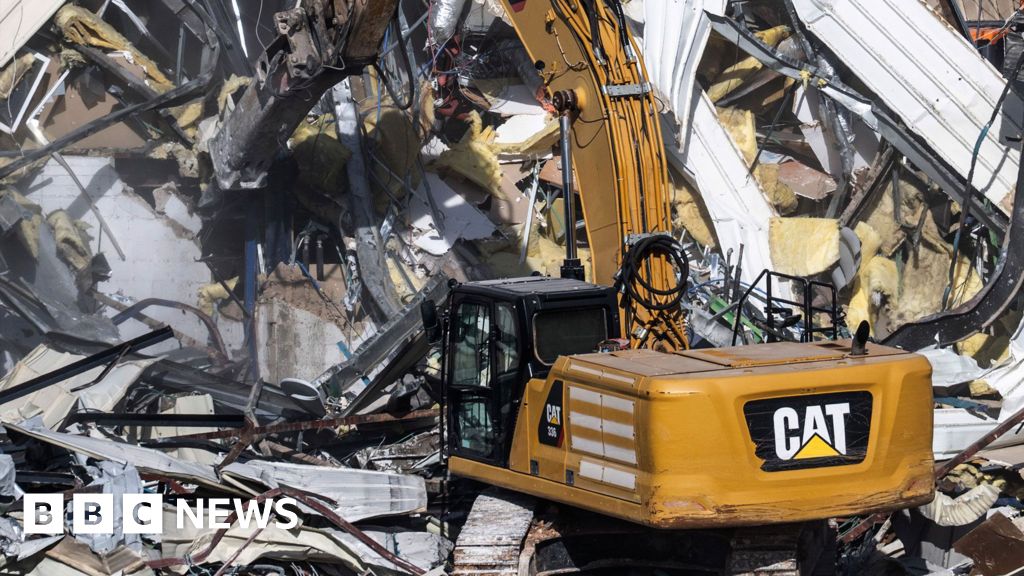
Israel asserts unequivocal ownership of the land upon which the Unrwa compound is situated, a claim that underpins its justification for the demolition. This territorial dispute is intricately woven into the broader context of the Israeli-Palestinian conflict, where land ownership and sovereignty are perpetually contested. The Israeli government has further levied severe accusations against Unrwa, alleging that the agency has become infiltrated by members of Hamas, the militant group designated as a terrorist organization by numerous countries, including Israel and the United States. These accusations, particularly those concerning the alleged involvement of Unrwa staff in the October 7th Hamas-led attacks on Israel, have cast a long shadow over the agency’s operations and have been a primary driver for the Israeli government’s aggressive stance.
Unrwa, in response to these grave allegations and the subsequent demolition, maintains a steadfast defense of its position. The agency asserts that its premises, by virtue of their international status, are protected under established international conventions. These conventions, designed to safeguard humanitarian operations and personnel, theoretically provide a shield against such forceful actions. While Unrwa has acknowledged that a small number of its staff, specifically nine individuals, may have been involved in the October 7th attacks, it vehemently disputes broader accusations of systemic infiltration or widespread complicity. The agency emphasizes that Israel has not presented sufficient evidence to substantiate claims of a more extensive involvement by its personnel in the attacks. This discrepancy in evidence and interpretation forms a critical fault line in the escalating conflict between Israel and Unrwa.
The demolition itself is not an isolated incident but rather the culmination of a period of intense scrutiny and pressure on Unrwa. Following the October 7th attacks, Israel intensified its efforts to delegitimize and dismantle Unrwa’s presence and operations, particularly in East Jerusalem, which Israel considers its unified capital but is internationally recognized as occupied Palestinian territory. The Israeli government has, for years, voiced its opposition to Unrwa’s mandate, arguing that the agency perpetuates the refugee issue rather than seeking a resolution. However, the recent accusations of Hamas infiltration have provided a new and potent impetus for their campaign.
The compound in East Jerusalem served as a critical nerve center for Unrwa’s multifaceted activities. It housed administrative offices responsible for coordinating aid distribution, managing educational programs for Palestinian children, providing healthcare services, and offering essential social support to a significant portion of the Palestinian population in the West Bank and Gaza Strip, as well as to Palestinian refugees in East Jerusalem. The demolition of these facilities not only disrupts these vital services but also sends a chilling message to the refugee community about their future and the reliability of international support.
The international community’s reaction to the demolition has been mixed, reflecting the complex geopolitical landscape and differing perspectives on the Israeli-Palestinian conflict. Some nations, particularly those who have historically been strong supporters of Unrwa, have expressed deep concern and condemned the demolition as a violation of international law. They argue that such actions undermine humanitarian efforts and will exacerbate the suffering of Palestinian refugees. Others, however, have adopted a more cautious stance, acknowledging Israel’s security concerns while also calling for due process and adherence to international conventions. The United States, a major funder of Unrwa, has been particularly vocal in its calls for transparency and accountability, while also grappling with the implications of the allegations against the agency.
The BBC’s correspondent, John Sudworth, reporting directly from the scene of the demolition, offers a ground-level perspective on the unfolding events. His dispatches paint a vivid picture of the physical destruction, capturing the sights and sounds of heavy machinery tearing down the buildings. Sudworth’s reporting likely details the atmosphere at the site, the presence of Israeli security forces, and any reactions from local residents or Unrwa staff who may have been present or observing the demolition. His presence underscores the international media’s attention to this significant development and the ongoing efforts to document the human impact of such actions.
The implications of this demolition extend far beyond the physical destruction of a compound. It signals a potential hardening of Israel’s stance towards Unrwa, raising questions about the agency’s ability to operate effectively in East Jerusalem and potentially in other areas under Israeli control. The accusations of Hamas infiltration, if substantiated by irrefutable evidence, would indeed pose a profound challenge to Unrwa’s mandate and its commitment to neutrality. However, the agency’s own defense, coupled with the lack of conclusive proof presented by Israel for widespread involvement, creates a complex and contentious narrative.
The international law aspect of the demolition is a key point of contention. Unrwa’s argument that its premises are protected under international conventions, such as the Geneva Conventions and the Convention on the Privileges and Immunities of the United Nations, is a significant legal challenge to Israel’s actions. These conventions typically grant certain protections to UN facilities and personnel, ensuring the unimpeded delivery of humanitarian aid. The violation of these conventions, if proven, could have serious repercussions for Israel on the international stage.
The specific nature of the land ownership dispute is also crucial. Israel’s claim to ownership in East Jerusalem, a territory captured in the 1967 Six-Day War and subsequently annexed in a move not recognized by the international community, is a central element of its legal and political arguments. However, international law generally prohibits the destruction of property in occupied territories without a compelling military necessity, and even then, with specific limitations. The question of whether Israel’s claims of land ownership override the protections afforded to a UN agency under international conventions remains a point of intense legal debate.
The broader geopolitical ramifications of this demolition are considerable. It occurs at a time of heightened regional instability and ongoing efforts to manage the aftermath of the October 7th attacks and the subsequent conflict in Gaza. The destruction of Unrwa’s headquarters in East Jerusalem could further complicate diplomatic efforts to de-escalate tensions and find a lasting resolution to the Israeli-Palestinian conflict. It also raises concerns about the potential for further erosion of humanitarian infrastructure and support for Palestinian refugees, a population already facing immense challenges.
The BBC’s reporting by John Sudworth from the site is invaluable in providing an on-the-ground perspective. His dispatches would likely detail the scale of the demolition, the types of buildings being targeted, and the overall impact on the immediate surroundings. He may also capture interviews with local residents, Unrwa representatives, or Israeli officials, offering a spectrum of viewpoints on the event. The visual evidence provided by his reporting will be crucial in conveying the gravity of the situation to a global audience.
The narrative surrounding the demolition is one of competing claims, deeply entrenched political positions, and significant humanitarian consequences. Israel’s pursuit of what it views as legitimate security interests and territorial claims clashes directly with Unrwa’s mandate to provide essential services and uphold the rights of Palestinian refugees under international law. The destruction of the Unrwa headquarters in East Jerusalem is a potent symbol of this ongoing conflict, and its long-term implications for the region and the international humanitarian system remain a cause for significant concern. The world watches as this critical humanitarian infrastructure is systematically dismantled, with the fate of countless refugees hanging in the balance. The questions of accountability, adherence to international law, and the future of humanitarian assistance in the region are now more pressing than ever. The continued reporting from the site by journalists like John Sudworth is essential for ensuring transparency and documenting the human cost of these actions.



 Ramos Leo
 Nakalama John