Nana Banana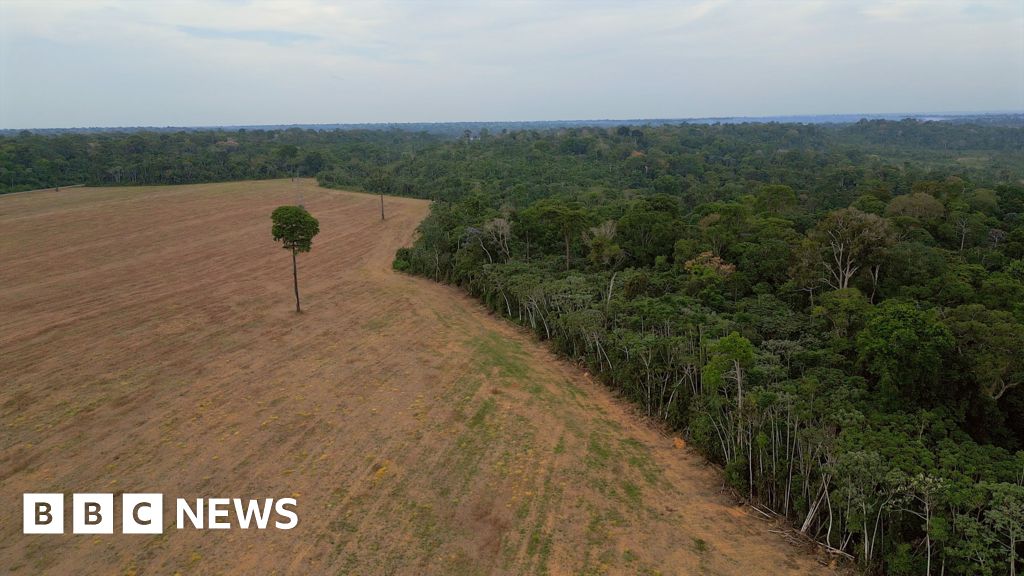
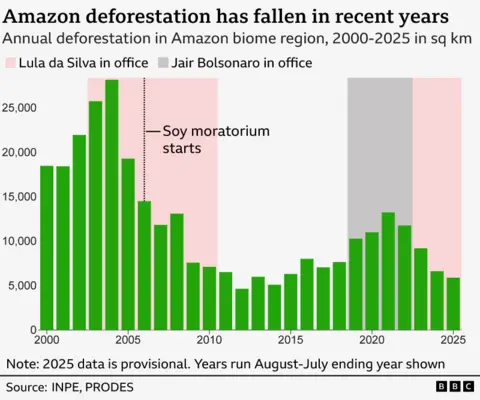
The Amazon Soy Moratorium, an agreement forged almost two decades ago, stands as a testament to collaborative conservation efforts. It specifically prohibits the sale of soya grown on land cleared after July 2008 within the Amazon biome. This voluntary pact was initially signed by a coalition of environmental organizations, major global food companies like Cargill and Bunge, and eventually embraced by farmers themselves. Its genesis can be traced back to a vigorous campaign by the environmental pressure group Greenpeace, which exposed the direct link between soya cultivated on deforested land and animal feed used by fast-food giants such as McDonald’s. The public outcry led McDonald’s to become a vocal champion of the moratorium, cementing its influence across the supply chain.
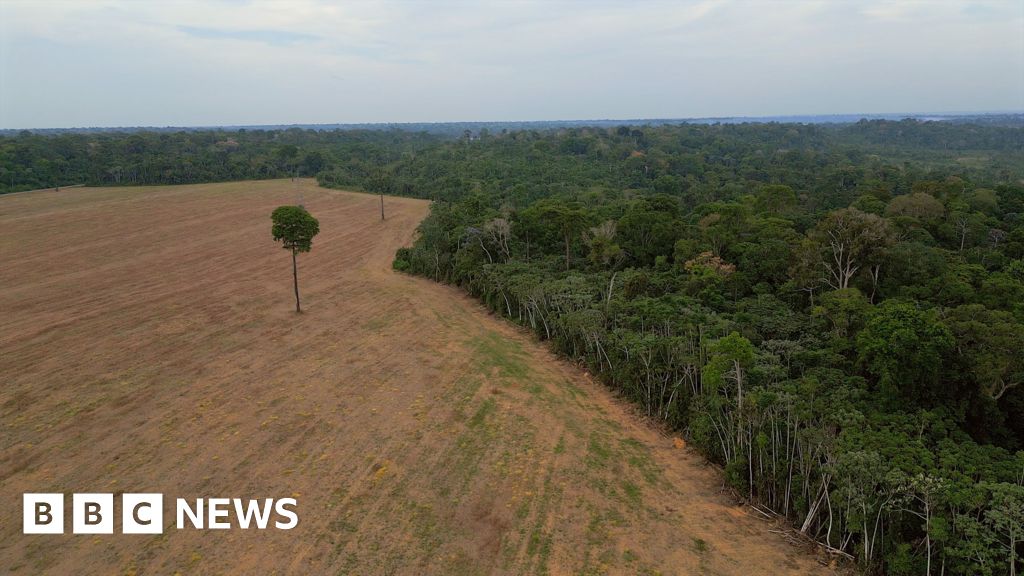
For years, the ASM has been widely credited with significantly curbing the expansion of soya cultivation into pristine Amazonian forests, thereby reducing deforestation rates. Before its implementation, the relentless clearing of forests for both soya expansion and cattle ranching were the primary drivers of Amazonian destruction. Following the agreement, forest clearance saw a dramatic decline, reaching an historic low in 2012 during President Luiz Inácio Lula da Silva’s second term. While deforestation surged under subsequent administrations, particularly under former President Jair Bolsonaro, who openly advocated for economic development in the Amazon, rates have once again begun to fall during Lula’s current presidency, underscoring the moratorium’s enduring importance and the impact of political will.
However, this critical protection is now under severe duress. Influential farming interests in Brazil, backed by a vocal group of Brazilian politicians, are aggressively pushing to dismantle these restrictions. Their central argument is that the ban constitutes an unfair "cartel," an anti-competitive measure that unduly empowers a select few large companies to dominate the Amazon’s soya trade, stifling growth for smaller and emerging farmers. Vanderlei Ataídes, president of the Soya Farmers Association of Pará state, a significant soya-producing region, articulates this sentiment: "Our state has lots of room to grow and the soy moratorium is working against this development. I don’t understand how [the ban] helps the environment. I can’t plant soya beans, but I can use the same land to plant corn, rice, cotton or other crops. Why can’t I plant soya?" This perspective frames the moratorium as an impediment to economic progress, despite the global environmental benefits it provides.
The challenge has escalated to Brazil’s highest judicial body. Opponents of the agreement recently demanded that the Supreme Court reopen an investigation into whether the moratorium exhibits anti-competitive behavior. This legal maneuvering has exposed a rift within the Brazilian government itself, with the Justice Ministry acknowledging the possibility of anti-competitive evidence, while both the Ministry of the Environment and the Federal Public Prosecutors Office have publicly and staunchly defended the moratorium, highlighting the complex interplay of economic and environmental priorities.
Environmental organizations worldwide are sounding alarm bells, warning that the removal of the ASM would be nothing short of a "disaster." Bel Lyon, chief advisor for Latin America at the World Wildlife Fund (WWF), one of the original signatories, starkly warned that suspending the moratorium "would be a disaster for the Amazon, its people, and the world, because it could open up an area the size of Portugal to deforestation." This would trigger a devastating new wave of land grabbing and forest clearance, pushing the delicate ecosystem closer to an irreversible catastrophe.
Scientists have long cautioned that the Amazon rainforest is hurtling towards a potential "tipping point" – a critical threshold beyond which the forest can no longer sustain itself. This dire prognosis is driven by the relentless combination of ongoing deforestation and the intensifying effects of climate change. Bruce Fosberg, an Amazon specialist with five decades of experience studying the forest, vividly illustrates this threat. From atop a 45-meter-high research tower in a pristine rainforest reserve, bristling with sensors monitoring water vapor, carbon dioxide, sunlight, and essential nutrients, Fosberg observes the profound changes. This tower is part of the Large-Scale Biosphere-Atmosphere Experiment (LBA), a long-term project dedicated to understanding the Amazon’s transformation.
Fosberg explains that as trees are lost to logging, fires, and heat stress, the forest releases less moisture into the atmosphere, directly reducing rainfall and exacerbating drought conditions. This creates a dangerous feedback loop: fewer trees lead to less rain, which in turn kills more trees, further diminishing the forest’s capacity to generate its own climate. "The living forest is closing down," he states, "and not producing water vapor and therefore rainfall." The ultimate fear is that vast swathes of the rainforest could transition into a savannah or dry grassland ecosystem. Such a collapse would unleash colossal amounts of stored carbon into the atmosphere, accelerate global warming, disrupt weather patterns across continents, and imperil the millions of people, along with countless plant, insect, and animal species, whose very existence depends on the Amazon.
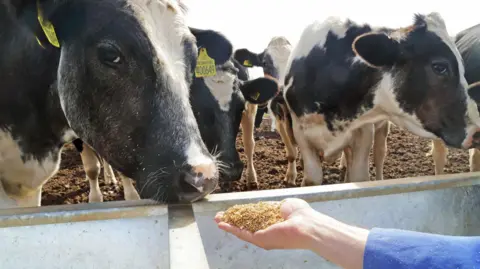
The global stakes are immense. Brazil is the world’s largest producer of soya beans, a vital crop rich in protein and a cornerstone of animal feed globally. A significant portion of the meat consumed in the UK – encompassing chicken, beef, pork, and farmed fish – relies on feeds containing soya beans, with approximately 10% of this supply originating from the Brazilian Amazon. Recognizing this interdependence, many major UK food companies, including industry giants like Tesco, Sainsbury’s, M&S, Aldi, Lidl, McDonald’s, Greggs, and KFC, have joined forces under the UK Soy Manifesto. This coalition represents around 60% of all soya imported into the UK and is a staunch advocate for the Amazon Soy Moratorium, viewing it as essential for ensuring that UK soya supply chains remain free from deforestation. In a statement released earlier this year, the signatories urged "all actors within the soy supply chain, including governments, financial institutions and agribusinesses to reinforce their commitment to the [ban] and ensure its continuation." Public sentiment in the UK mirrors this concern, with a World Wildlife Fund survey finding that 70% of respondents supported government action to eliminate illegal deforestation from UK supply chains.
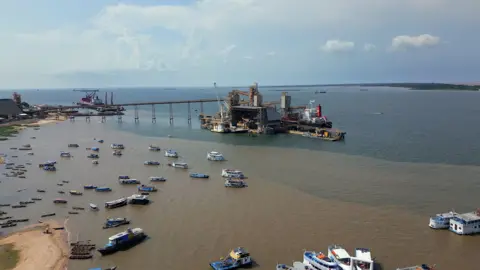
The pressure to lift the moratorium is exacerbated by broader infrastructure developments. Brazil is on the cusp of inaugurating a major new railway line, designed to stretch from its agricultural heartland in the south deep into the Amazon basin. This railway promises to significantly slash transport costs for soya and other agricultural products, thereby providing an even stronger economic incentive to clear more land for cultivation. This infrastructural expansion, while boosting agricultural output, poses a direct threat to the fragile ecosystem.
Local communities, who bear the immediate brunt of environmental degradation, voice their concerns. Raimundo Barbosa, who cultivates cassava and fruit near Boa Esperança, a town outside Santarém in the southeastern Amazon, recounts the visible changes: "Where there is forest, it is normal, but when it is gone it just gets hotter and hotter and there is less rain and less water in the rivers." His observations underscore the direct impact of deforestation on local weather patterns, making it harder for small farmers to sustain their livelihoods.
The Amazon stands at a precipice, caught between the imperative of economic development and the undeniable urgency of environmental preservation. The potential unraveling of the Amazon Soy Moratorium represents a critical juncture, not just for Brazil, but for global climate stability and biodiversity. The decisions made in the coming months will determine whether this vital global lung continues its descent towards a catastrophic tipping point or if international cooperation and domestic political will can reassert its protection, safeguarding its future for generations to come.

 Ramos Leo
 Nakalama John
 George Anjay