Nana Banana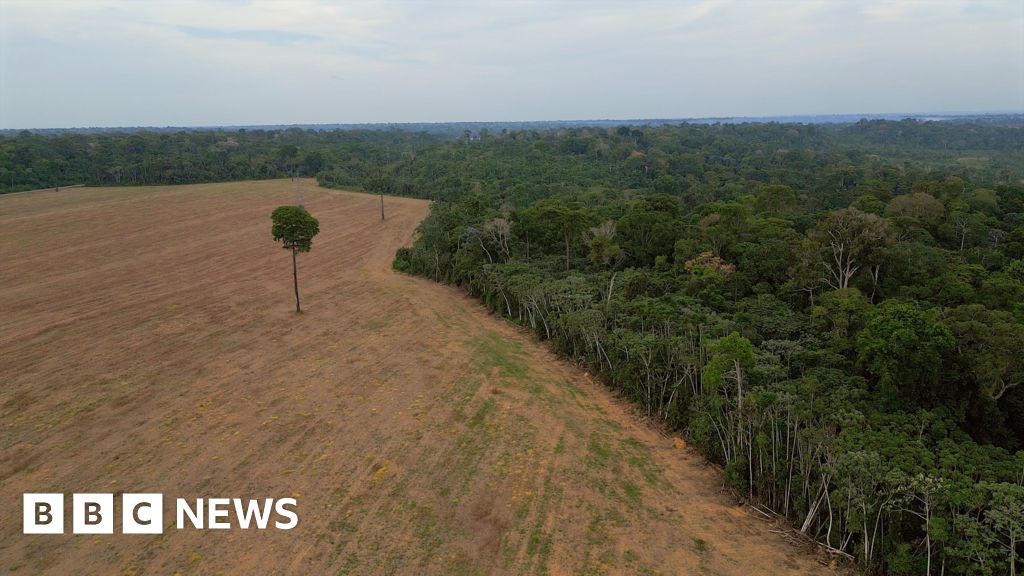
Powerful farming lobbies and a faction of Brazilian politicians are vehemently pushing to lift these restrictions. They argue that the ban constitutes an unfair "cartel," an anti-competitive measure that unduly favors a small group of large agricultural companies, allowing them to dominate the Amazon’s lucrative soya trade. This argument frames the moratorium as an impediment to economic growth and development for smaller farmers and states with vast agricultural potential.
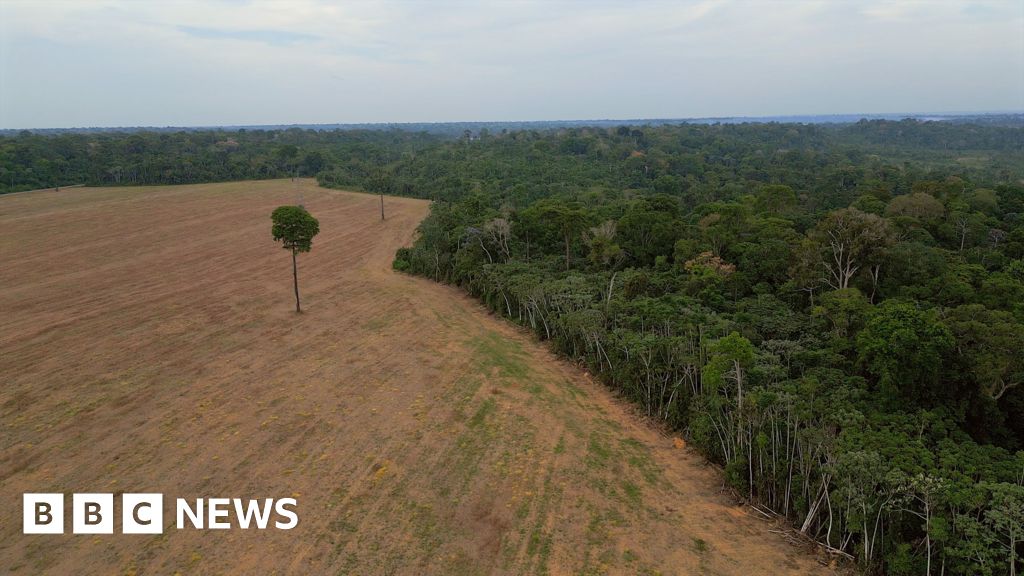
Environmental groups, conversely, issue stark warnings, describing the potential removal of the ban as an impending "disaster." They contend that such a move would unleash a new and devastating wave of land grabbing, driven by the insatiable demand to plant more soya within the delicate ecosystem of the Amazon. Scientists and climate experts underscore the gravity of the situation, explaining that ongoing deforestation, exacerbated by the accelerating effects of climate change, is already propelling the Amazon towards a perilous "tipping point." This threshold, if crossed, could render the rainforest incapable of sustaining itself, triggering an irreversible ecological collapse.
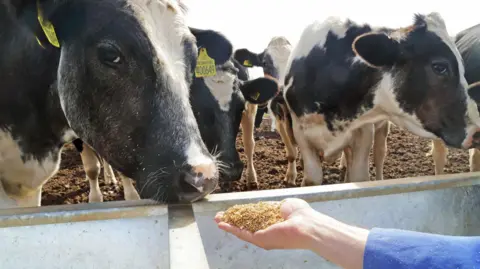
Brazil holds the distinction of being the world’s largest producer of soya beans, a vital global commodity primarily cultivated for its high protein content and extensive use as animal feed. A significant portion of the meat consumed in the United Kingdom, including chicken, beef, pork, and farmed fish, relies on feeds that incorporate soya beans. Approximately 10% of these soya beans are sourced directly from the Brazilian Amazon. Recognizing the environmental implications, many prominent UK food companies, such as Tesco, Sainsbury’s, M&S, Aldi, Lidl, McDonald’s, Greggs, and KFC, have joined forces under the banner of the UK Soy Manifesto. This influential coalition represents an estimated 60% of the soya imported into the UK and is a staunch advocate for the continuation of the Amazon Soy Moratorium.
In a powerful statement released earlier this year, the signatories of the UK Soy Manifesto declared their unwavering support for the ban. They emphasized its critical role in ensuring that UK soya supply chains remain free from any association with deforestation. The statement urged "all actors within the soy supply chain, including governments, financial institutions and agribusinesses to reinforce their commitment to the [ban] and ensure its continuation." This sentiment is echoed by public opinion within the UK, where a World Wildlife Fund (WWF) survey conducted recently revealed that a significant 70% of respondents supported decisive government action to eliminate illegal deforestation from all UK supply chains.
Despite this international and domestic environmental consensus, Brazilian opponents of the agreement escalated their challenge last week. They formally demanded that the Supreme Court, the highest judicial body in the country, reopen an investigation into whether the moratorium indeed amounts to anti-competitive behavior. Vanderlei Ataídes, president of the Soya Farmers Association of Pará state – one of Brazil’s principal soya-producing regions – voiced the perspective of many agriculturalists. He told the BBC, "Our state has lots of room to grow and the soy moratorium is working against this development." Ataídes further questioned the environmental rationale of the ban, stating, "I don’t understand how [the ban] helps the environment. I can’t plant soya beans, but I can use the same land to plant corn, rice, cotton or other crops. Why can’t I plant soya?"
This contentious challenge has created a visible rift within the Brazilian government itself. While the Justice Ministry has indicated that there may be credible evidence of anti-competitive practices worthy of investigation, both the Ministry of the Environment and the Federal Public Prosecutors Office have publicly and robustly defended the moratorium, highlighting its ecological importance.
The Amazon Soy Moratorium is a voluntary agreement that was initially forged almost two decades ago, in 2006. Its original signatories included a diverse coalition of farmers, leading environmental organizations, and major global food companies, notably agricultural commodities giants such as Cargill and Bunge. The genesis of the agreement stemmed from an impactful campaign spearheaded by the environmental pressure group Greenpeace. This campaign effectively exposed the direct link between soya grown on deforested Amazonian land and its use in animal feed, specifically highlighting chicken sold by McDonald’s. Following this exposé, the fast-food chain became a prominent champion of the moratorium, with all signatories pledging to cease purchasing soya grown on land deforested after the 2008 cut-off date.
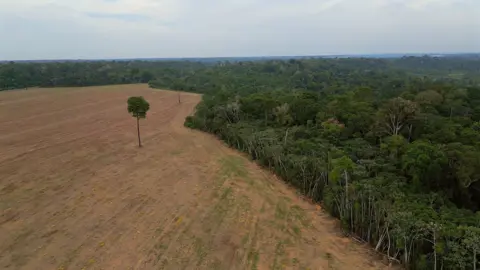
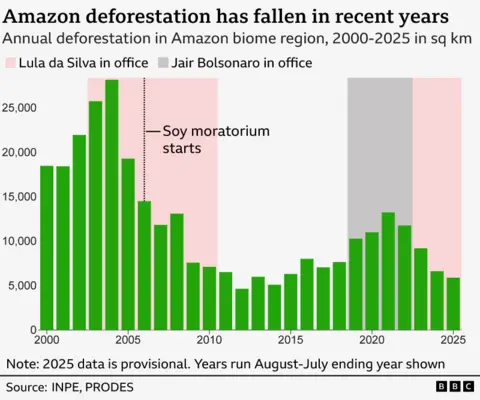
Prior to the implementation of the moratorium, the relentless expansion of soya cultivation and the growth of cattle ranching were identified as the primary drivers of Amazonian deforestation. The introduction of the agreement dramatically altered this trajectory, leading to a sharp decline in forest clearance. Deforestation rates reached an historic low in 2012, during President Luiz Inácio Lula da Silva’s second term in office. Although deforestation regrettably increased under subsequent administrations – particularly under Jair Bolsonaro, whose policies actively promoted opening the forest to extensive economic development – it has once again experienced a significant reduction during Lula’s current presidency, demonstrating the efficacy of focused environmental governance.
Bel Lyon, chief advisor for Latin America at the World Wildlife Fund (WWF), one of the original signatories of the ASM, issued a grave warning: suspending the moratorium "would be a disaster for the Amazon, its people, and the world, because it could open up an area the size of Portugal to deforestation." The ecological repercussions are not merely theoretical; small farmers whose plots border vast soya plantations are already reporting tangible disruptions to local weather patterns, making it increasingly difficult to cultivate their traditional crops.
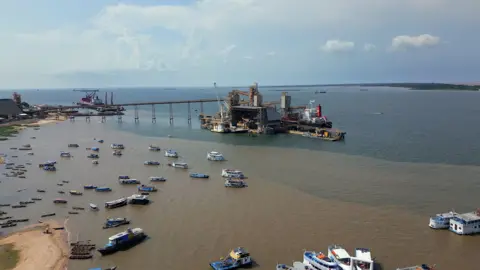
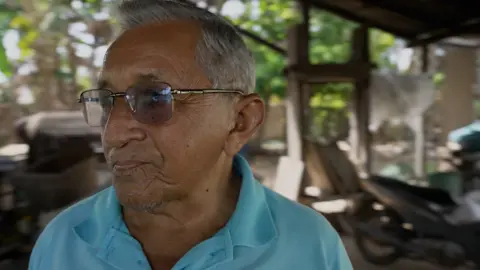
Raimundo Barbosa, who dedicates his life to farming cassava and fruit near the town of Boa Esperança, situated outside Santarém in the southeastern Amazon, bears witness to these changes. He recounted the destructive impact of forest clearance: "When the forest is cleared, the environment is destroyed." As he spoke in the shade beside the machinery he uses to process his cassava into flour, he elaborated, "Where there is forest, it is normal, but when it is gone it just gets hotter and hotter and there is less rain and less water in the rivers." His testimony underscores the direct and severe consequences of deforestation on local communities and their livelihoods.
Adding another layer of urgency to the situation is Brazil’s ongoing preparation to inaugurate a major new railway line. This ambitious infrastructure project is designed to stretch from the nation’s agricultural heartland in the south directly into the Amazon rainforest. The railway is projected to substantially reduce transport costs for soya and other agricultural products, thereby creating yet another powerful economic incentive to clear even more land for cultivation. This impending infrastructure development makes the protection offered by the Soy Moratorium even more critical.
Scientists, who have dedicated decades to studying this vital ecosystem, warn that deforestation is already profoundly reshaping the rainforest. Among them is Amazon specialist Bruce Fosberg, who has spent half a century researching the forest. From a small platform atop a 45-meter-high tower, bristling with high-tech instruments, he surveys a boundless sea of green within a pristine rainforest reserve in the heart of the Amazon. This tower, built 27 years ago, is part of the Large-Scale Biosphere-Atmosphere Experiment (LBA), a pioneering project designed to meticulously track changes in the Amazon and assess its proximity to a critical threshold.
Data meticulously collected by the LBA, corroborated by numerous other scientific studies, indicates that significant portions of the rainforest are indeed nearing a "tipping point." Beyond this critical juncture, the ecosystem may no longer be able to maintain its intricate functions. Fosberg explains, "The living forest is closing down, and not producing water vapor and therefore rainfall." He elaborates that as trees are lost due to deforestation, devastating fires, and escalating heat stress, the forest releases progressively less moisture into the atmosphere. This reduction in atmospheric moisture directly translates to decreased rainfall and intensified drought conditions, which in turn create a perilous feedback loop that kills even more trees. The profound fear among scientists is that if this destructive cycle continues unchecked, vast, irreplaceable areas of the rainforest could undergo a catastrophic dieback, transforming into a drier, less biodiverse savannah or grassland ecosystem. Such an unparalleled ecological collapse would unleash colossal amounts of stored carbon into the atmosphere, critically disrupt weather patterns across entire continents, and directly imperil the millions of people, as well as the countless plant, insect, and animal species, whose very existence is inextricably linked to the survival of the Amazon. The stakes for Brazil, and indeed for the global climate, could not be higher.


 George Anjay
 Ramos Leo
 Nakalama John