
 Roy Suryo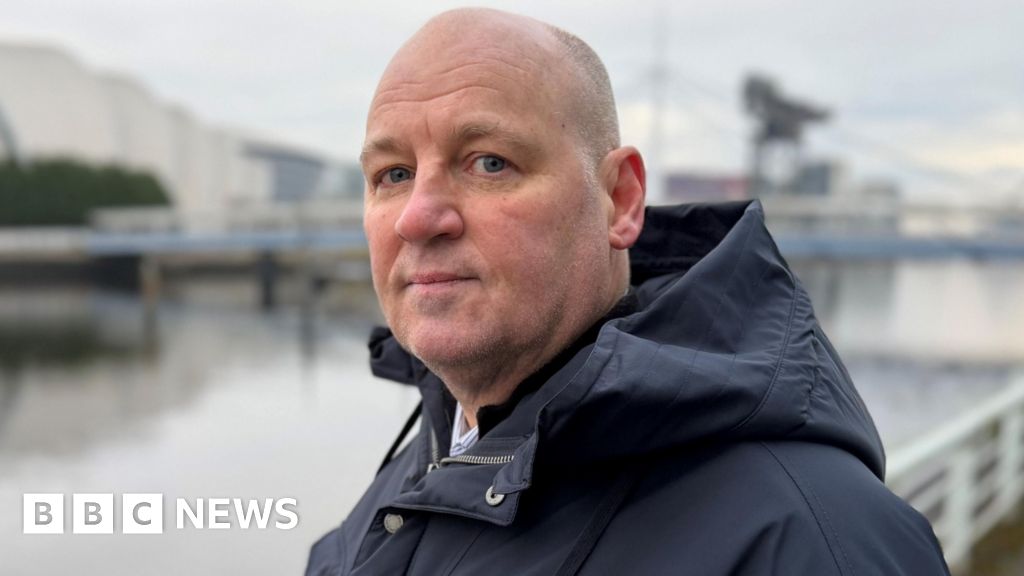
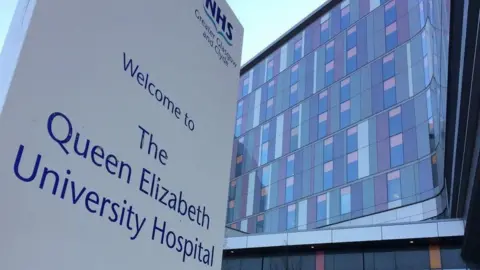
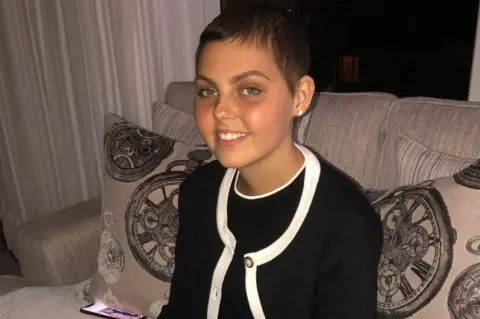
The father of a young woman whose death is now under investigation by prosecutors has stated that a health board was repeatedly alerted for years about persistent issues with a hospital water system, which the board has now conceded likely led to infections in child cancer patients. Molly Cuddihy, who tragically passed away in August at the age of 23, fell seriously ill in 2018 with an infection that is suspected to have been contracted at the Queen Elizabeth University Hospital (QEUH) in Glasgow. For an extended period, NHS Greater Glasgow and Clyde (NHSGGC) consistently denied that bacteria present in the hospital’s water supply were responsible for causing some of the infections that tragically resulted in patient deaths. However, in a significant shift, the health board has now admitted that, "on the balance of probabilities," there was a "causal connection" between certain infections and the hospital environment.
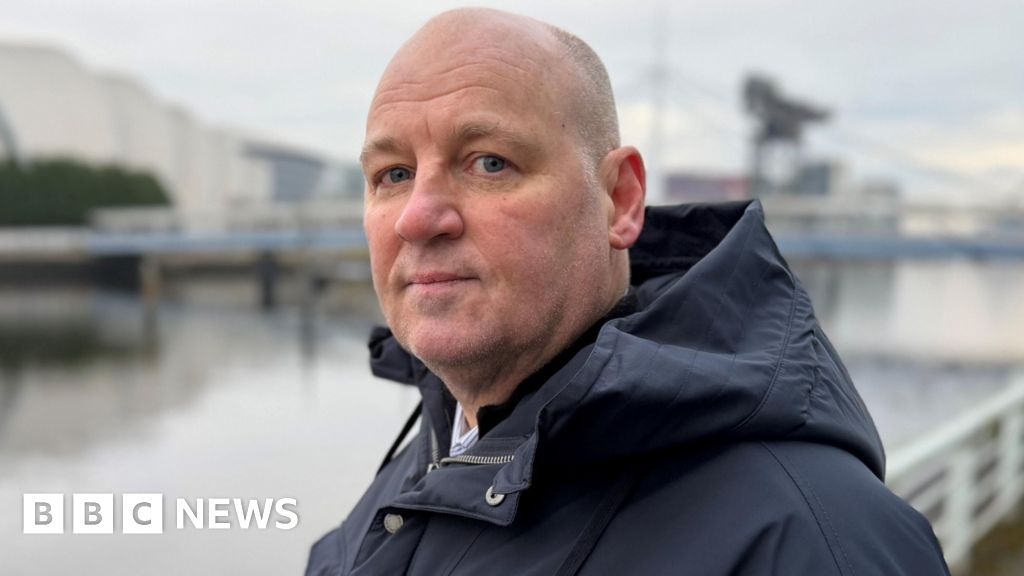
Molly’s father, John Cuddihy, a former head of organised crime and counter-terrorism for Police Scotland, described the health board’s statement as "overdue recognition." He emphasized that his daughter’s experience and her words must continue to resonate beyond her lifetime. A spokesperson for NHSGGC confirmed their support for the ongoing inquiry, while the Scottish government stated it would be "inappropriate to comment" at this juncture.
The broader inquiry was initiated to meticulously examine the mistakes made during the planning, design, and construction of the QEUH campus, following grave concerns raised about unusual infections and the deaths of several patients. Among the victims was 10-year-old Milly Main, who died in 2017 after contracting the stenotrophomonas bacteria while undergoing leukaemia treatment. This led to a separate corporate homicide investigation, launched in 2021, into the deaths of Milly, two other children, and 73-year-old Gail Armstrong. In 2024, prosecutors also opened an investigation into Molly Cuddihy’s death, prompted by a report from a consultant.
Molly, who hailed from Gourock, Inverclyde, was diagnosed with metastatic Ewing sarcoma at the tender age of 15. In a poignant interview with BBC Scotland News in 2024, she recounted how she knew something was gravely wrong when a radiographer began to cry during her scan. Mr. Cuddihy revealed that concerns regarding the hospital’s water supply were first raised in 2018, the same year Molly developed septic shock while undergoing cancer treatment at the QEUH. He highlighted that his daughter’s primary wish was for official acknowledgement of the issues with the hospital’s water system. "The sad thing is Molly is in her grave and she never got to read the words or hear what they had to say," he lamented.
The Scottish Hospitals Inquiry is currently hearing oral submissions, and Mr. Cuddihy expressed his fervent hope that patients will be placed at the forefront of these proceedings. "What I would like going forward is that Molly’s voice and the voices of those other children will influence real change," he stated, advocating for annual, validated checks of hospital ventilation and water systems.
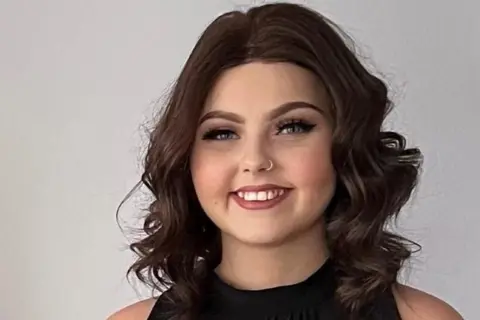
Molly’s arduous journey involved extensive treatment for previous hospital-acquired infections in 2018 and 2019, alongside her chemotherapy. These treatments unfortunately resulted in irreparable liver damage. She also required a kidney transplant in November 2024. Consequently, the treatment options available after Molly’s final hospital admission in July became severely limited. Mr. Cuddihy explained the profound and lasting impact of these complications: "The trauma just continued long after the cancer had gone. Because the impact of the antibiotics – which would be administered to leprosy patients – were so strong, were given over a prolonged period of time, they had a material impact on the reduced kidney function, on her liver function on her overall body and living experience. Her quality of life was reduced and it had a devastating impact on her. I am in no doubt that Molly’s quality of life was further eroded as a result of the bacteria. Absolutely no doubt." Visibly moved, he added, "Had Molly only had the cancer, and I say only had the cancer to contend with, it was hard enough, but perhaps Molly would be here. And that’s a hard thing to take. We will never know."
In 2022, Molly had courageously given evidence before the Scottish Hospitals Inquiry, detailing her experiences at the QEUH during her teenage chemotherapy. The inquiry is also investigating systemic issues at the Royal Hospital for Children and Young People (RHCYP) and the Department of Clinical Neurosciences in Edinburgh. Molly had informed the inquiry of her severe illness in the summer of 2018, stemming from an infection acquired via an intravenous line used for administering her medication. Mr. Cuddihy expressed his disappointment that his daughter was not explicitly mentioned in the health board’s submission and underscored the critical importance of the victims featuring prominently in the inquiry’s conclusions. He also expressed his hope that the health board’s admission would signify a "turning point in culture, governance and accountability across NHS Scotland." He concluded with a sentiment of profound loss and a call for future accountability: "Nothing will bring Molly back. Our hope now is that her testimony, her suffering and her courage help ensure that no other young person, and no other family, has to endure what she did."
In its closing statement to the Inquiry, NHSGGC had initially stated that it had "broadly acknowledged" no "definite link between infections and the water system." However, it then conceded that it was "more likely than not" that some infections suffered by patients were connected to the hospital’s water supply, adding, "NHSGGC accepts that, on the balance of probabilities, there is a causal connection between some infections suffered by patients and the hospital environment, in particular the water system."
When approached for comment regarding the closing statement, an NHSGGC spokesperson reiterated, "We remain fully committed to supporting the Inquiry in its investigations." A Scottish government spokesperson stated, "We established a statutory public inquiry so that families could get answers to their questions, and so that lessons can be learned for future hospital projects. As an independent core participant of the Inquiry, the Scottish government is committed to assisting the Inquiry and therefore it would be inappropriate to comment any further at this time."
Milly Main underwent a successful stem cell transplant in July 2017 while in remission from leukaemia. Tragically, her Hickman line, a vital catheter for administering drugs, later became infected. Milly’s condition rapidly deteriorated, leading to toxic shock, and she passed away on August 31, 2017. Her mother, Kimberly Darroch, welcomed the admission from NHSGGC but expressed deep disappointment that it had not been forthcoming much earlier for the affected families. Ms. Darroch told BBC Scotland News, "As a mother, I’ve spent six years fighting for answers that should have been given at the very beginning. It is good news that the health board has admitted that, on the balance of probabilities, there was a causal connection between the environment and Milly’s bloodstream infection. This acknowledgement is a significant milestone for our family, but it also highlights how hard families have had to fight just to have the truth recognised." In 2024, the former lead infection control doctor at the hospital had testified before the Inquiry, asserting there was no direct evidence linking the infections to the building’s infrastructure.
Patrick McGuire, a senior partner at Thompsons Solicitors Scotland, who represents numerous families impacted by these events, accused the health board of "callous evasion and dishonesty." The solicitor added, "The families have now been vindicated but only after years of being denigrated and dismissed by the health board."
Opposition politicians have demanded answers from the Scottish government. Scottish Labour leader Anas Sarwar declared, "The QEUH scandal is one of the worst failures in modern Scottish public life. Since the hospital opened, there has been a litany of serious problems: concerns about water safety, environmental risks, governance failures, and infections that devastated families." Mr. Sarwar noted that families had been forced to "fight for the truth" and stated that the health board’s admission "should be a turning point." Scottish Conservative health spokesman Dr. Sandesh Gulhane asserted that there was evidence of "a cover-up at the very top." He stated, "There is now a substantial body of evidence that points to a cover-up at the very top, which has only been exposed by this inquiry. Families like those of Milly Main, Molly Cuddihy and many others have waited years to get straight answers from those responsible. Those are now being extracted rather than freely given."

 Nakalama John
 George Anjay
 Ramos Leo
 atisusanti