Nakalama John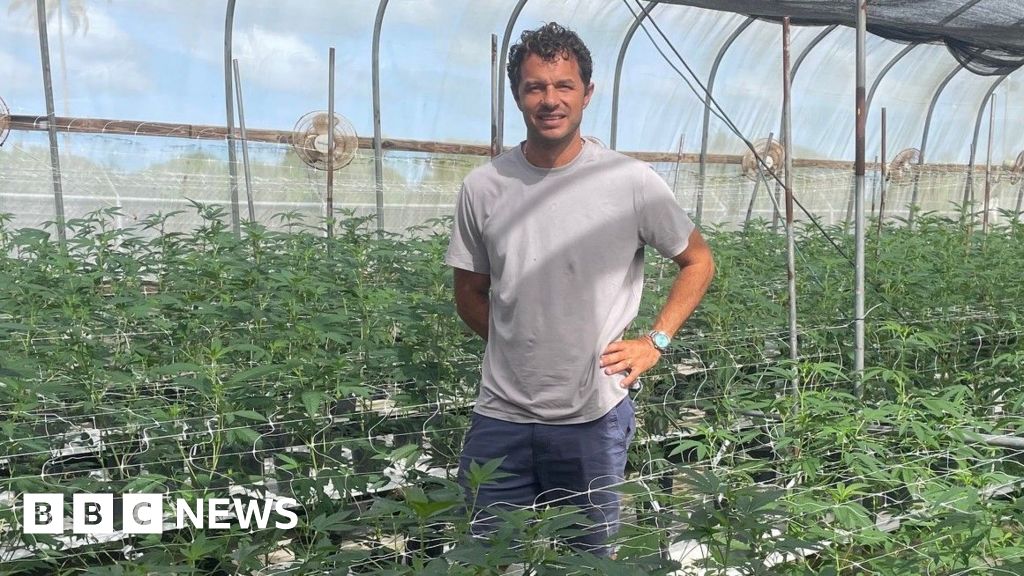
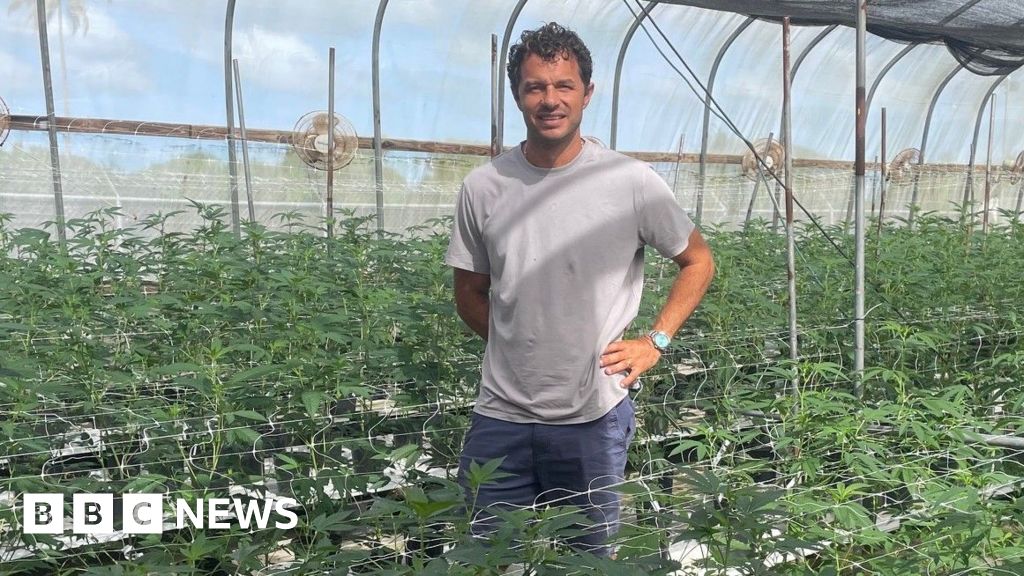
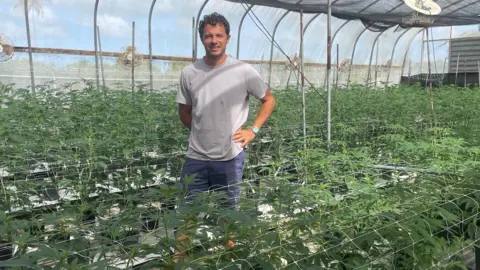
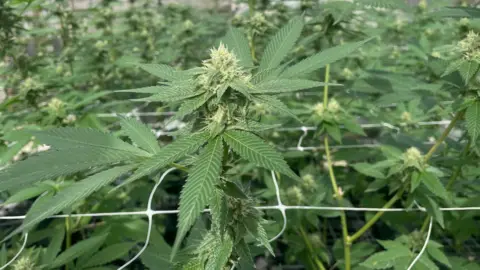
The air at Pineapple Road, a cannabis farm nestled deep within Antigua’s verdant countryside, is thick with a complex symphony of aromas. Master cultivator Michaelus Tracey invites a visitor to rub a leaf, then inhale its musky fragrance – a stark contrast to the citrusy notes emanating from a neighboring plant. To the untrained eye, the meticulously arranged rows of flowering cannabis plants appear uniform, yet Tracey, with years of dedicated experience and an intuitive understanding of the plant, can distinguish each of the nine distinct varieties by their subtle scent profiles and the nuanced shapes of their leaves.
Antigua’s idyllic conditions—its consistent warm temperatures, abundant sunshine, and high humidity—create a naturally prime environment for cultivating cannabis. Tracey explains that intense trials and careful selective breeding were undertaken to develop these specific strains. "We wanted different flavour profiles as well as different effects," he elaborates, "but all with a medicinal value – something to help you relax, something to give you more energy, more pain relief, less anxiety." This scientific approach to cultivation, focusing on specific cannabinoid and terpene profiles, underscores the region’s ambition to move beyond traditional cultivation towards a sophisticated medical and wellness industry.
Last year marked a significant milestone, a decade since Jamaica took the pioneering step of decriminalizing the recreational use of cannabis and legalizing its production and sale for medical purposes. This bold move paved the way for several other Caribbean nations, including the twin-island nation of Antigua and Barbuda in 2018, to follow suit. While the image of cannabis is deeply embedded in Caribbean culture, often reaching cliché status, the region’s emerging status as a leader in the legal cannabis field is a less recognized, yet equally compelling, narrative.
Today, the Caribbean boasts a growing number of legally registered cannabis farms and medicinal dispensaries. These establishments cater to both locals and tourists who possess a valid medical authorization card, offering a range of products from raw flower to processed oils and edibles. However, Prof. Rose-Marie Belle Antoine, a leading expert on the cannabis industry in the Caribbean, argues that further liberalization is essential for the region to fully realize its potential. "Decriminalization isn’t good enough," asserts Antoine, a former chair of the Caribbean Community’s Regional Commission on Marijuana. "We should just make it legal but regulated."
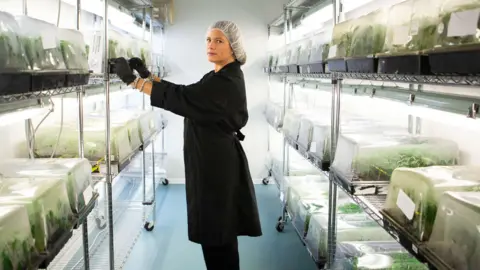
Antoine, who also serves as campus principal at the University of the West Indies in Trinidad, highlights the critical need for comprehensive research. Her institution is poised to embark on extensive studies into the myriad potential benefits of cannabis, ranging from its efficacy in alleviating the debilitating side effects of cancer treatment to its potential role in boosting agricultural sustainability by improving soil health. This cutting-edge research will primarily take place in Antigua, specifically chosen for its progressive legislative framework. Antoine believes this work offers "a lot of potential," but reiterates that full legalisation would significantly streamline and accelerate such crucial scientific endeavors. She laments that "the Caribbean is a leader in cannabis, in terms of strains and knowledge, and it has a long tradition of this. But legalities, the ‘war on drugs’ and all that nonsense, stifled not just the industry, but research and development." The decades-long global prohibition, heavily influenced by US policy, effectively suppressed the region’s ability to innovate and capitalize on its natural heritage.
Many across the Caribbean are now pinning their hopes on the implications of US President Donald Trump’s executive order in December, which initiated the process to reclassify cannabis as a lower-level drug. This potential reclassification from Schedule I (high potential for abuse, no accepted medical use) to Schedule III (moderate to low potential for physical and psychological dependence, accepted medical use) under the Controlled Substances Act is seen as a pivotal moment. Alexandra Chong, chief executive of Jamaica-based business Jacana, which markets a diverse array of cannabis-derived products from extract oils to skin creams, describes it as "a significant milestone." She notes that historically, "so much US public policy gets filtered down to the Caribbean. Because cannabis was classified as a schedule one drug alongside heroin in the US, regulatory bodies across the Caribbean have not been as bullish with [reducing] regulation." Chong believes that reducing cannabis to the lower Schedule III level, which also includes common medications like combined paracetamol-codeine tablets, is "far more appropriate" and could unlock significant opportunities.
The White House’s move, while not immediately legalizing international trade, signals a shift that could eventually allow Caribbean nations to export cannabis to the US for recreational use. Currently, despite 24 US states having legalized recreational cannabis, federal law still prohibits its importation. Nevertheless, producers in both Jamaica and Antigua are eagerly preparing for future legal export channels. Jamaica’s Cannabis Licensing Authority (CLA) has already established "interim administrative procedures to facilitate the export of ganja by licensees that hold a valid import permit from the country that the product will be exported to," indicating their readiness to engage with international markets, including Canada and Europe.
Similarly, Antigua and Barbuda’s Medicinal Cannabis Authority (MCA) is diligently working to cultivate a robust cannabis export industry. Regis Burton, the MCA’s chief executive, tells the BBC, "We already have the legal framework in place, a prime geographical location and an international airport." He expresses high confidence that Antigua will eventually be able to export its products, not least due to their unique appeal. "Very few people can say they’ve tried Antiguan cannabis," he adds, hinting at the potential for a premium brand built on unique strains and island provenance.
Domestically, however, both Jamaica and Antigua and Barbuda face significant challenges. High overhead costs—including substantial licensing fees, stringent compliance requirements, robust security measures, rigorous testing protocols, specialized packaging, and various taxes—are making it difficult for legal producers to compete. Furthermore, rules that limit the sale of cannabis exclusively to individuals with medical approval severely restrict the customer base. These factors, unfortunately, leave a substantial portion of the market to illicit producers. Jacana estimates that over 800,000 people use cannabis annually in Jamaica, with roughly half being tourists. Yet, a staggering 90% of the 87 tonnes consumed each year flows through illegal channels. Chong laments that "over-regulation has strangled the industry. Over time it’s got easier, but it’s by no means perfect," explaining that out of the 160-plus licenses issued by Jamaica’s Cannabis Licensing Authority between 2017 and 2024, "very few" are still actively operating.
In Antigua, industry consultant Robert Hill echoes these concerns: "It’s still more profitable to import cannabis illegally. Unlike dealers, private companies have staff and bills to pay." The island currently operates with just six licensed cannabis farms, four dispensaries, and a single cannabis lounge. The scale of the illicit market was starkly highlighted in September when Antiguan authorities intercepted 45kg of illegally imported cannabis within a mere 24 hours.
Despite these hurdles, Antigua has demonstrated an innovative and progressive approach to tackling domestic illegal cultivation. Instead of pursuing traditional prosecutions, the authorities have invited violators to participate in a free six-week course designed to educate them on how to transition into the legal market. "Twenty-two have already graduated, with two soon to transition to a medicinal business," Burton proudly reports to the BBC. This forward-thinking strategy acknowledges that "the industry won’t be successful if the illicit market does as it pleases," aiming instead to integrate traditional growers into the legitimate economy.
The continuing liberalization of cannabis across the Caribbean is also yielding profound positive impacts on social justice, particularly for the Rastafarian community. In 2018, Antigua’s Prime Minister Gaston Browne delivered a formal apology to the nation’s Rastafarians, acknowledging decades of historic persecution, stigma, and abuse suffered over their sacramental cannabis use. Six years later, the government solidified this commitment by granting Rastafarians official sacramental authorization to cultivate the plants for religious purposes. Last summer, further strides were made with the announcement of plans to expunge the criminal records of individuals previously prosecuted for possession of small amounts of marijuana, a vital step towards restorative justice.
For High Priest Selah, of Antigua’s Nyabinghi denomination of Rastafarians, the memories of past harassment remain vivid. "The police were always coming and locking us up, destroying our plants, tarnishing our name and embarrassing us in public," he recounts, emphasizing the long and arduous struggle waged by campaigners from his community to achieve decriminalization and recognition.
Back at Pineapple Road, two employees meticulously hand-roll joints, each containing a gram of pure marijuana, destined for sale in the company’s dispensary. Burton hopes that more local growers will embrace this burgeoning industry, ensuring that the economic proceeds remain within Caribbean hands. Hill concurs, asserting, "We have the ability to compete with much bigger countries thanks to our climate which reduces costs." He clarifies the regional vision: "We’re not trying to create an Amsterdam, this is about wellness." This statement underscores a commitment to developing a high-quality, ethically produced, and health-focused cannabis industry, leveraging the Caribbean’s unique climate and traditional knowledge to cultivate not just a product, but a sustainable future.

 Ramos Leo
 George Anjay