
 Ramos Leo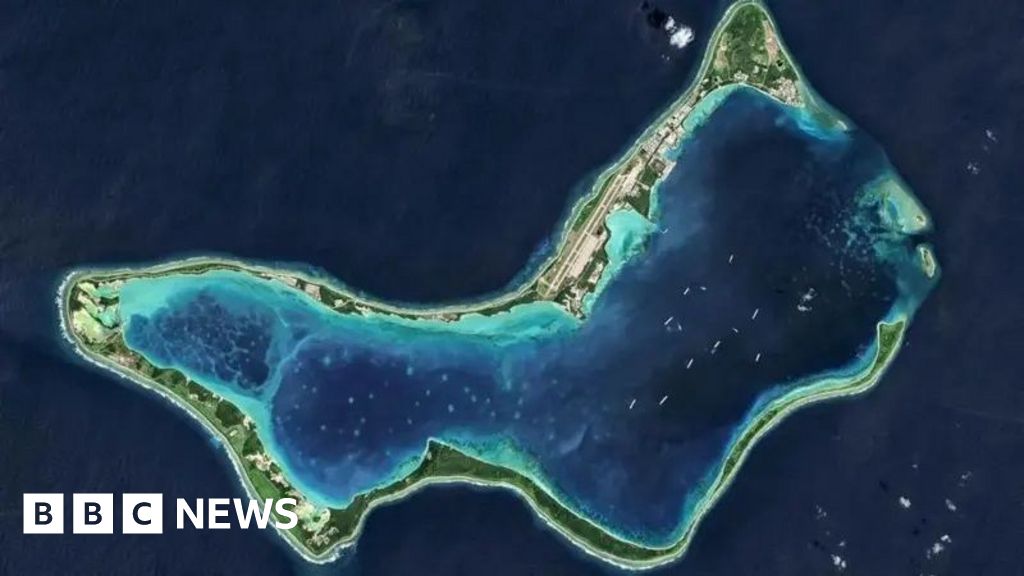
A pivotal bill, designed to formalise the UK government’s agreement to cede sovereignty of the Chagos Islands to Mauritius, will not proceed to its scheduled debate in the House of Lords. The delay, announced late on Friday, follows a significant intervention by the Conservative Party, who tabled an amendment calling for an immediate pause in light of "changing geopolitical circumstances." This unexpected halt throws the future of the landmark deal, which includes a substantial annual payment and the continued lease of the vital Diego Garcia military base, into uncertainty.
The legislation, formally known as the Diego Garcia Military Base and British Indian Ocean Territory Bill, was due for a critical debate in the Lords on Monday. Its passage would enshrine in law the government’s commitment to transfer the archipelago in the Indian Ocean to Mauritius. In return, the United Kingdom would lease back the strategically crucial military base on Diego Garcia for an initial period of 99 years, at an average cost of £101 million per annum. This arrangement aims to resolve a long-standing colonial dispute and address international legal pressures while safeguarding a key Western defence asset.
However, the Conservative opposition, which has consistently voiced strong reservations about the proposed agreement, seized the opportunity to delay its progress. Their amendment explicitly called for a halt to the bill, citing the evolving global security landscape. The government, caught off guard by the Tory manoeuvre, has now opted to postpone the debate indefinitely, stating that the bill will return to the Lords at an unspecified later date.
A government spokesperson expressed deep frustration over the delay, stating, "The government remains fully committed to the deal to secure the joint UK-US base on Diego Garcia, which is vital for our national security." The spokesperson sharply criticised the move by peers, describing it as "irresponsible and reckless behaviour," and asserting that the role of the Lords is to scrutinise legislation, "not interfere with our national security priorities." Government sources indicated that they are actively exploring options to prevent similar tactical delays from being deployed in the future, highlighting the seriousness with which they view the interruption to this critical piece of legislation.
The bill is currently in the "ping-pong" stage of parliamentary scrutiny, a process where legislation is passed back and forth between the House of Commons and the House of Lords as both chambers propose and consider amendments. This iterative process allows for detailed review and refinement but also provides opportunities for political manoeuvring, as demonstrated by the Conservatives’ successful intervention.
The core of the Tory opposition centres on the legality and wisdom of the deal, particularly in relation to a 1966 Treaty agreed between the UK and the United States concerning the islands. Article 1 of this foundational treaty explicitly states that "the territory shall remain under UK sovereignty." The Conservatives contend that transferring sovereignty to Mauritius, even with a lease-back arrangement, would put the UK in contravention of this existing treaty and potentially in breach of international law. They have urged ministers to secure explicit agreement from the US regarding the implications for the 1966 Treaty before attempting to bring the bill back to the House of Lords for further consideration.
Under the terms of the proposed new Chagos deal, Mauritius would gain sovereignty of the islands from the UK. In return, the agreement allows the US and UK to continue operating their joint military base on Diego Garcia, the largest of the islands, for an initial period of 99 years. A crucial element of the deal is the establishment of a 24-mile buffer zone around Diego Garcia, within which no development or construction can take place without explicit UK consent, designed to protect the base’s operational security. The agreement, reportedly signed by Sir Keir Starmer last May in his then-capacity as a government envoy, stipulated that the UK would pay Mauritius an average of £101 million annually over the 99-year lease period. Sir Keir calculated the "net cost" to the UK as approximately £3.4 billion after accounting for factors such as inflation.
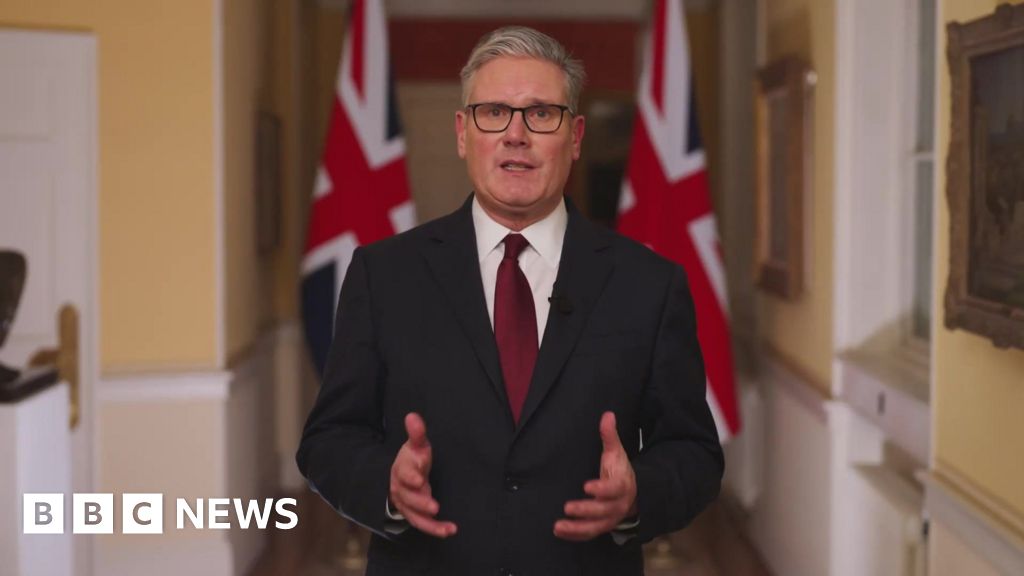
The urgency from the government’s perspective stems from the potential legal and geopolitical repercussions of failing to resolve the Chagos dispute. Last May, the Prime Minister underscored this urgency, warning that the UK had to "act now" to prevent Mauritius from initiating legal action that could severely disrupt operations at the Diego Garcia base. He further warned that "If we did not agree this deal the legal situation would mean that we would not be able to prevent China or any other nation setting up their own bases on the outer islands or carrying out joint exercises near our base. No responsible government could let that happen." This statement highlights the profound strategic anxieties underpinning the UK’s drive to finalise the agreement, particularly concerning the burgeoning influence of China in the Indo-Pacific region.
The historical backdrop to the Chagos dispute is deeply controversial and adds significant moral weight to the current negotiations. The British Indian Ocean Territory (BIOT) was created in 1965 by the UK, separating the Chagos Archipelago from Mauritius (which was then a British colony) just before Mauritius gained independence. This move was made to facilitate the establishment of a joint US-UK military base on Diego Garcia. Between 1968 and 1973, approximately 1,500 indigenous Chagossians, known as Ilois, were forcibly removed from their homes on the islands by the British authorities to make way for the base. They were resettled in Mauritius, Seychelles, and the UK, enduring poverty and cultural dislocation. Their ongoing struggle for the right to return to their homeland and receive adequate compensation has garnered international attention and condemnation.
This historical injustice has fuelled a protracted legal and diplomatic battle. In 2019, the International Court of Justice (ICJ) issued an advisory opinion stating that the UK’s separation of the Chagos Archipelago from Mauritius in 1965 was unlawful and that the UK was under an obligation to complete the decolonisation of Mauritius by returning the islands. This opinion was overwhelmingly endorsed by a resolution of the UN General Assembly later that year. These international rulings have placed immense pressure on the UK to resolve the dispute, making the current deal with Mauritius a diplomatic necessity to align with international law and opinion.
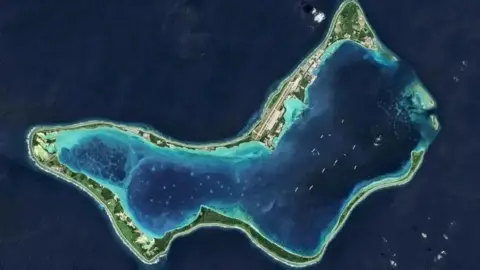
Diego Garcia’s geopolitical significance cannot be overstated. Located roughly equidistant from Africa, India, and Southeast Asia, it provides the United States and the United Kingdom with an unparalleled strategic platform in the heart of the Indian Ocean. The base serves as a crucial hub for surveillance, refuelling, logistics, and intelligence gathering, enabling power projection across a vast and increasingly contested region. It has been instrumental in numerous military operations, including the Gulf Wars, operations in Afghanistan, and counter-piracy efforts. The ability to launch long-range bombers and conduct maritime surveillance from Diego Garcia is a cornerstone of Western security architecture in an era of renewed great power competition. The prospect of China establishing a military presence or even gaining influence on the outer islands, as warned by the Prime Minister, represents a significant threat to this strategic advantage, further explaining the government’s urgency.
The delay to the bill’s parliamentary journey comes in the same week that former US President Donald Trump appeared to reverse his previous stance on the agreement. On Tuesday, Trump inexplicably described the deal as a "great act of stupidity" – a surprising condemnation given that his administration had previously expressed contentment with its terms. Before the deal was formally signed in May last year, the UK had offered Trump an effective veto, acknowledging its implications for US security interests. During a meeting with Sir Keir Starmer in the Oval Office in February of last year, Trump had indicated, "I think we’ll be inclined to go along with your country." Following the agreement’s signing, then-US Secretary of State Marco Rubio publicly welcomed the deal, stating that Washington "welcomed" the agreement as it secured the "long-term, stable, and effective operation of the joint US-UK military facility at Diego Garcia," which he described as a "critical asset for regional and global security." Trump’s sudden and contradictory comments have introduced an element of diplomatic uncertainty, potentially emboldening the Conservatives’ argument that explicit US agreement on the 1966 Treaty is paramount before proceeding.
The path forward for the Diego Garcia Military Base and British Indian Ocean Territory Bill remains unclear. The government faces the challenge of placating its internal critics, navigating the complexities of parliamentary procedure, and potentially seeking renewed assurances from the United States, especially in light of Trump’s recent comments. The delay underscores the intricate balance between national security imperatives, historical justice, international legal obligations, and domestic political divisions that define the Chagos Islands dispute. The future of a critical military asset and the resolution of a long-standing colonial grievance now hang in the balance, awaiting an unspecified later date for parliamentary resolution.


 George Anjay
 Nakalama John
 atisusanti