
 George Anjay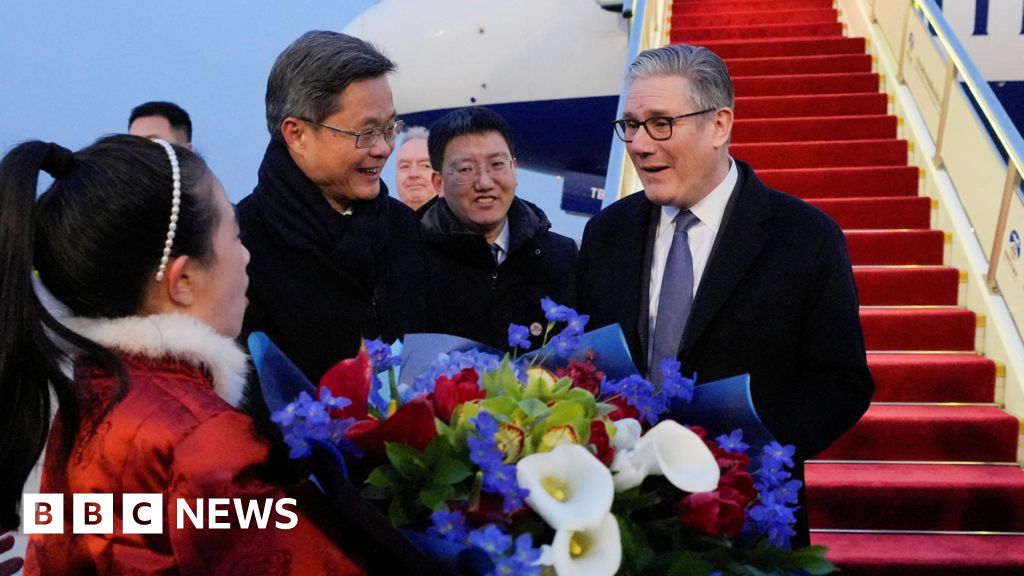
Prime Minister Sir Keir Starmer has touched down in Beijing for a pivotal three-day visit, marking the first by a British premier in eight years, signalling a determined effort to recalibrate and strengthen the UK’s engagement with the world’s second-largest economy. This high-stakes diplomatic mission comes at a time of complex global dynamics, with Sir Keir aiming to foster deeper trading and cultural ties between the two nations after a period marked by considerable international friction and domestic debate. However, his approach has not been without its critics, facing pointed questions at home regarding the perceived risks China poses to the UK’s national security and concerns over President Xi Jinping’s human rights record.
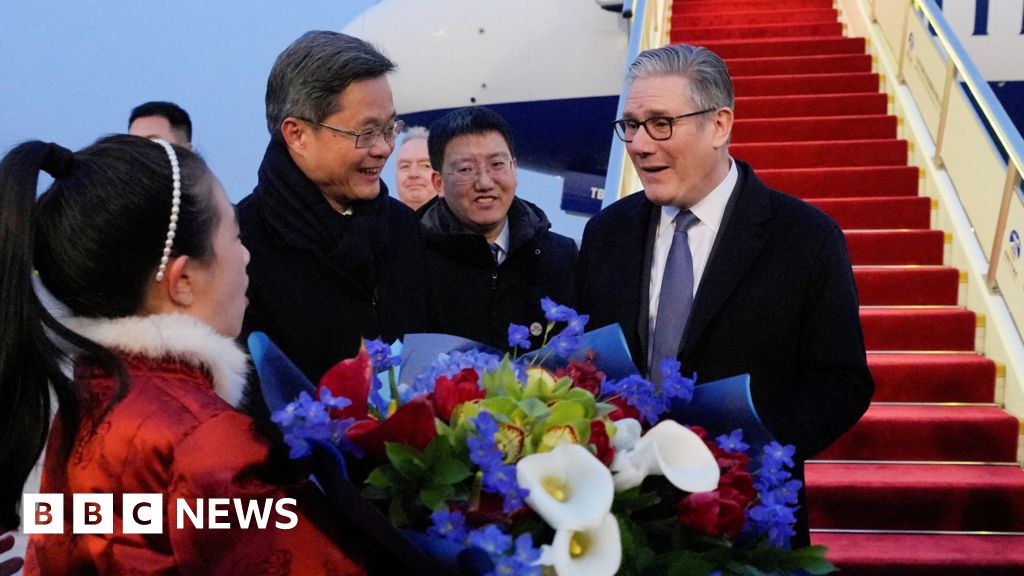
Undeterred by the domestic scrutiny, Sir Keir articulated a clear rationale for his engagement, asserting that the trip is strategically designed to yield tangible benefits for the United Kingdom. He emphasized the paramount importance of maintaining a "strategic and consistent relationship" with China, a nation whose economic influence reverberates globally. Upon his arrival at Beijing’s bustling airport, Sir Keir was met by a delegation of Chinese government officials, a reception underscored by the presentation of a traditional bouquet of flowers, and symbolically, the prominent display of Union flags in the iconic Tiananmen Square.
Addressing the significant contingent of 60 British business leaders accompanying him on this historic delegation, Sir Keir underscored the transformative nature of their presence. "On this delegation, you’re making history," he declared, framing their participation as integral to the broader shift in the UK’s international outlook. "You’re part of the change that we’re bringing about. We are resolute about being outward-looking, about taking opportunities, about building relationships…and always being absolutely focused on our national interest." This statement encapsulates his administration’s dual commitment to pursuing economic opportunities while rigorously safeguarding Britain’s core interests.
The political tightrope walked by a UK Prime Minister engaging with China is inherently delicate, fraught with competing imperatives. Beyond the persistent concerns surrounding China’s human rights record, particularly in Xinjiang and Hong Kong, the UK intelligence services have issued stark warnings about the pervasive nature of Chinese espionage activities. The head of MI5 recently reiterated that Chinese state operatives represent a daily national security threat, underscoring the need for vigilance. In this context, Sir Keir’s decision to engage directly with Beijing is a deliberate strategic choice, balancing economic diplomacy with national security considerations.
When pressed by reporters travelling with him on the specifics of issues he intends to raise with Chinese leaders, Sir Keir adopted a measured tone. "In the past, on all the trips I’ve done, I’ve always raised issues that need to be raised, but I don’t want to get ahead of myself on the specifics until I’ve had the opportunity," he stated, signalling a preference for direct dialogue rather than pre-emptive pronouncements. He further elaborated on his engagement philosophy: "Part of the reason for engaging with China is so that issues where we disagree can be discussed, and the issues where we agree can be progressed, and so that’s the approach." This suggests a pragmatic strategy focused on constructive dialogue, even on contentious subjects.
Sir Keir’s visit, the first since Theresa May’s engagement in 2018, is intended to mend strained relations with China while simultaneously navigating the complex geopolitical landscape shaped by the UK’s enduring alliance with the United States. He has explicitly stated that the UK will not be compelled to "choose between" China and the US, a stance that reflects the intricate economic interdependencies and strategic considerations involved. The Prime Minister affirmed the UK’s intention to maintain "close ties" with the US across business, security, and defence, while unequivocally asserting that "sticking your head in the sand and ignoring China… wouldn’t be sensible." This highlights a nuanced foreign policy designed to preserve vital alliances while pursuing pragmatic engagement with major global actors.
However, this engagement strategy has drawn sharp criticism from political opponents. Conservative leader Kemi Badenoch, articulating a contrasting view, stated that she would refrain from visiting China "at this time" if she were Prime Minister. "We should be talking more to those countries who are aligned with our interests, not the country that is doing everything it can to undermine our economy," she argued, directly challenging Sir Keir’s approach. Badenoch expressed concern over the Prime Minister’s intentions, questioning the wisdom of approving a "super-embassy," which she suggested could become a hub for espionage. "I think that that is what the prime minister should be talking about and he needs to show strength, not approving a super-embassy which many people think is going to become a spy hub," she added, advocating for a foreign policy rooted in "realism and focusing on Britain’s national interest."
The Liberal Democrats have also voiced strong opposition to Sir Keir’s diplomatic overtures. During a House of Commons session, where Deputy Prime Minister David Lammy stood in for Sir Keir, Liberal Democrat deputy leader Daisy Cooper articulated their party’s concerns with forceful language. "Whilst the Chinese regime still holds British citizen Jimmy Lai captive in prison, and whilst the Chinese regime continues to hunt down pro-democracy protesters on the streets of Britain with bounties on their heads, the British prime minister has gone cap in hand to China to ask for a trade deal on the promise of a super-embassy from which the Chinese regime will continue to spy on us," Cooper declared, highlighting the moral and security implications of the visit.
The economic stakes of Sir Keir’s visit are substantial. China remains a crucial market for British goods and services, and deepening trade relations could provide a significant boost to the UK economy, particularly in sectors like advanced manufacturing, financial services, and education. The delegation of business leaders accompanying the Prime Minister underscores this focus, with many representing companies eager to explore new export opportunities and investment partnerships. Discussions are expected to revolve around reducing trade barriers, facilitating market access, and fostering greater collaboration in areas of mutual economic interest, such as green technology and digital innovation.
Beyond trade, the visit is also an opportunity to advance cultural and educational exchanges, which have historically been a bedrock of the UK-China relationship. Sir Keir’s government is keen to re-establish and expand programmes that promote understanding and cooperation between the peoples of both nations, recognizing the long-term benefits of such exchanges for diplomacy and soft power. This includes fostering greater student mobility, supporting joint research initiatives, and encouraging cultural collaborations that can build bridges and foster goodwill.
However, the shadow of geopolitical tension looms large over these economic and cultural aspirations. The ongoing strategic competition between the United States and China, coupled with concerns over China’s assertive foreign policy and its growing military capabilities, creates a complex backdrop for Sir Keir’s engagement. The UK’s position as a key ally of the US necessitates a careful balancing act, ensuring that its independent foreign policy choices do not unduly strain its transatlantic relationship. Sir Keir’s insistence on a relationship that is both "strategic and consistent" suggests an attempt to carve out a distinct British approach, one that prioritizes national interests while maintaining strong alliances.
The meeting with President Xi Jinping, scheduled for Thursday, will be the focal point of the visit. It will provide a direct platform for Sir Keir to convey the UK’s perspective on key bilateral and global issues. While the specifics of the agenda remain closely guarded, it is widely anticipated that discussions will encompass trade, climate change, international security, and human rights. The outcome of these high-level talks will undoubtedly shape the future trajectory of UK-China relations for years to come, influencing not only economic opportunities but also the broader geopolitical alignment of the United Kingdom. The success of the trip will be measured not only by immediate trade deals but by the establishment of a more stable and predictable framework for engagement, one that acknowledges both the opportunities and the challenges inherent in the UK’s relationship with China.


 Ramos Leo
 atisusanti
 Nakalama John
 Roy Suryo