George Anjay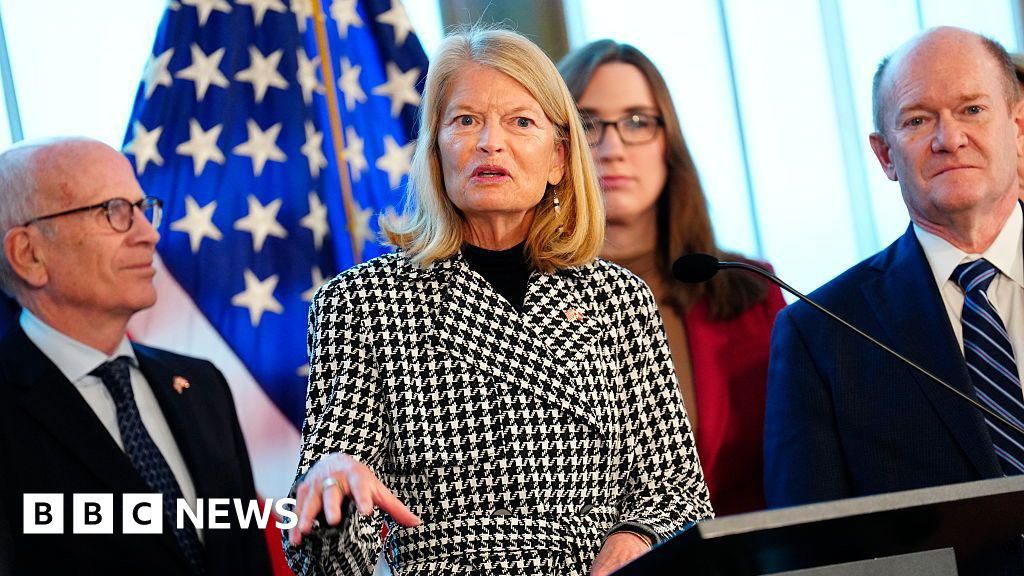
President Donald Trump’s audacious ambition to acquire Greenland has ignited a significant backlash within his own Republican party in Congress, fueling growing unease about the potential for further US military interventions and unilateral foreign policy actions. This internal dissent raises a critical question: can enough Republicans coalesce with Democrats to thwart a potential takeover of the strategically vital Arctic territory? And if Congress does muster the resolve, would President Trump heed their pressure, or would he, as he has demonstrated on multiple occasions during his presidency, pursue his objectives independently, further entrenching the United States in complex global entanglements?
The focus on Greenland has rapidly transcended the immediate issue of territorial acquisition, evolving into a broader national conversation about the Trump administration’s assertive and often unilateral approach to projecting American power. This strategy encompasses not only military interventions, as seen in past discussions regarding Venezuela and Iran, but also the deployment of diplomatic and economic coercion to achieve foreign policy goals. While Republicans have, by and large, offered staunch support for Trump’s foreign policy agenda since his return to the White House, a discernible shift is occurring. A growing contingent of lawmakers, including prominent figures, are now aligning themselves with Democrats and NATO allies who contend that any attempt to annex Greenland would be a flagrant violation of both US domestic law and established international legal frameworks.
In recent days, a number of Republican leaders have publicly stated that there is minimal, if any, appetite within the United States for purchasing Greenland or resorting to military force to seize it. While the White House had previously left the military option on the table, President Trump himself definitively ruled it out during his address at the World Economic Forum in Davos. This public retraction, however, has not entirely assuuaged concerns on Capitol Hill. Furthermore, some Republican lawmakers have joined their Democratic colleagues in vocally opposing a new initiative proposed by President Trump: the imposition of tariffs on countries that do not support his bid to acquire Greenland, a self-governed territory that remains under Danish sovereignty.
Senator Thom Tillis of North Carolina articulated a stark warning regarding the potential economic ramifications of such tariffs, stating on social media that they would be "bad for America, bad for American businesses, and bad for America’s allies." He further elaborated that such a move would ultimately benefit adversaries like China and Russia, declaring, "It’s great for [Russian President Vladimir] Putin, [Chinese President] Xi [Jinping] and other adversaries who want to see Nato divided." This sentiment underscores a growing apprehension among Republicans that Trump’s aggressive pursuit of Greenland could inadvertently undermine the very alliances that bolster US global standing. Other Republicans have echoed these concerns, emphasizing that Trump’s ambition to annex Greenland is particularly ill-timed, given the current period of heightened tension between the United States and its European allies, and could potentially destabilize the NATO alliance, of which both the US and Denmark are integral members.
Senator Lisa Murkowski, the co-chair of the Senate Arctic Caucus, issued a pointed statement emphasizing the fundamental principle of territorial integrity: "Respect for the sovereignty of the people of Greenland should be non-negotiable." President Trump, however, has consistently argued that US ownership of Greenland is essential for America to effectively compete with China and Russia in the strategically important Arctic region. He has publicly vowed to acquire the territory "one way or another," a statement that has generated considerable consternation among lawmakers and international observers alike. When questioned by the BBC about whether he was prepared to see the decades-old security alliance of NATO collapse as a consequence of his pursuit of Greenland, Trump downplayed these concerns. He reiterated his belief that control of Greenland was paramount for both US national security and global stability, stating, "We need [Greenland] for national security and even world security."
Despite Trump’s unwavering conviction, his insistence on obtaining Greenland is proving increasingly unpopular on Capitol Hill, with a growing number of Republicans publicly breaking ranks with the administration. Representative Don Bacon of Nebraska, a known critic of President Trump, has gone so far as to suggest that the push for Greenland could potentially lead to an impeachment investigation. Furthermore, the Republican leadership in both chambers of Congress, Senate Majority Leader John Thune and House Speaker Mike Johnson, have voiced their opposition to any military intervention in Greenland, a stance that directly contrasts with the administration’s earlier refusal to rule out such an option.
However, not all Republicans have joined the chorus of opposition. Senator Ted Cruz of Texas, a staunch supporter of the President, declared on Sunday that owning Greenland was "overwhelmingly in America’s national interest." In an interview with Fox News, Cruz commended President Trump for his "single-mindedly focused on America First, on US economic interests, and US national security interests." This division within the Republican party creates a complex political landscape, leaving the ultimate outcome of Trump’s Greenland gambit uncertain.
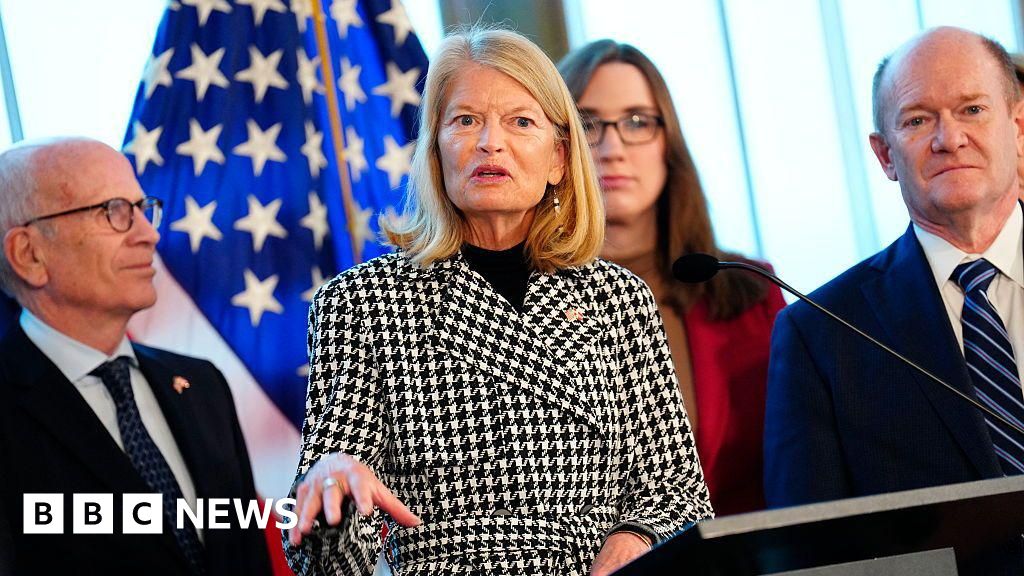
Should Republicans and Democrats ultimately decide to confront the President on this issue, Congress possesses several avenues to rein him in. Experts emphasize that Congress holds the "power of the purse," meaning that any funding required to purchase Greenland would theoretically need congressional approval. Both Denmark and Greenland have unequivocally stated that the island is not for sale, a position that further complicates any potential transaction. Daniel Schuman, executive director of the American Governance Institute and an expert on congressional procedure, explained, "If Trump wants to buy Greenland it would require an act of Congress to provide the funds to do so." He added that it is highly unlikely Congress would be able to repurpose existing appropriations to finance such an acquisition.
Despite these congressional checks, the Trump administration has demonstrated a willingness to expand the executive branch’s authority to implement the President’s agenda, including his immigration policies and trade initiatives. Schuman cautioned that the administration might attempt to assert some novel executive authority to seize Greenland, thereby circumventing any congressional roadblocks.
Lawmakers concerned about the possibility of a military incursion into Greenland have signaled their support for legislative measures that would prohibit any US military action without explicit congressional authorization. However, the crucial question remains whether these proposals can garner sufficient Republican support to pass in either the House or the Senate. Earlier this month, a bipartisan group of five Senate Republicans joined Democrats in advancing a bill that would have barred the administration from taking further military action in Venezuela, following an attack in December that led to the ousting of former President Nicolás Maduro. Although the war powers resolution concerning Venezuela ultimately failed to pass the Senate, it served as a significant indicator of the growing frustration among both Republican and Democratic lawmakers regarding President Trump’s deployment of military force abroad, particularly in light of his 2024 campaign promise to reduce US involvement in foreign conflicts. Last week, a bipartisan congressional delegation embarked on a visit to Denmark, a symbolic gesture of solidarity with a key US ally.
The potential for a treaty-based acquisition of Greenland also presents a complex scenario for Congress. The Senate, which is responsible for ratifying treaties, would have a significant role to play if the US were to reach any agreement with Denmark for the transfer of sovereignty over all or part of Greenland. The US currently has an existing arrangement with Denmark, established in 1951, which grants the US the right to expand its military presence in Greenland. Senator Murkowski and other Republicans have argued that this existing agreement already adequately addresses US national security needs in the region, rendering a full territorial acquisition unnecessary. Should a formal treaty be presented, the Senate could attempt to thwart President Trump’s objectives by opposing its ratification. Given the current partisan landscape, securing the two-thirds majority required for treaty ratification would be an exceedingly difficult, if not impossible, task for the administration.
Some Republicans have already indicated a willingness to break with President Trump over the Greenland issue. Senator Mitch McConnell of Kentucky, the former Senate Majority Leader, stated to reporters that a US takeover of the territory would "shatter the trust of allies." Faced with mounting Republican dissent, President Trump might explore alternative avenues to achieve his objectives, potentially seeking a less formal agreement that does not necessitate Senate approval. However, legal analysts express skepticism regarding the president’s authority to enter into such significant international agreements without congressional input. Josh Chafetz, a professor at Georgetown Law, noted that while "plenty of international agreements are concluded in forms other than treaties," he remains "sceptical that something of this magnitude could be concluded as a pure executive agreement."
When questioned on Tuesday about whether he felt constrained in his pursuit of Greenland, President Trump offered a cryptic response, urging reporters to "stay tuned." He concluded by stating, "I think something is going to happen that’s going to be very good for everybody." The ultimate decision on whether Congress can successfully block President Trump’s ambitions for Greenland, and whether he would acquiesce to such a legislative challenge, remains a critical and unfolding geopolitical drama.
Additional reporting by Kayla Epstein.



 Ramos Leo
 Nakalama John