George Anjay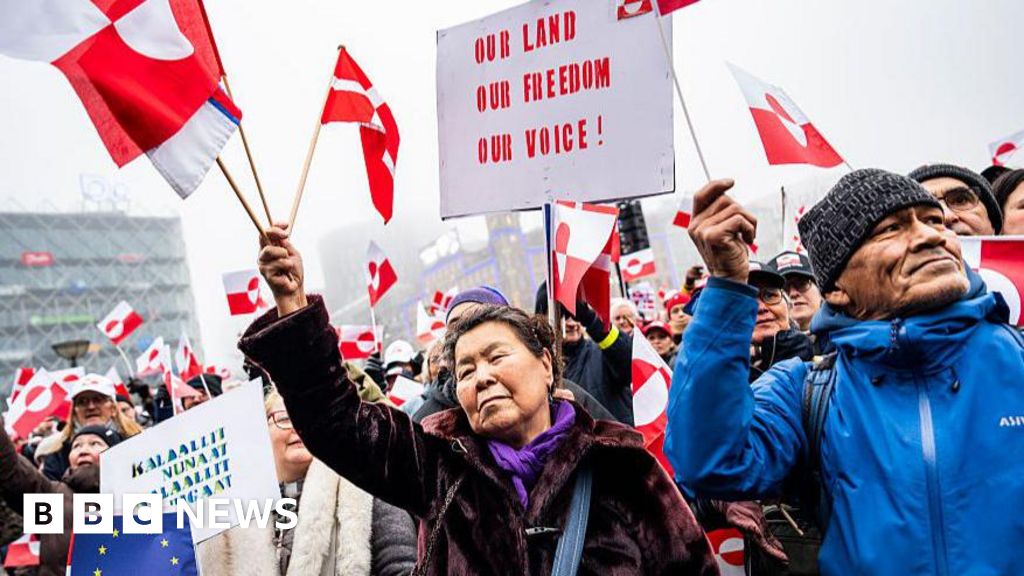
US President Donald Trump’s recent, and frankly astonishing, threat to penalize Western allies who do not support his proposed annexation of Greenland marks a new and deeply concerning chapter in international relations. This is not merely an unusual or unexpected economic maneuver; it represents a departure from established diplomatic norms and plunges the global political landscape into "surreal and utterly dangerous territory," according to Faisal Islam, the BBC’s Economics Editor. If taken at face value, this action constitutes an act of economic warfare, initiated by the White House against its closest partners, and at an incredibly short notice. The potential ramifications are vast, threatening to fracture NATO and dismantle the very fabric of the Western alliance.
Officials from the targeted nations are likely experiencing a profound sense of bewilderment, perhaps even more so than anger, given the sheer outlandishness of the proposition. The idea that a nation would threaten its allies over the acquisition of their territory is almost unthinkable. This raises critical questions about President Trump’s domestic support for such a radical policy. Does he truly possess the backing of Congress, or even his own administration, to pursue this course of action? Some trade officials are undoubtedly speculating whether this is the ultimate "TACO" – Trump Will Chicken Out – moment, a pattern observed in previous, less severe, economic pronouncements. While these nations have, to date, weathered the economic storms stirred by Trump’s trade policies, the scale and nature of this latest threat are qualitatively different.
Consider the case of Canada. Despite experiencing a slump in trade with the United States, Canadian Prime Minister Mark Carney has demonstrably navigated this challenge by bolstering trade with the rest of the world. Canada’s trade has surged by an impressive 14% globally, a figure that more than compensates for the trade lost with the US. Carney’s proactive approach, including his recent visit to China to champion "a new world order" and foster deeper trade ties, stands in stark contrast to the isolationist tendencies advocated by certain elements within the Trump administration. This pursuit of broader international partnerships, particularly with China, offers a significant counterpoint to the "China versus the world" narrative that the Trump administration had been actively promoting just a few months prior. Carney’s actions, therefore, provide a notable and perhaps strategically timed backdrop to President Trump’s latest, and most audacious, intervention.
However, should President Trump’s threats be taken with the gravity they appear to warrant, the implications are profoundly troubling. The concern extends far beyond the potential imposition of a 10% tariff. The underlying rationale – the acquisition of territory from an ally and the public coercion of allies – is what truly sends a shiver down the spine of international diplomacy. One can only imagine the global outcry if China or Russia were to issue such a threat to their respective allies. The very foundation of this threat is deeply disturbing, undermining the trust and mutual respect that form the bedrock of international partnerships.
Around the world, leaders and policymakers will undoubtedly scrutinize President Trump’s social media pronouncements, questioning the stability and predictability of American decision-making processes. The timing of President Trump’s arrival to meet with leaders of these very allied nations at the World Economic Forum on Wednesday adds another layer of tension to an already volatile situation. The hope among the vast majority of the international community will be that, by the time of this crucial meeting, this unprecedented and destabilizing threat will have somehow receded into the realm of the absurd, allowing for a return to more predictable and constructive international dialogue.
The economic implications of Trump’s threats are multifaceted and extend beyond immediate trade figures. The concept of using economic leverage to force the acquisition of territory from an ally is a dangerous precedent. It signals a willingness to disregard international law and established norms for territorial acquisition, potentially emboldening other nations with territorial ambitions. This could lead to a more fragmented and unstable global order, where economic power is wielded as a blunt instrument to achieve geopolitical aims, regardless of the consequences for existing alliances.
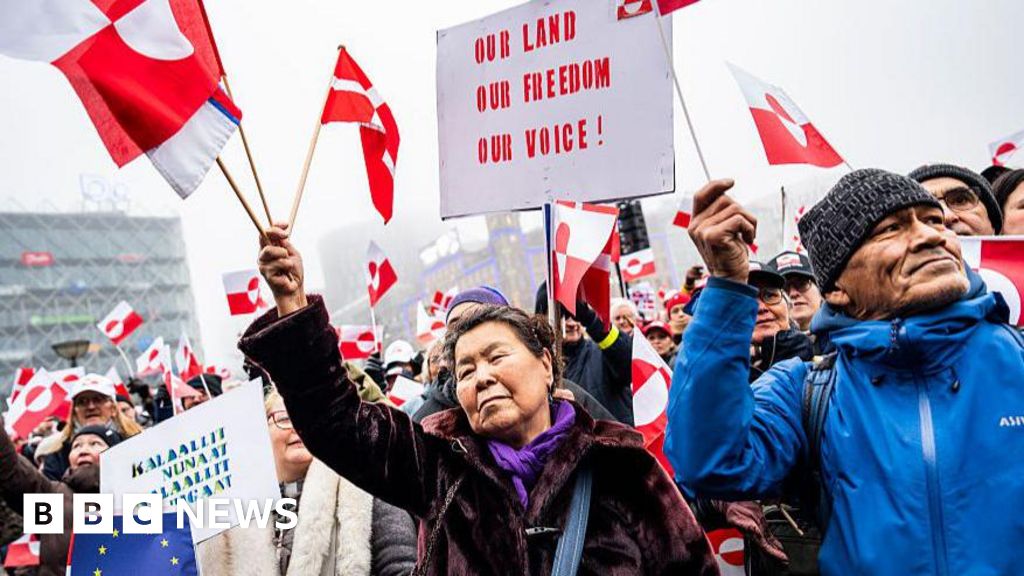
The threat to impose tariffs is, in itself, a significant economic weapon. Tariffs can disrupt supply chains, increase consumer prices, and reduce economic growth for both the imposing nation and its targets. However, when coupled with the demand for territorial concessions, the economic threat takes on a far more sinister dimension. It suggests that economic ties are not based on mutual benefit and shared prosperity, but rather on a transactional exchange where loyalty and compliance are rewarded, and dissent is punished with economic sanctions. This approach erodes the principles of free trade and open markets, which have been cornerstones of global economic stability since World War II.
The international reaction to such a threat from a major power like the United States is crucial. If other nations were to follow suit, the global economic system could descend into a state of constant flux and uncertainty, where trade agreements are fragile and subject to the whims of individual leaders. This could lead to a significant slowdown in global economic growth, as businesses become hesitant to invest in a volatile international environment.
Furthermore, the geopolitical implications are immense. NATO, the cornerstone of Western security, is built on a foundation of mutual defense and shared values. A threat to undermine allied relationships over territorial ambitions could severely weaken the alliance, leaving its members vulnerable to external threats. The very idea of an ally using economic coercion to seize territory from another ally is antithetical to the principles of collective security that underpin NATO.
The role of economic diplomacy is to foster cooperation and understanding, not to sow discord and division. President Trump’s actions, as described by Faisal Islam, represent a radical departure from this established practice. They suggest a transactional approach to international relations, where alliances are viewed as mere instruments to be leveraged for personal gain, rather than as partnerships built on trust and shared interests.
The "TACO" (Trump Will Chicken Out) hypothesis, while perhaps a cynical observation, reflects a historical pattern of aggressive rhetoric followed by a less confrontational approach. However, the scale and nature of the Greenland threat are such that even if Trump were to back down, the damage to the United States’ reputation and its relationships with its allies may be long-lasting. The trust that has been painstakingly built over decades could be significantly eroded, making future cooperation more challenging.
The economic strategies employed by countries like Canada, which have actively sought to diversify their trade relationships, offer a potential roadmap for other nations facing similar pressures. By strengthening ties with a broader range of global partners, countries can reduce their dependence on any single market and build greater resilience against external economic shocks. This approach not only mitigates the impact of aggressive trade policies but also contributes to a more balanced and stable global economic order.
Ultimately, President Trump’s Greenland threats represent a moment of profound reckoning for the international community. They highlight the fragility of established alliances and the need for a renewed commitment to the principles of diplomacy, international law, and mutual respect. The economic and geopolitical consequences of such actions are far-reaching, and the world will be watching closely to see how these unprecedented challenges are met. The hope, as articulated in the article, is that this extraordinary threat will dissipate, allowing for a return to a more predictable and collaborative international landscape. However, the very fact that such a threat was made, and potentially taken seriously, underscores a dangerous shift in the dynamics of global power and diplomacy.



 Ramos Leo
 Nakalama John