
 Nana Banana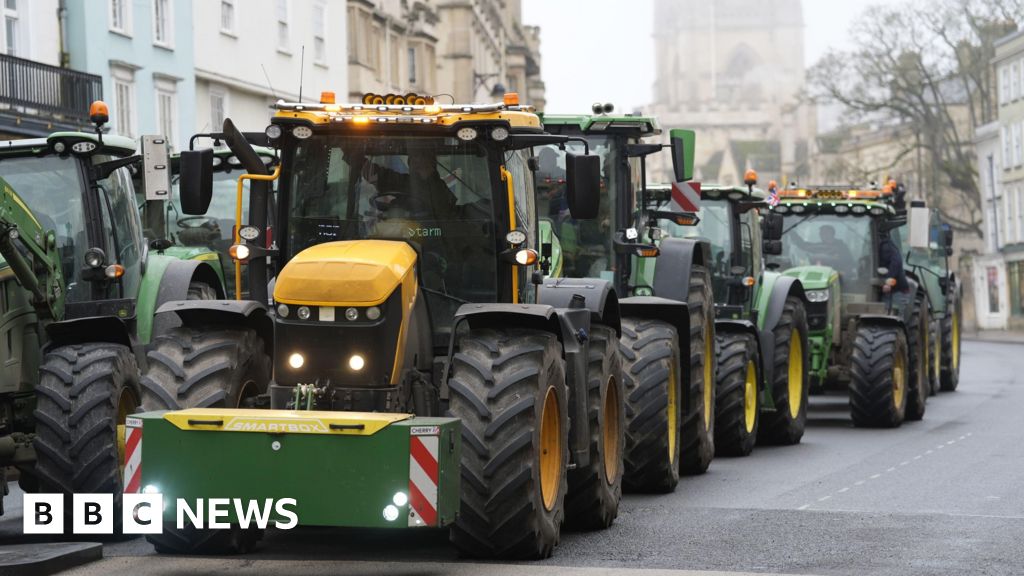
The government has declared that there will be no further modifications to its already adjusted proposals concerning farm inheritance tax, despite ongoing protests from the agricultural community. This firm stance was communicated by Environment Secretary Emma Reynolds on Thursday at the prestigious Oxford Farming Conference, a key annual event for the UK’s agricultural sector, where leading figures, policymakers, and farmers convene to discuss critical issues facing the industry.
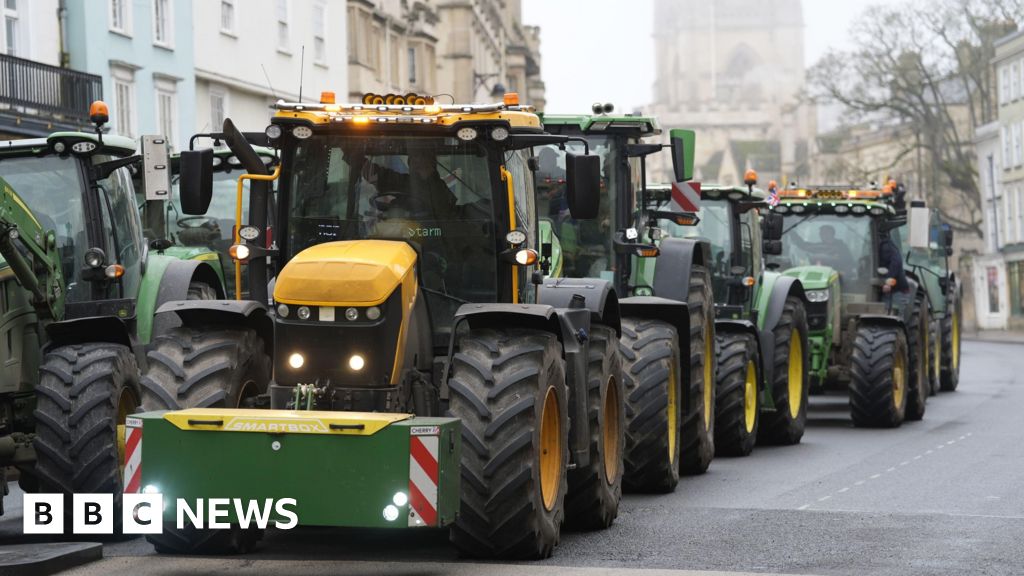
The announcement came amidst a visible demonstration outside the conference venue, where a convoy of tractors, adorned with protest banners, disrupted proceedings with a cacophony of horns. Farmers drove their vehicles into the heart of Oxford, creating a stark visual and auditory protest against the proposed changes, highlighting the depth of their dissatisfaction.
Addressing the conference, Emma Reynolds directly responded to questions about the possibility of further concessions. "That’s it, I’m afraid," she stated unequivocally, sending a clear message that the government’s revised position was final. She further contrasted the influence of the two groups, asserting, "it is the people in this room who have engaged with us constructively and relatively quietly that have had an influence on this process, not the people sounding their horns." Her remarks underscored a perceived divide between traditional lobbying efforts and more disruptive forms of protest, favouring the former as the channel for policy influence.
The initial proposals for an inheritance tax on agricultural assets, unveiled in Chancellor Rachel Reeves’ first budget in 2024, sparked immediate and widespread concern across the farming community. The original plan suggested a 20% tax on inherited agricultural assets exceeding a threshold of £1 million, a rate half the standard inheritance tax, and was projected to generate an estimated £520 million annually by 2029. The government’s justification for this significant policy shift was twofold: to protect smaller, family-run farms and to curb what it identified as a tax loophole exploited by wealthy investors acquiring farmland primarily for tax avoidance rather than genuine agricultural production. This move was framed as an effort to ensure fairness and prevent speculative land purchases from driving up prices beyond the reach of genuine farmers.
However, the agricultural sector argued that the proposed tax would fundamentally undermine the principle of intergenerational farm transfer, a cornerstone of British farming. They contended that farms, by their very nature, are capital-intensive businesses with significant asset values tied up in illiquid land and machinery. Imposing such a tax, they argued, could force the sale of parts of a farm, or even entire holdings, to cover tax liabilities, thereby threatening the viability of family farms, fragmenting agricultural land, and jeopardising food security.
Following months of intense lobbying, public campaigns, and growing political pressure, the government announced a significant adjustment to its plans in December. This "partial climbdown," as many critics termed it, saw the planned tax threshold for inherited agricultural assets substantially raised from £1 million to £2.5 million. This revision was widely interpreted as a direct response to the powerful and sustained opposition from farming organisations and rural constituencies. The timing of the announcement, just days before Christmas, and shortly after a high-profile meeting between the National Farmers’ Union (NFU) President and the Prime Minister, was seen by many as a strategic political manoeuvre to mitigate further unrest.
Under the revised policy, coupled with an existing exemption allowing assets to be passed between spouses tax-free, a farming couple could collectively transfer up to £5 million in qualifying agricultural assets without incurring inheritance tax. While this significantly alleviates the tax burden for a substantial number of family farms, it has not entirely satisfied the industry’s representative bodies.
The Country Land and Business Association (CLA), which champions the interests of rural landowners and businesses across England and Wales, remains steadfast in its campaign for a complete reversal of the policy. Gavin Lane, President of the CLA, acknowledged that the December adjustment provided a "welcome relief," but stressed it was also "a further acknowledgement that their reforms were ill-thought through and deeply damaging." Lane reiterated the CLA’s view that the policy, even in its watered-down form, remains "so dreadful for the rural economy," warning of long-term negative impacts on investment, succession planning, and the overall vitality of rural areas.
Similarly, the National Farmers’ Union (NFU), representing the largest number of farmers in England and Wales, expressed its continued opposition to the inheritance tax in principle. NFU President Tom Bradshaw confirmed that the organisation would "push for further changes at the next political opportunity." However, Bradshaw also highlighted the immediate positive impact of the revised threshold, noting that "news of the change to the inheritance tax threshold just two days before Christmas… has been a huge relief for many farming families across the country." He added that "the change removes the tax burden from a significant number of family farms," acknowledging the government’s responsiveness to their concerns, even if not fully meeting their demands.
The debate over inheritance tax has occurred within a broader context of uncertainty and reform in the agricultural sector, particularly regarding environmental payments. The Environment Secretary also used her platform at the Oxford Farming Conference to address anxieties surrounding the Sustainable Farming Incentive (SFI), a cornerstone of England’s post-Brexit agricultural policy.
Reynolds pledged that there would be "no more sudden, unexpected closures" of farming payment schemes, a direct reference to a widely criticised incident last March. At that time, the SFI, designed to reward farmers for delivering "public goods" such as insecticide-free farming, creating wildflower strips, and managing hedgerows, was abruptly closed for new applications after its allocated funding for the year was exhausted. The NFU had then described this closure as "another shattering blow to English farms," highlighting the precarious position farmers found themselves in, having often made plans and investments based on the expectation of these payments.

The SFI is a crucial component of the wider Environmental Land Management Schemes (ELMs), which replaced the European Union’s agricultural subsidies after Brexit. The transition has been fraught with challenges, including perceived complexity, delays in scheme rollout, and a lack of clear communication, leading to significant ongoing uncertainty for farmers. A farming profitability review, commissioned by the government and led by former NFU president Baroness Minette Batters, had warned late last year that the sector was "bewildered and frightened," with both inheritance tax and SFI payment changes contributing to profound concern among farmers.
On Thursday, Reynolds outlined ambitious plans for what she described as a "simpler, fairer and more stable" SFI scheme, openly admitting that "mistakes were made" in the past regarding the administration and communication of these payments. She detailed a phased approach for the new scheme’s application windows: the first, opening in June, would target small farms under 50 hectares (approximately 120 acres) and those not already participating in a payment scheme. A broader, second application window would then open from September for all other farms.
The Environment Secretary strongly reiterated the government’s commitment to the overall approach of linking agricultural payments to environmental benefits. She told the assembled farmers, "Protecting the environmental foundations of farming isn’t separate from profitability, it’s essential to it." This statement sought to bridge the perceived gap between environmental stewardship and economic viability, framing ecological practices as integral to long-term farm resilience.
Reynolds also hinted at further refinements to the scheme, including a potential slimming down of the number of different nature-friendly farming initiatives funded, a limit on the amount of land that could be enrolled in a particular action, and a consideration of capping the total amount of money a single farm business could receive through SFI. These prospective changes aim to streamline the scheme, ensure broader participation, and potentially prevent a few large enterprises from dominating funding.
However, environmental organisations remain cautious. The Wildlife Trusts, a leading conservation charity, responded to the announcement by stressing that it was now "vital" for the farm payments budget for environmental schemes to be "considerably increased" to effectively address the twin crises of climate change and wildlife decline. Their call underscores the ongoing debate about whether the current funding levels are sufficient to drive the necessary scale of environmental improvement across the English landscape, even with a more streamlined and accessible scheme. The agricultural sector, therefore, continues to navigate a complex landscape of policy reform, economic pressures, and environmental imperatives, with the government’s latest pronouncements setting a clear, albeit contested, path forward.



 Ramos Leo
 atisusanti
 Nakalama John
 George Anjay

 Roy Suryo