George Anjay
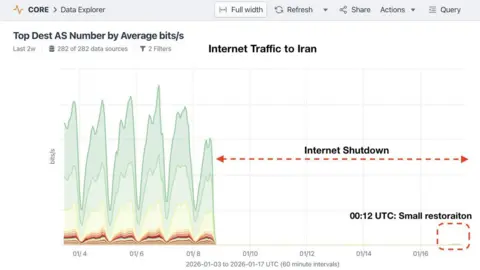
Iran is currently enduring one of the most severe internet shutdowns in recent history, with an estimated 92 million citizens completely disconnected from all online services. This extensive blackout, initiated on January 8th, has also disrupted mobile phone and text messaging capabilities, plunging the nation into an unprecedented state of digital silence. The government claims the shutdown was implemented to thwart dissent and prevent international observation of a crackdown on protesters. Iranian Foreign Minister Abbas Araghchi stated that the internet was severed in response to what he characterized as "terrorist operations" with external direction.
While the government has provided no timeline for the restoration of internet services, new intelligence suggests a more concerning long-term strategy may be underway. Reports from the news outlet IranWire indicate that government spokesperson Fatemeh Mohajerani informed journalists that international web access would remain unavailable until at least the Iranian New Year, which falls in late March. Internet freedom observers at FilterWatch express grave concern, believing the authorities are rapidly deploying new infrastructure and regulations designed to permanently sever Iran’s connection to the global internet. "There should be no expectation of reopening international internet access, and even afterwards, users’ access to international internet will never return to its previous form," FilterWatch warned, citing anonymous government sources. While the BBC cannot independently verify these claims, journalists speaking with BBC Persian have also been informed that internet access will not be restored in the immediate future.
From Temporary Outage to Communication Black Hole
Iran has long maintained a stringent control over its digital landscape, with most Western social media platforms and applications, as well as international news outlets like the BBC, being systematically blocked. Nevertheless, a significant portion of the population has historically relied on Virtual Private Networks (VPNs) to access popular platforms such as Instagram. Internet freedom advocates at Access Now have repeatedly highlighted that Iran has frequently employed internet shutdowns as a tactic to obscure evidence of mass violence and brutal crackdowns on protesters, a pattern observed during the nationwide blackouts in November 2019 and September 2022. A similar shutdown was also imposed during the Iran-Israel conflict in June 2025. However, the current blackout has surpassed all previous durations, raising alarms about the government’s intentions.
In a public statement, the charity Access Now emphasized the critical need for the full restoration of internet access. "Restricting access to these essential services not only endangers lives but emboldens authorities to conceal and evade accountability for human rights abuses," the organization stated. Already, reports indicate severe impacts on livelihoods within Iran, with the e-commerce sector being particularly hard-hit. As of January 18th, the Human Rights Activists News Agency (HRANA) estimates that over 3,300 confirmed protester deaths have been recorded, with more than 4,380 cases under review. The agency also reports a staggering 24,266 arrests across 187 cities. It is widely believed that the actual figures for fatalities and detentions are significantly higher, but the lack of internet access prevents independent verification.
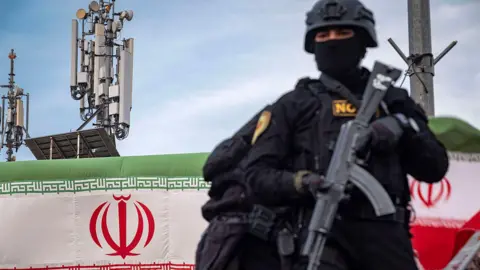
The internet monitoring project, FilterWatch, posits that the latest shutdown marks the beginning of a more extreme phase of "digital isolation" and an escalation in surveillance over online communications. Amir Rashidi, director of cybersecurity and digital rights at the Miaan Group, which operates FilterWatch, informed the BBC that he believes the Iranian authorities are transitioning towards a tiered internet access system. Under this proposed model, access to the global internet would no longer be automatic but would require government approval, likely through a registration and vetting process. Rashidi added that the technical infrastructure for such a system has reportedly been in place for years.
Who Decides About the Internet?
According to FilterWatch, these plans are not being openly discussed, with crucial decisions increasingly being consolidated within security bodies rather than civilian ministries. The government’s motivation may also stem from the need to protect Iran from cyber attacks, given the numerous high-profile and disruptive incidents in recent years. However, analysts caution that the full implementation of these plans may be subject to internal power dynamics and broader economic and technical pressures, potentially leading to uneven application or incomplete realization. Amir Rashidi further noted that risks to internet providers, coupled with users’ capacity to adapt or migrate to alternative platforms, could further complicate the implementation process.
If Iran proceeds with the reported plans, it would be emulating systems already in place in Russia and China. China has long been a global leader in internet control, employing extensive state censorship over online discourse and regulating access to foreign content. Its formidable "Great Firewall" blocks citizens from a significant portion of the global internet, rendering Western applications like Facebook, Instagram, and YouTube inaccessible without VPNs, which are themselves facing increasing restrictions. In 2019, Russia initiated testing for a comprehensive system, dubbed Ru-net, designed for similar state control. Unlike China, which integrated state control into the internet’s development, Russia is retrofitting such controls into its existing complex digital infrastructure. Russia’s ambition extends further, with plans for a "kill switch" to disconnect from the World Wide Web during crises, enabling internal internet traffic while severing external connections—effectively creating a digital border. However, this system has yet to undergo full testing.
Where is Internet in Iran Heading?
If the current reports prove accurate, Iran appears to be charting a course towards a hybrid model of permanent Chinese and Russian internet control. Professor Alan Woodward, a computer security expert from Surrey University in the UK, reviewed the reports and commented that "In Iran there seems to be a move to isolate everyone from any electronic access, unless approved by the government." He suggests that the Iranian regime may be leveraging the current blackout as an opportunity to implement its longer-term plans and make the necessary technical adjustments while connectivity is already severed. Amir Rashidi believes the ultimate implementation of such systems now hinges on political will rather than technical feasibility.
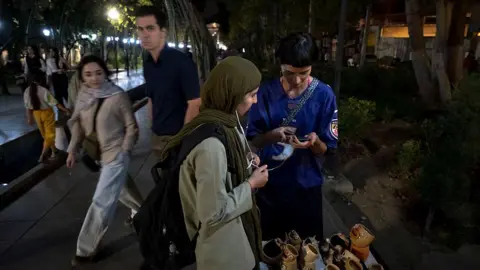
Starlink and other satellite-based internet services, known as Low Earth Orbit (LEO) systems, have also presented challenges to Iranian authorities in controlling information flow during the protests. LEO internet services enable users to bypass censorship and shutdowns by connecting via satellites. While the government has reportedly jammed some Starlink users, it has been confirmed to the BBC that other terminals remain operational following firmware updates by the company to circumvent government blocking efforts. Elon Musk’s company has also waived subscription fees for Iranian users.
Despite the increasing tools employed by repressive regimes, Woodward expresses cautious optimism regarding the future of internet access. He points to advancements in LEO technology and the growing capability of smartphones to utilize satellites for emergency SOS messages even when standard internet is down. Emerging mesh network applications, which rely on Bluetooth, also offer the potential for connectivity in areas with no existing infrastructure. "It’s almost inevitable that internet access will be truly universal eventually, but it’ll always be cat and mouse for repressive regimes," Woodward concluded.




 Ramos Leo
 Nakalama John