Roy Suryo
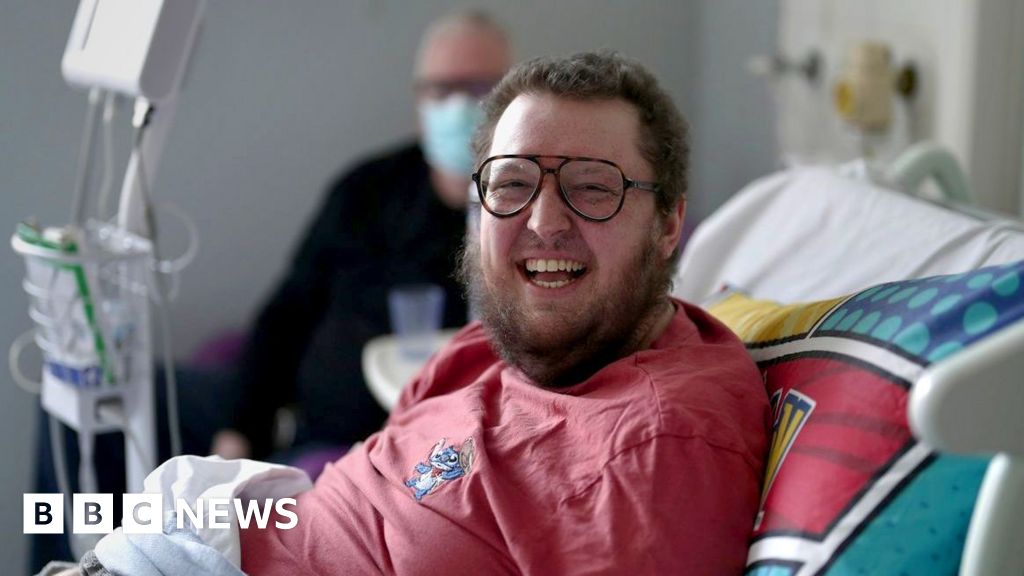
The advent of CAR-T therapy, a revolutionary "living drug," on the National Health Service (NHS) marks a monumental leap forward in the fight against aggressive blood cancers, with Oscar Murphy, a 28-year-old battling an aggressive form of B-cell acute lymphoblastic leukaemia (B-cell ALL), becoming the first patient to receive this groundbreaking treatment at Manchester Royal Infirmary. BBC News was present on January 2nd as Oscar received the initial infusion of his own genetically modified immune cells, meticulously engineered to identify and obliterate his cancer. This pioneering therapy, now funded by NHS England at select centres nationwide, is poised to benefit approximately 50 NHS patients annually, offering a beacon of hope where conventional treatments have faltered.
Oscar’s harrowing journey began in March 2025 with his diagnosis of B-cell ALL, a particularly aggressive and fast-acting strain of leukaemia. Despite undergoing intensive chemotherapy and a life-saving donor stem cell transplant in July, the relentless disease returned, presenting a stark prognosis. "The leukaemia I’ve got is so fast-acting," Oscar, a car salesman from Bury, explained. "It needs an even quicker response to stop it. And we’ve now got an answer for that." This sentiment underscores the urgent need for advanced therapeutic options for patients like Oscar, whose conditions have progressed beyond the reach of standard medical interventions.
The efficacy of CAR-T therapy is supported by robust clinical data, with a significant clinical trial demonstrating that 77% of patients achieved remission following treatment. Crucially, half of these patients remained cancer-free for over three and a half years, and the treatment, on average, extended patients’ lives by an additional 15.6 months. Dr. Eleni Tholouli, Oscar’s haematologist, lauded the CAR-T therapy as a significant advancement, highlighting its improved safety profile and superior efficacy compared to existing treatments. "Usually, this type of leukaemia is very aggressive and adult patients don’t live beyond six to eight months," Dr. Tholouli stated. "With this therapy, we are able to offer them years and potentially a cure. It’s very significant and is revolutionising the way we tackle this cancer." This transformative potential offers a stark contrast to the grim outlook often faced by individuals with relapsed or refractory B-cell ALL.
While CAR-T therapy has been available on the NHS for several years for specific types of leukaemia and lymphoma, its expansion to adults with B-cell ALL represents a crucial new frontier. The intricate process involves the removal of Oscar’s T-cells, a vital component of the immune system, which were then transported to a specialized laboratory in Stevenage. There, these cells underwent a sophisticated reprogramming process utilizing a harmless virus to introduce a genetic sequence. This genetic modification equips the T-cells with the ability to recognize cancer cells by introducing new surface receptors that act like a "lock and key," effectively marking the malignant cells for destruction. These enhanced cells are then termed "chimeric antigen receptor T-cells," or CAR T-cells, and their numbers are exponentially expanded in the laboratory, creating millions of potent cancer-fighting agents.
Oscar’s highly personalized treatment, a veritable "living drug," was then cryopreserved and dispatched to Manchester Royal Infirmary. The minuscule volume, containing an astounding 100 million CAR T-cells suspended in just three teaspoons of liquid, was infused into Oscar’s bloodstream in a procedure lasting mere minutes. The sheer density of therapeutic power within such a small dose left Oscar in awe. "It’s very sci-fi, but if it means it gets rid of the cancer permanently and my own cells can do it it’s just fantastic," he expressed, marveling at the innovative nature of his treatment. Oscar completed his CAR-T therapy with a second infusion of 300 million cells yesterday, signifying the conclusion of this crucial phase. The enduring nature of this "living drug" means that the cancer-killing CAR T-cells will continue to circulate and actively combat the disease within Oscar’s body long after the infusions have ended, offering sustained protection and the potential for a lasting remission.
The development and manufacturing of this cutting-edge CAR-T therapy are spearheaded by Autolus, a dynamic spin-out company originating from University College London. During earlier clinical trials, the transportation of patient cells to laboratories in the United States was a necessary logistical hurdle. However, the availability of domestic manufacturing through Autolus signifies a crucial step in streamlining the treatment process and increasing accessibility. The list price for this advanced therapy stands at a substantial £372,000 per infusion, though NHS England has secured a confidential discount, making it more attainable for eligible patients.
This groundbreaking treatment will now be accessible to patients over the age of 26 whose B-cell ALL has proven resistant to conventional therapies or has relapsed. The designated treatment centres in England include Cambridge, Newcastle, Sheffield, Plymouth, and London. Patients hailing from Wales and Northern Ireland will need to travel to England to receive this life-changing therapy, while its approval in Scotland is still pending. NHS England anticipates that approximately 50 patients per year will benefit from CAR-T therapy, but Dr. Tholouli suggests that the actual number could be higher, envisioning a future where CAR-T therapy becomes a preferred first-line treatment, potentially supplanting stem cell transplantation.
Professor Peter Johnson, NHS National Clinical Director for Cancer, heralded this development as a "landmark moment" for individuals afflicted with aggressive blood cancers. He emphasized the remarkable achievement of developing and delivering this treatment within NHS centers, stemming from pioneering scientific research conducted in the UK. "It will help more people like Oscar live longer and healthier lives," he stated, underscoring the profound impact this innovation will have on patient outcomes.
The transformative power of CAR-T therapy is further exemplified by the experience of Chris Williams, a 29-year-old from Belfast who was diagnosed with the same aggressive form of leukaemia as Oscar in 2021. When his cancer returned, Chris received CAR-T therapy in Manchester during its experimental phase and has now been in remission for nearly three years. "A few years ago I was very unwell and now I’m able to live a full life," Chris shared, his voice filled with gratitude. "I was able to go back to work. I also met Chloe and now we’re engaged. I have fantastic support from my family and they are over the moon." His story serves as a powerful testament to the life-altering potential of this therapy.
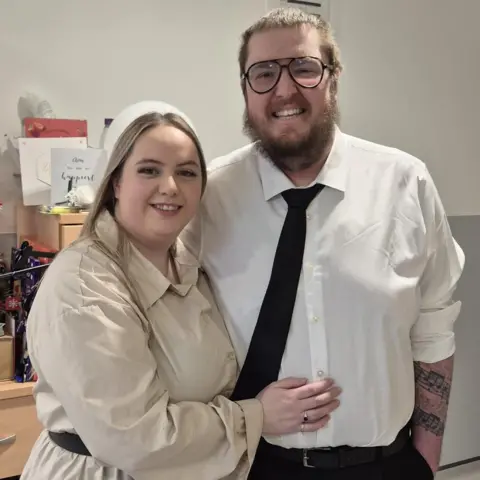
In a poignant reflection of his renewed hope and desire for a normal future, Oscar and his fiancée Lauren exchanged vows at Manchester Royal Infirmary last month. He explained his decision to marry sooner rather than later, acknowledging the inherent uncertainties surrounding his condition. However, the couple has a larger ceremony planned for October, a testament to their enduring love and optimism. "I want children and the white picket fence with my amazing wife – I just want that normality," Oscar declared, his voice filled with anticipation. "This is my gateway to doing it and I can’t wait." Oscar’s journey, from a dire prognosis to a future filled with hope and normalcy, encapsulates the profound impact of scientific innovation and the unwavering spirit of those who bravely face the challenges of cancer.

 Nakalama John
 Ramos Leo
 atisusanti
 George Anjay