
 George Anjay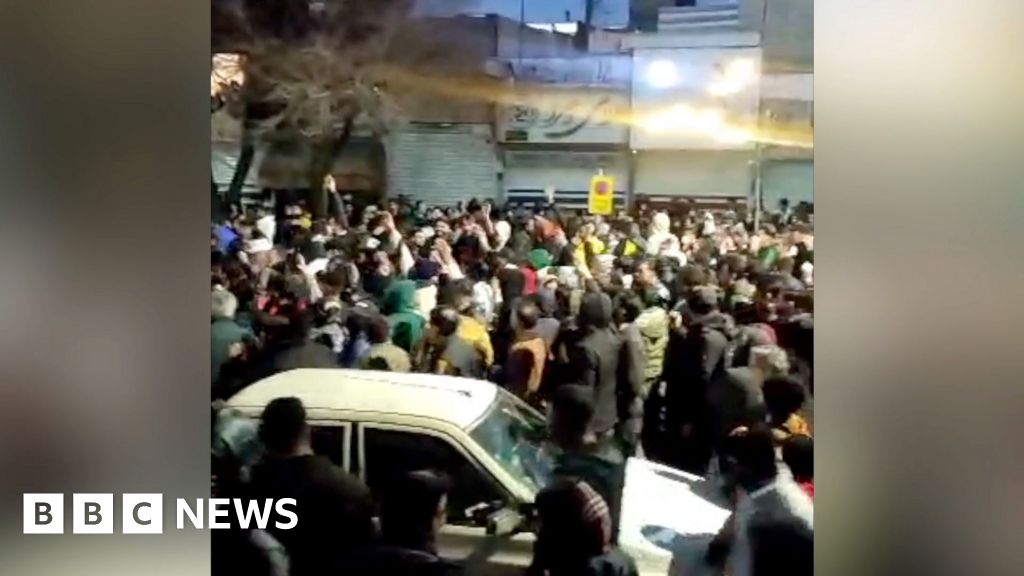
Violent confrontations between anti-government demonstrators and security forces erupted across multiple locations in Iran on Wednesday, marking the 11th day of widespread unrest fueled by the nation’s escalating economic crisis. In the southwestern town of Lordegan, two police officers were reportedly killed by armed individuals, according to the semi-official Fars news agency, which maintains close ties with the Revolutionary Guards. Social media videos depicted tense standoffs between protesters and security forces, punctuated by the distinct sound of gunfire. Further footage from various other regions appeared to show security forces deploying firearms and tear gas against crowds of demonstrators, some of whom were seen retaliating with stones.
The scale of the protests has become increasingly evident, with the US-based Human Rights Activist News Agency (HRANA) reporting that demonstrations have now spread to 111 cities and towns across all 31 of Iran’s provinces. HRANA’s figures indicate a grim toll, with at least 34 protesters and four security personnel confirmed dead, and an estimated 2,200 protesters having been arrested. The BBC Persian service has independently corroborated the deaths of 21 individuals, while Iranian authorities have officially reported the fatalities of five security personnel.
The current wave of protests, which began on December 28th, was initially ignited by shopkeepers in the capital, Tehran, voicing their deep-seated anger over a precipitous decline in the value of the Iranian rial against the US dollar in the open market. Over the past year, the rial has plummeted to record lows, while inflation has soared to an alarming 40%. This economic turmoil is exacerbated by international sanctions imposed over Iran’s nuclear program, compounded by decades of government mismanagement and endemic corruption.
University students soon joined the burgeoning movement, and the protests rapidly expanded to other cities. Chants against the country’s Supreme Leader, Ayatollah Ali Khamenei, became a common refrain, with some crowds also expressing support for Reza Pahlavi, the exiled son of Iran’s late former shah.
On Wednesday, verified videos shared by BBC Persian captured crowds demonstrating in Qazvin, a city northwest of Tehran. Protesters were heard shouting slogans such as "Death to the dictator," a clear reference to Khamenei, and "Long live the shah." In the Gulf port city of Bandar Abbas, footage showed demonstrators chanting, "Police force, support, support," before security forces moved to disperse them.
In Mashhad, the holy city in the country’s northwest, protesters were observed clashing with security forces, forcing them to retreat. Another video from the same city featured chants in support of the Pahlavi dynasty, which was overthrown by the 1979 Islamic Revolution.
Later in the afternoon, a substantial demonstration unfolded in Abadan, a southwestern city situated near the Iraqi border. Verified footage revealed protesters chanting, "Cannon, tanks, firecrackers! Mullahs must get lost," a direct indictment of Iran’s clerical leadership. Additional footage, filmed from a balcony in Abadan, appeared to show security forces firing their weapons as they retreated from advancing protesters who were pelting them with stones and other projectiles.
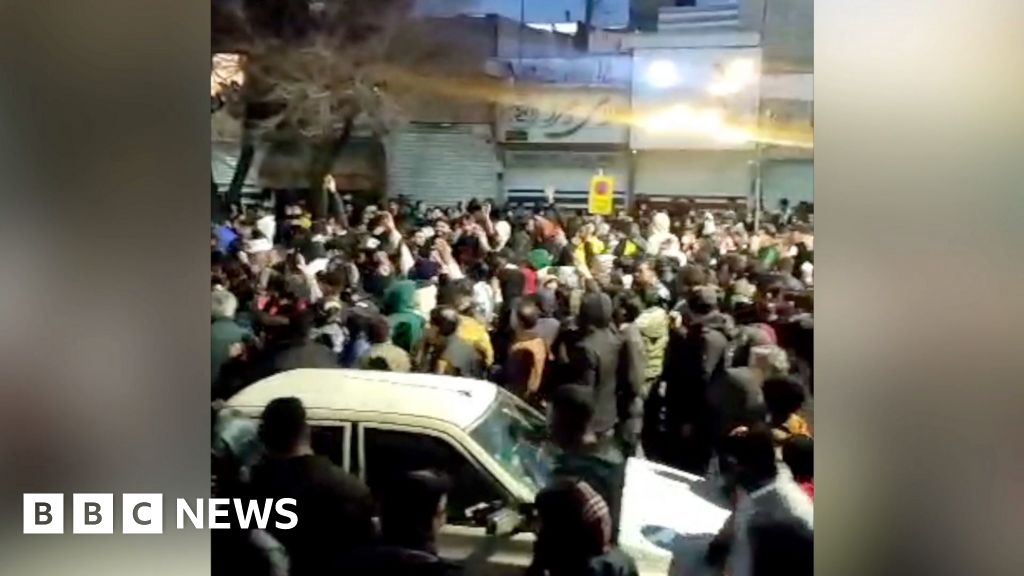
As dusk settled, security forces were filmed deploying tear gas to break up a protest in Aligudarz, another western city, where a crowd had gathered in a square chanting, "People’s uprising, Viva!" Further disturbing footage emerged from Qaemyeh, in Fars province, showing protesters toppling a statue of Qasem Soleimani, the commander of the elite Quds Force and a highly influential figure in Iran, who was assassinated in a US drone strike ordered by then-President Donald Trump in 2020.
Regarding the reported deaths in Lordegan, Fars news agency identified the deceased officers as Hadi Azarsalim and Moslem Mahdavinasab, stating they were shot by "armed individuals" who were part of a group of what it termed "rioters." Independent verification of such reports remains challenging due to restrictions on foreign media access within Iran. However, Lordegan has previously been a focal point of violent clashes during the ongoing unrest, with two protesters reportedly killed there the previous Thursday.
Following a cabinet meeting on Wednesday, Vice-President for Executive Affairs Mohammad Jafar Qaempanah announced that President Masoud Pezeshkian had issued directives for "no security measures" to be taken against peaceful protesters. He emphasized the critical distinction between legitimate protesters and "rioters," defining the latter as individuals who carry firearms, knives, and machetes, and who attack police stations and military sites. State media also reported that the government had commenced distributing a new monthly allowance, equivalent to approximately $7 (£5), to 71 million citizens in an effort to mitigate the impact of the high cost of living.
Concurrently, judiciary chief Gholamhossein Mohseni Ejei informed police commanders that "rioters" would face swift prosecution and punishment to serve as a deterrent. Supreme Leader Ayatollah Ali Khamenei, who holds ultimate authority in Iran, had previously stated on Saturday that authorities should "speak with the protesters" but that "rioters should be put in their place." These remarks came in the wake of a threat from former US President Donald Trump, who had declared that the United States was "locked and loaded" and would intervene if Iranian security forces killed peaceful protesters.
Dr. Sanam Vakil, director of the Middle East program at the London-based think tank Chatham House, commented to the BBC that the protests have rapidly evolved into a political movement, driven by profound public discontent. She articulated, "People are fed up. They have no prospects for the future. Day-to-day life is becoming much more difficult." She further warned, "If there is more momentum and if more people come out, [the protests] will be more serious and, of course, there the government response becomes more violent."
Sadegh Zibakalam, a political science professor at the University of Tehran, suggested that the Iranian authorities might be exercising restraint in their response due to President Trump’s threats. He told the BBC, "Some Iranian leaders – Revolutionary Guard commanders and security forces – maybe they are a bit more cautious and are not in a hurry to suppress the crowd this time fearing it may create an American intervention."
The current demonstrations represent the most extensive period of unrest since the 2022 uprising that was triggered by the death of Mahsa Amini, a young Kurdish woman who died in custody after being detained by morality police for allegedly failing to wear her hijab properly. Human rights groups reported that over 550 people were killed and 20,000 detained during the violent crackdown on those protests by security forces.

 Ramos Leo
 atisusanti
 Nakalama John
 Roy Suryo