George Anjay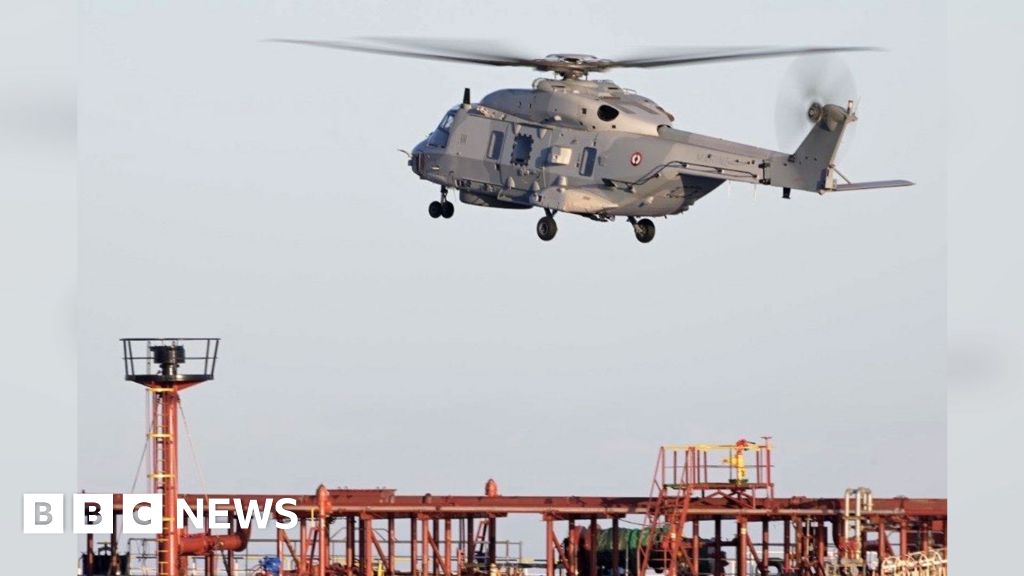
Moscow’s so-called shadow fleet represents a sophisticated and often opaque network of aging tankers. These vessels are strategically employed to evade stringent Western sanctions imposed on Russian oil exports. The modus operandi involves obscuring ownership, insurance, and operational details, creating a veil of deniability that allows Russia to continue generating revenue from its oil trade, even in the face of international condemnation. The "Grinch," according to French authorities, was en route from the Arctic port of Murmansk in northern Russia when it was intercepted. Ship tracking websites, such as MarineTraffic and VesselFinder, indicated that the vessel had been flying the flag of the Comoros, a small island nation often used by such illicit operations due to its less stringent maritime regulations.
President Macron announced the successful seizure on the social media platform X, formerly Twitter, emphasizing France’s unwavering commitment to upholding international law and ensuring the robust enforcement of sanctions. "We are determined to uphold international law and to ensure the effective enforcement of sanctions," Macron stated, underscoring the broader implications of the operation. He directly linked the activities of the shadow fleet to the financing of Russia’s ongoing aggression in Ukraine. "The activities of the ‘shadow fleet’ contribute to financing the war of aggression against Ukraine," he asserted, adding a significant detail that the vessel had been "diverted," suggesting a deliberate attempt to mislead authorities.
The United Kingdom played a vital role in this coordinated effort. Defence Secretary John Healy confirmed that the UK navy provided essential "tracking and monitoring" support throughout the operation. Specifically, the HMS Dagger, a Royal Navy vessel, was instrumental in monitoring the tanker’s movements through the strategically important Straits of Gibraltar. Healy further articulated the shared objective of the allied nations: "Alongside our allies, we are stepping up our response to shadow vessels to choke off the funds that fuel Putin’s illegal invasion of Ukraine." This statement highlights a growing consensus among Western powers to take more aggressive measures against the financial arteries supporting the conflict. The UK’s commitment to this cause is substantial; the nation has already imposed sanctions on an impressive 544 Russian shadow fleet vessels, demonstrating a sustained effort to disrupt this illicit trade.
The Ukrainian President, Volodymyr Zelensky, immediately welcomed the French action, portraying it as a critical step in the global effort to isolate Russia financially. He stated, "It was exactly the kind of resolve needed to ensure that Russian oil no longer finances Russia’s war." Zelensky went on to advocate for further punitive measures, posing a pointed question: "Vessels must be apprehended. And wouldn’t it be fair to confiscate and sell the oil carried by these tankers?" This suggestion points towards a potential escalation of sanctions, moving beyond mere seizure to direct financial restitution. Earlier in January, speaking at the World Economic Forum in Davos, Zelensky had exhorted European leaders to move beyond discussion and towards decisive action on security matters, lamenting that "Europe loves to discuss the future but avoids taking action." The seizure of the "Grinch" can be seen as a tangible response to his calls for greater resolve.
The imposition of sanctions on Russian energy by many Western countries followed Russia’s full-scale invasion of Ukraine in February 2022. These sanctions aimed to cripple Russia’s economy and limit its capacity to fund its military operations. However, the emergence and proliferation of shadow fleets have significantly undermined the effectiveness of these measures. This incident is not an isolated event. Earlier in January, British armed forces provided support to a United States operation that resulted in the seizure of a Russian-flagged tanker in the Atlantic. US officials stated that this tanker had violated sanctions by carrying oil destined for both Venezuela and Russia. Moscow vehemently denounced that move, asserting that no state possesses the right to employ force against vessels properly registered under other nations’ jurisdictions, a stance that highlights the differing interpretations of international maritime law and sanctions enforcement.
France itself has a recent history of engaging with these illicit tankers. In October of the previous year, French authorities seized another sanctioned tanker, the "Boracay," off its west coast. However, that vessel was released a few days later, a development that may have prompted the more decisive action taken with the "Grinch." The phenomenon of shadow fleets is not confined to Russia. Venezuela and Iran are also frequently accused of utilizing similar clandestine networks to circumvent international sanctions on their oil exports. The scale of this illicit trade is considerable. Financial intelligence firm S&P Global estimates that a staggering one in five oil tankers operating globally are currently involved in smuggling oil from sanctioned countries, underscoring the systemic challenge that these shadow fleets pose to international efforts to curb illicit financial flows and enforce global sanctions regimes. The seizure of the "Grinch" represents a significant, albeit partial, victory in this ongoing struggle.



 Ramos Leo
 Nakalama John