Nana Banana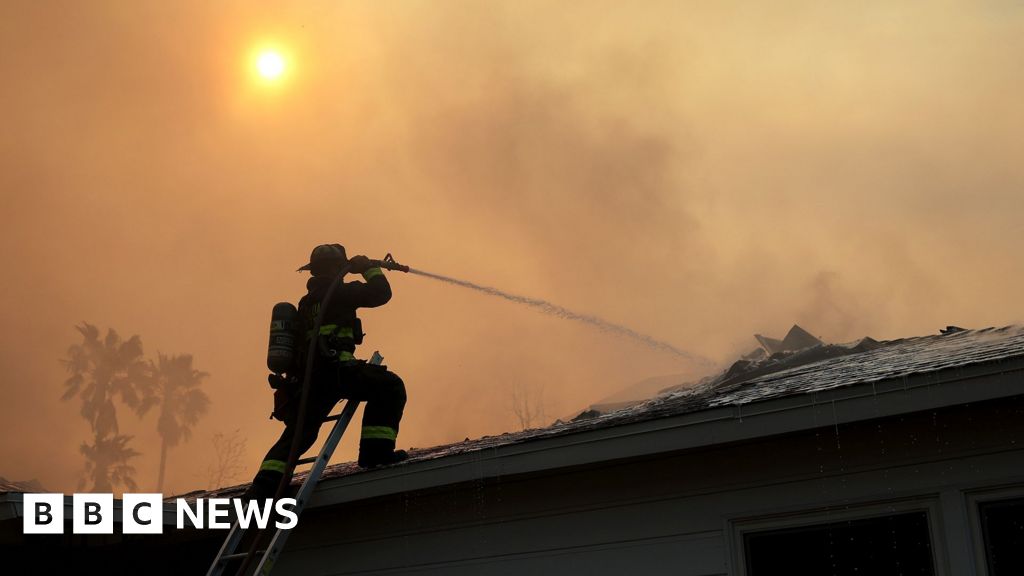
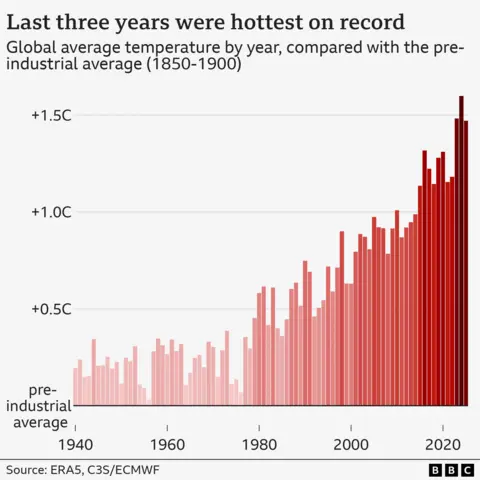
Global temperatures in 2025, while not quite reaching the unprecedented heights of the preceding year, 2024, offered a brief respite thanks to the natural cooling influence of the La Niña weather pattern in the Pacific. This new data, compiled by the European Copernicus Climate Change Service and the UK’s Met Office, reveals a complex picture: a temporary downturn within an accelerating long-term warming trend that continues to push the planet dangerously close to breaching critical international climate targets. Despite this ephemeral dip, the last three years (2023, 2024, and 2025) collectively stand as the world’s warmest ever recorded, underscoring the relentless progression of human-induced climate change.
The cooling effect of La Niña, a periodic phenomenon characterized by cooler-than-average sea surface temperatures in the equatorial Pacific, typically brings a slight reduction in global average temperatures. However, 2025 still registered significantly warmer than temperatures observed even a mere decade ago. This stark comparison serves as a potent reminder that humanity’s unabated carbon emissions are the dominant force driving the planet’s heat accumulation. Scientists are unequivocal in their warning: this persistent warming will inevitably lead to further temperature records being shattered in the coming years, bringing with them a worsening array of extreme weather events, unless global emissions are drastically and urgently reduced.
"If we go twenty years into the future and we look back at this period of the mid-2020s, we will see these years as relatively cool," stated Dr. Samantha Burgess, deputy director of Copernicus. Her sobering assessment highlights the alarming trajectory of global warming, suggesting that what feels like extreme heat today will be considered mild in comparison to future climate conditions. The global average temperature in 2025 was more than 1.4°C above "pre-industrial" levels – a baseline typically referring to the late 1800s, before industrialization began releasing vast quantities of fossil fuels into the atmosphere. This figure, derived from both Copernicus and Met Office data, signals a perilous proximity to the internationally agreed-upon climate threshold.
While the precise figures for global average temperatures may vary slightly between major climate monitoring groups, primarily due to minor differences in how the pre-industrial baseline is calculated, there is an overarching scientific consensus. There is no debate regarding the world’s undeniable and accelerating long-term warming trend. "We understand very well that if we continue to pump greenhouse gases into the atmosphere, the concentrations of those gases increase in the atmosphere, and the planet responds by warming," explained Prof. Rowan Sutton, director of the Met Office Hadley Centre. This fundamental scientific principle underpins the urgent calls for action.
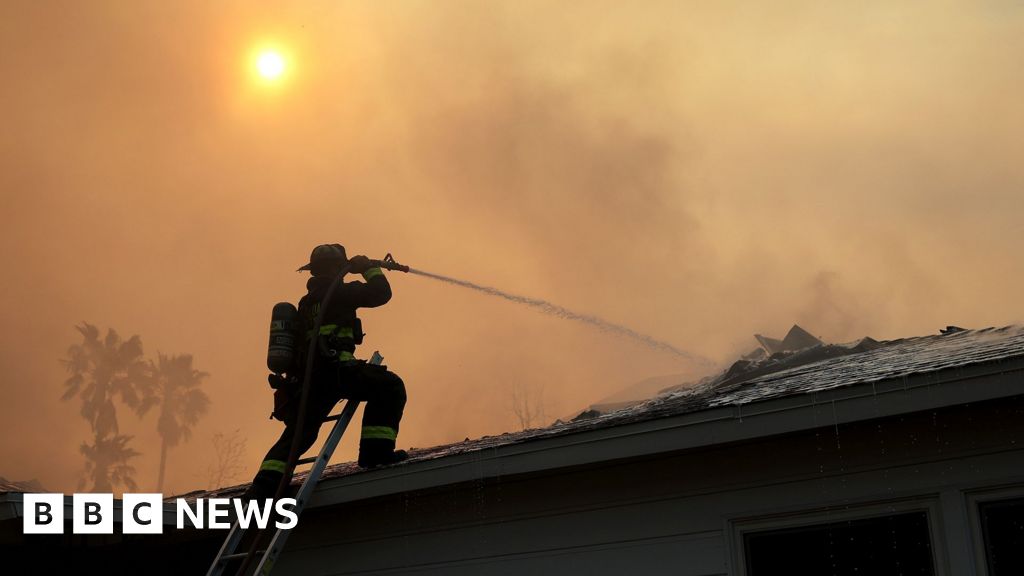
Even though 2025 did not claim the title of the absolute hottest year on record worldwide, it was far from tranquil. The year was punctuated by a series of devastating extreme weather events, many of which scientists have linked directly or indirectly to global warming. January 2025 saw the catastrophic Los Angeles fires, which raged across Southern California, consuming vast swathes of land and properties. These fires, exacerbated by prolonged drought conditions, high winds, and soaring temperatures, became one of the most expensive weather-related disasters in US history. Firefighters battled relentlessly, often silhouetted against hazy, smoke-filled skies, as seen in the striking image from Altadena.

Later in the year, October brought the fury of Hurricane Melissa, which unleashed mass flooding and widespread devastation across the Caribbean, particularly impacting Haiti. Images from Petit Goave showed residents wading through debris-laden water in front of their submerged homes, a grim testament to the storm’s destructive power. Scientists confirm that a warmer world contributes to stronger hurricanes with increased wind speeds and heavier rainfall, as warmer ocean waters provide more energy for these storms to intensify. These events serve as potent examples of the "worsening weather extremes" that scientists warn will become more frequent and severe in a warming climate. Beyond fires and hurricanes, 2025 also witnessed other significant climate impacts, including prolonged heatwaves across parts of Europe and Asia, and exacerbated droughts in various agricultural regions, further straining food and water security.
The continued upward trajectory of global temperatures brings the world ever closer to breaching the critical international target established by the Paris Agreement in 2015. Nearly 200 countries committed to limiting the rise in global temperatures to well below 2°C above pre-industrial levels, and ideally to 1.5°C, to avert the most catastrophic consequences of climate change. Dr. Burgess’s analysis offers a stark outlook: "Looking at the most recent data, it looks like we’ll exceed that 1.5 degree level of long-term warming by the end of this decade." This projection underscores the urgency of climate action, as crossing this threshold could trigger irreversible tipping points and amplify environmental and societal disruptions.
While the overarching long-term warming trend is unequivocally a result of human activities, the temperature of individual years can be influenced by natural variability in climate systems. One of the most significant of these natural variables is the cyclical switch between the El Niño and La Niña weather patterns in the Pacific Ocean. El Niño, characterized by warmer-than-average sea surface temperatures, typically leads to warmer global average years, as observed in the world’s hottest year, 2024, and to a lesser extent, 2023. Conversely, La Niña conditions, with their cooler Pacific waters, tend to suppress global temperatures.
The return of La Niña conditions is credited with tempering the warmth in 2025. However, the fact that global temperatures remained so exceptionally high even during a La Niña year is a cause for considerable concern among climate scientists. "The persistence of extreme warmth into 2025, despite the cooling influence of La Niña, is a little worrying," remarked Dr. Zeke Hausfather, a climate scientist at Berkeley Earth in the US. This suggests that the underlying human-induced warming signal is so strong that it is overriding or significantly diminishing natural cooling effects.
The period from 2023 to 2025 has been marked by global temperature records being broken by significant margins. As visualized in climate data charts, every single month of the year has seen its warmest-ever recording since 2023, according to Copernicus data. This unprecedented streak of monthly records, depicted by the darkening shades of red on temperature anomaly charts, illustrates the rapid and widespread nature of the current warming phase. The sheer size of the jump in temperatures observed in 2023, in particular, surprised many scientists, sparking intensive speculation about potential additional factors beyond carbon emissions and El Niño contributing to the surge.
Theories attempting to explain this accelerated warming include subtle changes to cloud cover, which can influence how much solar radiation is reflected back into space, and variations in tiny atmospheric particles known as aerosols. Aerosols, produced by both natural processes and human activities (like burning fossil fuels), typically have a cooling effect by reflecting sunlight. However, some research suggests a potential reduction in aerosol emissions, particularly from shipping, might be contributing to less solar reflection and thus more warming. "The persistence of extreme warmth into 2025 suggests that there might be some mysteries that we haven’t fully solved," Hausfather acknowledged. Prof. Sutton agreed, noting, "We are seeing rapid warming at the upper end of our longer-term expectations." Both scientists emphasize that more data and further research are needed before drawing firm conclusions about these potential additional drivers.

Despite the uncertainties surrounding the precise mechanisms of the recent warming acceleration, the overarching message remains clear. While scientists expect more temperature records to be broken in the years ahead, they also emphasize that the future impacts of climate change are not irrevocably set in stone. "We can strongly affect what happens," Sutton affirmed, highlighting a two-pronged approach. First, through mitigating climate change, which involves drastically cutting greenhouse gas emissions to stabilize global warming. This requires a global transition to renewable energy sources, improved energy efficiency, and sustainable land use practices. Second, through adapting, by making societies and infrastructure more resilient to the ongoing and unavoidable changes that are already locked in. This includes developing early warning systems for extreme weather, building climate-resilient infrastructure, and implementing strategies to protect vulnerable communities.
The temporary dip in global temperatures in 2025 serves as a fleeting reminder of natural variability, but it should not obscure the alarming long-term trend. The scientific community’s consensus is resolute: without immediate and sustained global efforts to reduce emissions, the planet will continue its inexorable march towards higher temperatures, more frequent and intense extreme weather events, and a future that will make the "warmest years on record" of the mid-2020s seem relatively cool. The imperative to act, both in mitigating further warming and adapting to its consequences, has never been more urgent.
Additional reporting by Jess Carr



 George Anjay
 Ramos Leo
 Nakalama John