
 Nana Banana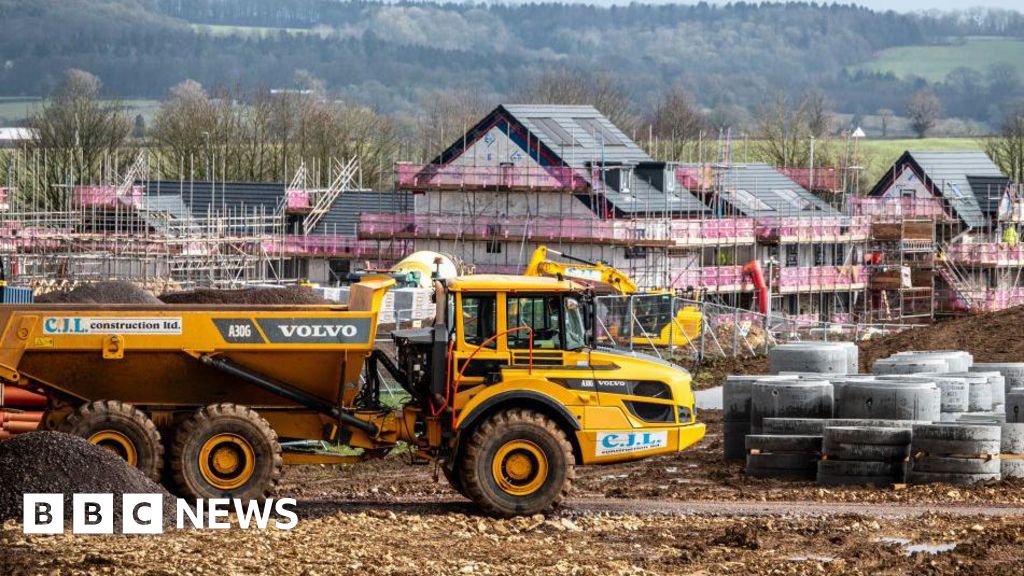
More housing developments across England will now be exempt from crucial rules designed to improve wildlife habitats, a move announced by the government on Tuesday as part of a sweeping overhaul of planning regulations aimed at accelerating house building. Ministers have been actively reviewing the policy known as Biodiversity Net Gain (BNG), a cornerstone environmental regulation that mandates developers to compensate for any loss of nature on their construction sites by achieving a 10% increase in biodiversity. This decision to increase the size of exempted developments has provoked strong condemnation from a coalition of nature charities and conservation groups, who warn that the policy shift risks severely undermining ongoing efforts for nature recovery across the country.
The changes are a central component of a broader reform package for the National Planning Policy Framework, which the government asserts is critical to achieving its ambitious target of constructing 1.5 million new homes within the current parliamentary term. Matthew Pennycook, the Minister of State for Housing, unveiled these reforms, stating their purpose was to "get Britain building again." Acknowledging the inevitable backlash, Pennycook remarked, "They will not be without their critics. But in the face of a housing crisis that has become a genuine emergency in parts of Britain, we will act where previous governments have failed." This robust defence underscores the government’s prioritisation of housing delivery amidst mounting economic and social pressures.
Biodiversity Net Gain, a policy that requires developments in England to demonstrably increase biodiversity by at least 10%, has been in full effect for a relatively short period, less than two years. Its implementation marked a significant step forward in integrating environmental protection directly into the planning process, aiming to ensure that new developments contribute positively to the natural environment rather than merely mitigating harm. Developers are typically required to achieve this gain either on-site, by enhancing existing habitats or creating new ones within the development boundary, or off-site, by funding biodiversity improvements elsewhere. This often involves detailed ecological surveys, habitat management plans, and long-term monitoring, usually spanning a minimum of 30 years.
However, the new revisions significantly narrow the scope of BNG application. Under the updated rules, developments on sites smaller than 2,000 square metres will now be exempt from BNG requirements. The government estimates that this exemption will apply to approximately 12,500 new homes each year, primarily targeting smaller-scale projects and individual custom builds. This figure represents a considerable number of properties that will no longer need to demonstrate a 10% biodiversity uplift. While the current exemption is limited to 2,000 sq m, it’s notable that earlier consultations had considered much larger exemptions, including sites up to 10,000 sq m – an area roughly equivalent to one or two football fields. The decision to opt for the smaller exemption was presented by the government as a compromise following stakeholder feedback, yet it remains a point of contention for environmentalists.
The proposed reforms extend beyond the current exemption. The government has also signalled its intention to launch a consultation on expanding exemptions to larger brownfield sites, potentially up to 25,000 square metres. Furthermore, measures are planned to make it easier, quicker, and cheaper for medium-sized developments to deliver off-site nature improvements. These future changes suggest a continued effort to streamline the development process by reducing the regulatory burden associated with BNG, particularly for projects on previously developed land.
Unsurprisingly, a consortium of nature-focused groups and charities has jointly voiced strong criticism of the government’s decision to dilute the impact of BNG. Richard Benwell, CEO of Wildlife and Countryside Link, a prominent coalition of conservation organisations, expressed profound concern, stating that the revisions risk "hollowing-out one of the most important nature protection policies in a generation." He acknowledged that the exemptions were "narrower than originally proposed," but quickly added, "this is still damage limitation, not positive leadership for nature." Benwell’s comments underscore a pervasive fear that while the specific exemptions might seem small individually, their cumulative effect over time could significantly impede national biodiversity targets and undermine the UK’s international environmental commitments.
Speaking alongside Benwell in an interview with the BBC, Craig Bennett, chief executive of the Wildlife Trusts, delivered an even more scathing critique, accusing the government of attempting to "scapegoat nature for a failing economy." Bennett emphasised the public’s desire for a balanced approach, asserting, "The British people want to see development for the economy and for nature at the same time, and yet this government seems intent on pitching them as one against the other." This sentiment reflects a broader concern among environmentalists that the government is sacrificing long-term ecological resilience for short-term economic gains, thereby creating a false dichotomy between economic prosperity and environmental stewardship. They argue that sustainable development must integrate nature protection, rather than viewing it as an obstacle.
From the perspective of the building industry, however, the BNG policy has presented significant challenges. Critics of the BNG principle have consistently argued that the policy can substantially increase costs and introduce considerable delays into the planning process, particularly impacting smaller developers who often lack the resources and expertise of larger firms. Rico Wojtulewicz of the National Federation of Builders, a key building trade body, articulated this view, stating that the policy has made building "harder, more expensive and more complicated." He detailed how developers face additional expenses for ecological surveys, specialist consultants, and the acquisition or creation of off-site habitat land, alongside the administrative burden of securing and monitoring BNG agreements for decades. These costs, according to the industry, inevitably get passed on to homebuyers, exacerbating the affordability crisis the government claims to be tackling. For smaller projects, the relative cost and complexity of BNG compliance can, in some cases, render the entire development unviable, slowing down the very housing delivery it aims to boost.
Beyond BNG, the planning reforms include several other significant changes. Among these is the introduction of a "default yes" approach to planning applications near railway stations, including on designated green belt land. This controversial measure aims to unlock development potential in well-connected areas but raises alarms among those concerned about protecting valuable green spaces. Simultaneously, the government has mandated that all new builds must incorporate nature-friendly features, such as the installation of ‘swift bricks’ – specially designed bricks with internal nesting cavities for swifts – to support urban wildlife. While these measures are welcomed by conservationists as positive steps, they are seen as insufficient to offset the broader impact of BNG exemptions.
The cumulative effect of these changes could be substantial. While the government frames the BNG exemptions as minor adjustments to ease the burden on smaller developers and accelerate housing, environmental groups fear a ‘death by a thousand cuts’ scenario. Each small exemption, when aggregated across thousands of developments annually, could lead to a significant net loss of biodiversity, making the UK’s ambitious targets for nature recovery – such as reversing biodiversity decline by 2030 – increasingly difficult, if not impossible, to achieve. This also poses questions about the UK’s standing on the international stage, particularly given its role in advocating for global biodiversity protection.
The ongoing consultation on brownfield site exemptions and the drive to simplify off-site nature improvements suggest that the debate around balancing housing needs with environmental protection is far from over. The government faces the delicate task of demonstrating that its "get Britain building again" agenda can coexist with robust environmental stewardship, without being perceived as compromising the nation’s natural heritage for development. The success of these policies will ultimately be judged not only by the number of homes built but also by the health of England’s ecosystems in the years to come.




 Nakalama John
 George Anjay
 Ramos Leo


 atisusanti