
 Nana Banana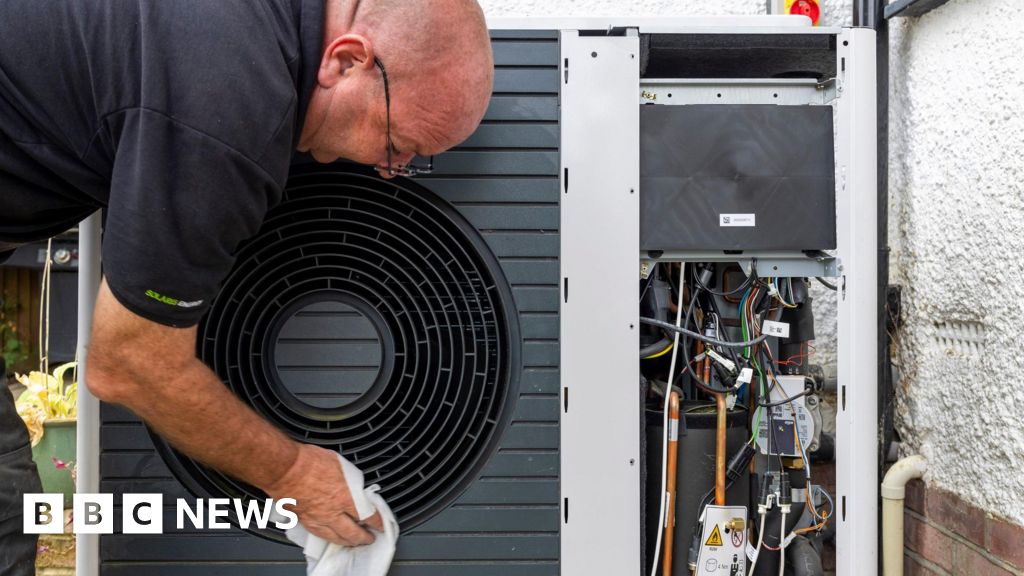
The UK government’s ambitious Warm Homes Plan has earmarked a substantial £15 billion to assist households across the nation in adopting green technologies, including the increasingly popular heat pumps. This initiative is a cornerstone of the country’s broader strategy to curb energy expenses and significantly reduce planet-warming emissions. With home heating contributing approximately one-fifth of the UK’s total carbon footprint, transitioning away from traditional gas and oil boilers towards more sustainable solutions like heat pumps is identified as a critical national priority for achieving net-zero targets.
What is a heat pump and what grants are available?
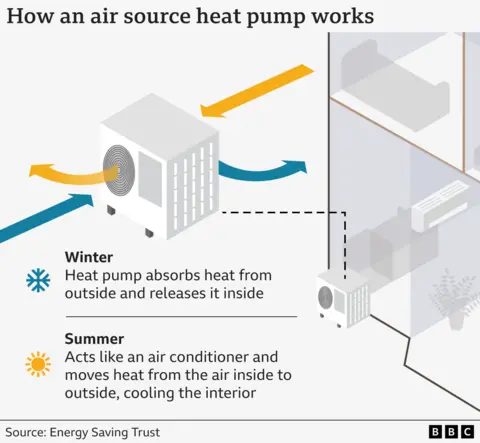
At their core, heat pumps operate on electricity, distinguishing them from fossil-fuel-dependent gas or oil boilers. Their fundamental principle involves warming buildings by efficiently absorbing and amplifying ambient heat from the air, ground, or even water sources. This innovative approach positions them as a leading solution for dramatically cutting carbon dioxide emissions and propelling the UK towards its net-zero goals. Beyond their environmental benefits, heat pumps boast superior efficiency compared to conventional gas boilers. They leverage electricity, which is progressively sourced from cleaner, renewable options such as wind and solar power, further reducing reliance on polluting fossil fuels.
The most prevalent type, air source heat pumps, function by drawing in outdoor air and circulating it over a series of tubes containing a specialized refrigerant fluid. Even in cold conditions, this outdoor air contains latent heat, which causes the refrigerant to absorb energy and evaporate, transforming into a low-pressure gas. This gas is then directed to a compressor, where its pressure is significantly increased. As the gas is compressed, its temperature rises dramatically. This high-temperature, high-pressure gas then flows through a heat exchanger within the indoor unit, transferring its heat to the home’s heating system (e.g., radiators or underfloor heating) and hot water cylinder. As it releases its heat, the refrigerant condenses back into a liquid, which then passes through an expansion valve, reducing its pressure and temperature, ready to absorb more heat from the outside air and repeat the cycle. This entire system typically comprises an outdoor unit, often a box measuring around 1m x 1m x 0.4m, which sits adjacent to the property. Inside, there’s a heat pump unit, roughly the size of a standard gas boiler, and a hot water cylinder, whose capacity is determined by the size and hot water demands of the household.
Ground source heat pumps, while less common due to their higher installation complexity and cost, are generally even more efficient than their air-source counterparts. This enhanced efficiency stems from the stable temperature of the earth a few meters below the surface, which remains relatively constant year-round, making it a reliable heat source. However, their installation demands either the drilling of a deep bore hole or the excavation of a horizontal loop system over a considerable land area, making them less suitable for smaller properties or urban environments. Another less common variant is the water source heat pump, which extracts heat from nearby bodies of water like rivers, lakes, or ponds, offering similar high efficiencies where a suitable water source is available.
How much do they cost and what support is there?
The upfront cost of installing a heat pump can be a significant barrier for many homeowners. Before grants, the average cost for an air source heat pump installation can range from £8,000 to £18,000, depending on the property size, specific system chosen, and any necessary upgrades to existing heating infrastructure like radiators or pipework. Ground source heat pumps are typically more expensive, often costing between £15,000 and £30,000 or more due to the extensive groundworks required.
To mitigate these substantial costs, the government’s Boiler Upgrade Scheme (BUS) offers a generous grant of £7,500 towards the installation of either an air source or ground source heat pump for eligible homeowners in England and Wales. While this significantly reduces the burden, the UK’s spending watchdog has highlighted that the average additional outlay of £5,000 (after the grant) is still prohibitively high for a considerable number of households, slowing the pace of adoption.
To qualify for the BUS grant, properties must be existing homes or non-domestic buildings, and possess an eligible Energy Performance Certificate (EPC) issued within the last 10 years. Crucially, the scheme requires that a certified installer applies for the grant on behalf of the homeowner, with the grant amount then deducted from the total installation cost. The government’s latest Warm Homes Plan has committed to extending this scheme until 2029/30, providing long-term certainty. A key recent change to the BUS rules has removed the prior requirement for homes to have existing loft or cavity wall insulation, which could save homeowners an estimated £2,500 in upfront insulation costs. While insulation is no longer a mandatory prerequisite for the grant, a well-insulated home remains vital for a heat pump to perform at its peak efficiency and deliver maximum cost savings.
For low-income households and those residing in social housing, the government is bolstering support through an extended £5 billion funding for the Social Housing Decarbonisation Fund and the Warm Homes Local Grant. The Warm Homes Local Grant specifically offers funding for a range of energy efficiency improvements, including insulation, solar panels, and air source heat pumps, administered through local authorities. Eligibility criteria for this grant typically include being an owner-occupier or private renter in England, and having an EPC rating between D and G, targeting homes with the greatest need for improvement.
Scotland and Northern Ireland operate their own distinct schemes to promote home energy efficiency. Home Energy Scotland offers grants and interest-free loans for various measures, including heat pumps, while Northern Ireland’s Energy Saving Grants provide similar support. The broader Warm Homes Plan aims to supplement these devolved programmes with additional funds to ensure a comprehensive national push towards greener heating.
Could a heat pump save me money?
While the initial investment for a heat pump can be substantial, the long-term running costs present a more optimistic picture. According to the Climate Change Committee (CCC), which advises the UK government on emissions reduction, heat pumps are projected to become cheaper to run than gas boilers in the future. The actual cost savings depend on a confluence of factors, including prevailing energy prices, the specific efficiency of the heat pump, and the thermal performance of the property itself.
Electric heat pumps are inherently more energy-efficient than gas boilers, often achieving a Coefficient of Performance (CoP) of 3-4, meaning they produce 3-4 units of heat for every 1 unit of electricity consumed. In contrast, even modern condensing gas boilers rarely exceed 90% efficiency. However, electricity typically carries a higher unit cost than gas. This is where a well-insulated home becomes paramount; minimizing heat loss ensures the heat pump operates optimally, reducing the amount of electricity needed to maintain comfortable indoor temperatures.
The energy market is evolving to support heat pump adoption. Many energy providers are introducing specialized tariffs and deals designed for heat pump owners, often featuring lower electricity rates during off-peak hours. These "time-of-use" or "smart" tariffs can significantly reduce running costs, particularly when combined with smart controls that optimize heat pump operation. Furthermore, integrating a heat pump with rooftop solar panels and domestic battery storage offers the potential for even greater savings and energy independence. By generating their own electricity during the day and storing excess for evening use, homeowners can drastically reduce their reliance on the grid. Nesta, a social charity, has estimated that an average home equipped with both solar panels and a heat pump could potentially save nearly £1,000 on its annual energy bills, underscoring the long-term financial benefits of this integrated approach. Over the lifespan of a heat pump, which can exceed 15-20 years, these accumulated savings can make the initial investment worthwhile.
Are heat pumps noisy?
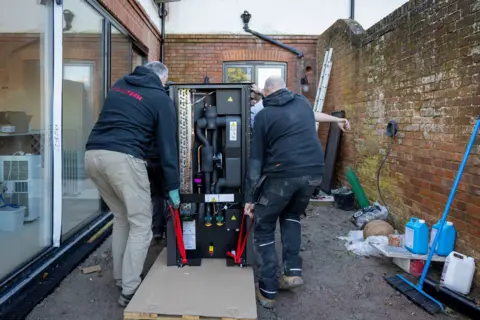
One of the historical concerns surrounding heat pump adoption has been the potential for noise pollution from the outdoor unit. Previously, stringent planning permission rules required homeowners to seek approval if they wished to install a heat pump within one metre of a neighbour’s property, primarily due to these noise considerations. However, in a move to accelerate the widespread uptake of heat pumps, this particular rule has been relaxed.
Modern advancements in heat pump technology have significantly addressed noise concerns. Manufacturers have made considerable progress in designing quieter compressors, optimizing fan blades for reduced sound output, and incorporating advanced acoustic insulation within the units. Consequently, the noise output of newer devices is much less of an issue. While units are still subject to certain volume regulations, the current standard has been set at 42 decibels (dB). To put this into perspective, 42dB is comparable to the quiet hum of a modern refrigerator, the ambient noise level in a quiet library, or the sound of soft rainfall. This level is generally considered unobtrusive for most residential environments.
In addition to the relaxation of planning permission for proximity to neighbours, the rules governing the overall size and number of heat pumps that households can install have also been eased. This provides greater flexibility for homeowners to choose systems that best suit their property and heating needs without undue regulatory hurdles. While noise levels are now much lower, careful consideration of the outdoor unit’s placement can further minimize any potential disturbance, both for the homeowner and their neighbours, ensuring a harmonious integration into the home environment.
How many heat pumps have been installed in the UK?
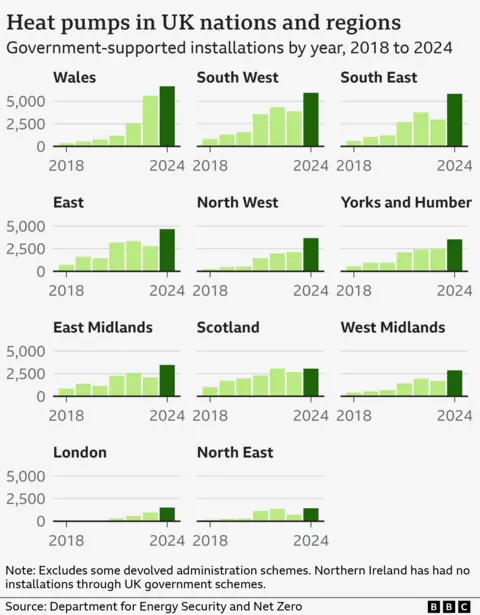
The UK has seen a steady, albeit challenging, increase in heat pump installations over recent years, driven by government incentives and a growing awareness of their environmental benefits. Data from government-supported installations between 2018 and 2024 reveals a clear upward trend across all UK nations and regions, with 2024 consistently showing the highest numbers of installs. This trajectory indicates a growing momentum, although the pace needs to accelerate significantly to meet the government’s ambitious target of 600,000 heat pump installations per year by 2028. While regions like the South East of England and Scotland have often led in adoption rates, the graph illustrates a nationwide effort to transition to this greener heating technology. The increased grants and relaxed planning rules are designed to further boost these figures and overcome the initial hurdles to wider adoption.
What other help is offered under the Warm Homes Plan?
Beyond the direct support for heat pump installations, the broader Warm Homes Plan encompasses several other initiatives aimed at making homes more energy-efficient and affordable to heat. A significant component is the Warm Homes Fund, which is designed to offer low-interest and, in some cases, zero-interest loans. These loans are intended to cover the costs of a wider array of green technologies, including solar panels and domestic battery storage systems, making these investments accessible to all households, not just those installing heat pumps. The government has stated that further details on when and how households can access these funds will be announced later this year.
For the most vulnerable households, the plan reinforces existing provisions. Those on low incomes or living in social housing will continue to benefit from the technologies covered as part of the established Social Housing Decarbonisation Fund and the Warm Homes Local Grant, ensuring that energy efficiency upgrades are accessible to those who need them most. Furthermore, the Warm Homes Plan emphasizes a holistic approach to home decarbonization, which also includes support for insulation upgrades, smart heating controls, and professional advice on improving overall energy efficiency. There’s also a focus on developing the installer workforce, ensuring enough skilled professionals are available to meet the growing demand for these new technologies. This comprehensive strategy underlines the UK’s commitment to not only reduce carbon emissions from heating but also to alleviate energy poverty and create warmer, healthier homes for its citizens.




 Nakalama John
 George Anjay
 Ramos Leo


 atisusanti