
 Nana Banana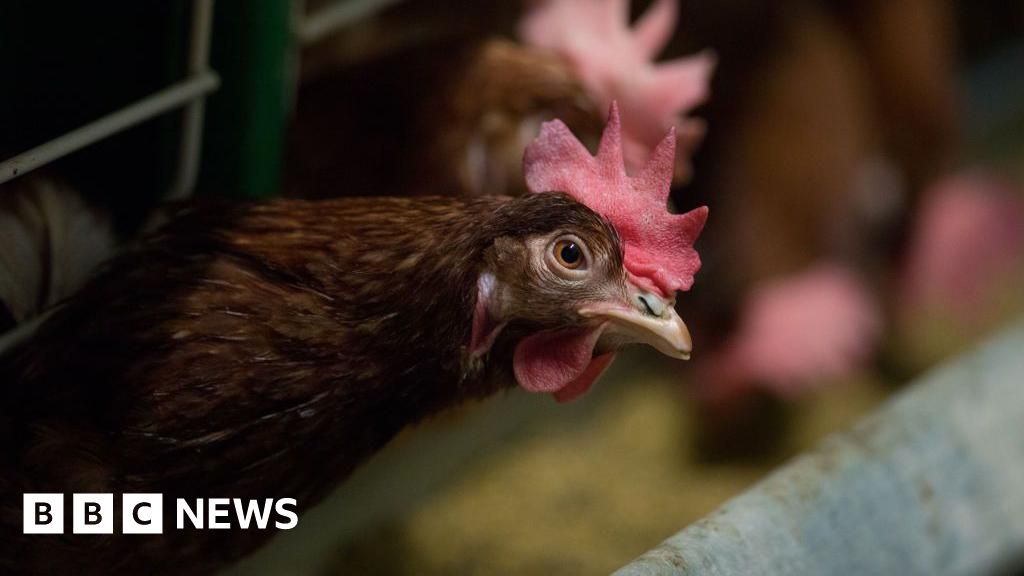
The government has unveiled an ambitious animal welfare strategy for England, aiming to significantly enhance standards across various sectors, with a firm commitment to phasing out hen cages and moving away from pig farrowing crates. This comprehensive package of reforms, slated for implementation by 2030, has been heralded by Environment Secretary Emma Reynolds as "the most ambitious animal welfare strategy in a generation," though it has also sparked debate over its implications for rural communities and agricultural competitiveness.
Central to the new proposals is the complete eradication of conventional hen cages. While individual battery cages for hens were banned in the UK years ago, the strategy specifically targets the "enriched ‘colony’ cages" that currently house millions of egg-laying hens. These systems, though offering slightly more space than their predecessors, still severely restrict natural behaviours such as dust bathing, foraging, and perching, leading to significant welfare concerns for the birds. Animal welfare organisations, including the RSPCA, estimate that approximately 80% of egg-laying hens in the UK are already free-range, suggesting that the transition for the remaining 20% should not present a "massive commercial problem" for the industry. David Bowles, head of public affairs at the RSPCA, highlighted that many producers have already begun transitioning to non-cage systems in anticipation of such legislative changes, making the 2030 target a realistic goal for a full move to barn or free-range production. The strategy outlines a clear path to "transition to non-cage systems and consult on phasing out enriched ‘colony’ cages," signaling an end to all forms of caged egg production in England.
Equally significant is the government’s intention to "explore how to transition away from the use of farrowing crates to alternative systems" for pigs. Farrowing crates are metal enclosures designed to contain pregnant sows during birth and the initial weeks of nursing. Their primary purpose is to prevent the sow from accidentally rolling over and crushing her piglets, thereby reducing piglet mortality. However, these crates severely restrict the sow’s movement, preventing her from turning around, nesting, or properly interacting with her offspring. This confinement raises substantial welfare concerns, impacting the sow’s physical health and psychological well-being. Critics argue that the inability to express natural maternal behaviours, such as nest building and foraging, causes considerable stress. Alternatives, such as "free farrowing" systems or temporary crating, offer greater freedom of movement for the sow while still providing safe areas for piglets. These systems often involve larger pens with adjustable barriers that can be opened once the initial risk period for piglet crushing has passed. The National Pig Association (NPA) has indicated it will be "following the next steps closely" and is actively exploring more flexible and welfare-friendly farrowing systems, acknowledging the industry’s need to adapt to evolving welfare standards while maintaining productivity.
Beyond these confinement systems, the strategy also addresses the controversial practice of farming so-called "Frankenchickens." This term, coined by animal welfare campaigners, refers to fast-growing breeds of broiler chickens specifically bred for meat production, engineered to reach slaughter weight at an unnaturally rapid pace. While economically efficient for producers, these breeds often suffer from a range of severe health issues, including lameness due to their rapid weight gain overwhelming their skeletal systems, organ failure, and heart problems. The government’s consideration of outlawing these breeds underscores a commitment to addressing the welfare implications of intensive farming practices and promoting healthier, more resilient animal populations. The British Poultry Council has been approached for comment regarding the implications of this potential ban.
The breadth of the new animal welfare strategy extends far beyond farm animals, encompassing a range of measures designed to improve the lives of domestic pets and wild creatures. Environment Secretary Emma Reynolds highlighted that the government has already taken steps to "improve zoo standards, end puppy smuggling and protect livestock from dog attacks." The new raft of proposals further solidifies this commitment, planning to ban cruel snares, curb low-welfare dog breeding, and outlaw trail hunting. Anthony Field, head of Compassion in World Farming UK, praised the government for "raising the bar for farmed animal welfare" and for its comprehensive approach.
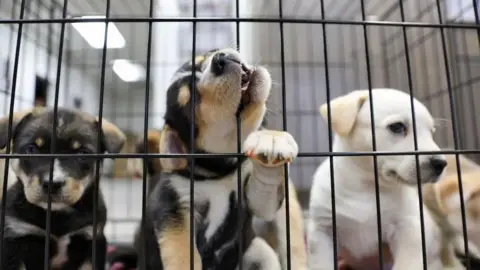
A significant focus of the strategy is the crackdown on puppy farming. This term describes the mass breeding of dogs in often squalid and inhumane conditions, where profit is prioritised over animal welfare. Puppies from such environments frequently suffer from genetic defects, poor health, and severe behavioural problems due to lack of proper socialisation and care. While it is not currently illegal to breed a large number of dogs, existing regulations require breeders selling three or more litters a year in England, Wales, and Northern Ireland to obtain a licence following an inspection. However, loopholes and inadequate enforcement have allowed many unethical operations to continue. The government’s plan includes launching a consultation on introducing a new, more stringent registration scheme for all dog breeders, irrespective of litter numbers, and significantly improving the health and welfare standards required for licensing. The RSPCA has hailed a potential puppy farm ban as a "real game-changer," pledging to work closely with the government to draft legislation that is robust and free of loopholes, ensuring genuine protection for breeding dogs and their offspring.
Further measures include a proposed ban on the use of snare traps in the countryside. Snares are wire nooses set to catch wild animals, typically foxes, but they are indiscriminate and often trap non-target species, including domestic pets. Animals caught in snares can suffer prolonged periods of distress, injury, and even death, making them a highly controversial method of wildlife control.
The strategy also confirmed a consultation on a proposed ban on trail hunting in 2026. Trail hunting involves laying an artificial scent for hounds to follow, ostensibly as a legal alternative to traditional fox hunting, which was banned in England and Wales by the Hunting Act 2004. However, critics argue that trail hunting is often used as a "smokescreen" for illegal fox hunting, with hounds frequently picking up the scent of live animals instead of the artificial trail. Environment Secretary Reynolds explicitly stated that while Labour had previously banned fox hunting, "we have seen that people are trying to get around that ban by using trail hunting in some cases." She added, "We know sometimes it is used as a smokescreen for fox hunting," underscoring the government’s determination to close these perceived loopholes. This particular proposal has drawn fierce criticism from rural organisations. Tim Bonner, chief executive of the Countryside Alliance, expressed his disbelief that the government would allocate parliamentary time to what he described as a "pointless and divisive issue," arguing it was "completely unnecessary" and an "attack on rural Britain." Similarly, Conservative chairman Kevin Hollinrake condemned the proposed ban as an "attack on rural Britain and British culture," accusing the government of "punishing the law-abiding majority who support legal trail hunting."
A key concern raised by farming unions, particularly the National Farmers’ Union (NFU), is the potential for unfair competition arising from these heightened domestic welfare standards. NFU President Tom Bradshaw stressed that if British farmers are required to adopt more expensive, higher-welfare production methods, the government must ensure that imported food products are held to the same stringent standards. He warned that failing to do so would lead to British farmers being undercut by cheaper goods produced under lower welfare conditions abroad, effectively "exporting our industry overseas." This argument highlights a significant challenge in implementing higher welfare standards: ensuring a level playing field for domestic producers in a global market. The Department for Food and Rural Affairs (Defra) has responded by affirming that it "will not lower food standards and will uphold high animal welfare standards as part of our approach to trade." Defra further added that it "will always consider whether overseas produce has an unfair advantage and any impact that may have," attempting to reassure farmers that their concerns are being heard.
In conclusion, the new animal welfare strategy represents a significant shift in England’s approach to animal care, promising a more compassionate future for both farmed and companion animals. While the ambitious targets, including the eradication of hen cages and the phasing out of farrowing crates, have been welcomed by animal welfare advocates, they also present considerable challenges for the agricultural sector and necessitate careful consideration of economic impacts and international trade implications. The government’s stated commitment to these reforms by 2030 signals a clear direction, but the consultations and legislative processes ahead will undoubtedly involve intense debate and negotiation as England strives to balance ethical imperatives with economic realities.



 George Anjay
 Ramos Leo
 Nakalama John