
 Nana Banana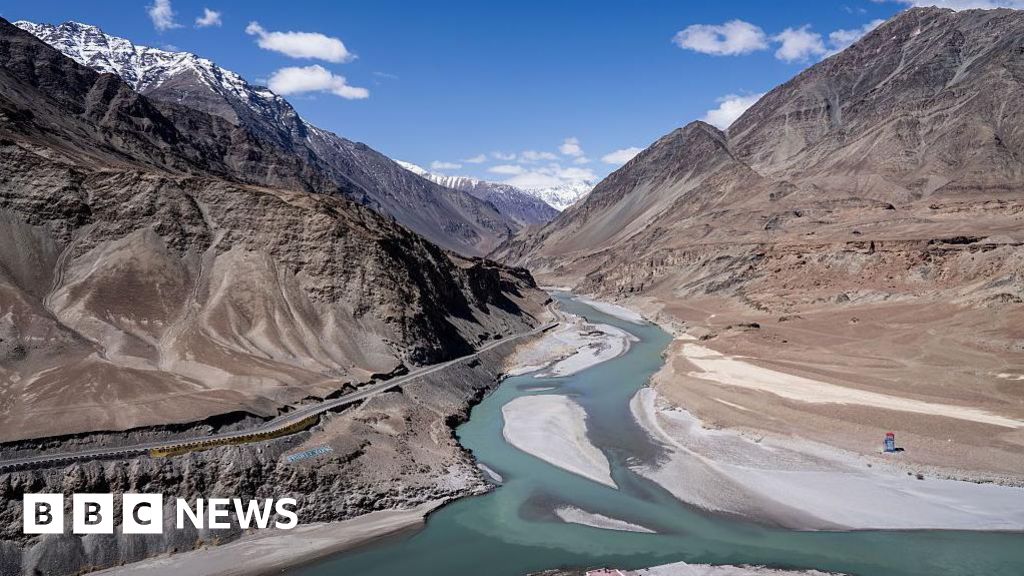
The root causes of this dramatic shift are firmly linked to global warming. Rising temperatures mean that what little snow does fall melts at an accelerated rate, vanishing quickly rather than accumulating. Furthermore, lower-elevation areas, which once received consistent snowfall, are now experiencing more rain than snow, a direct consequence of a warming climate, as highlighted by the Intergovernmental Panel on Climate Change (IPCC) and numerous scientific reports. This phenomenon has led to what experts describe as a "snow drought" across many parts of the Himalayan region, where snow cover is significantly scarcer than historical norms.
For decades, the accelerated melting of Himalayan glaciers has been recognized as a major crisis, threatening the long-term water security of countries like India, Nepal, Bhutan, and Pakistan. The dwindling winter snowfall exacerbates this already precarious situation, creating a "double trouble" scenario for a region often referred to as the "Third Pole" due to its vast ice reserves. Experts warn that this reduction in ice and snow will not only fundamentally alter the aesthetic and ecological character of the Himalayas but also profoundly impact the lives of hundreds of millions of people and countless ecosystems dependent on its resources.
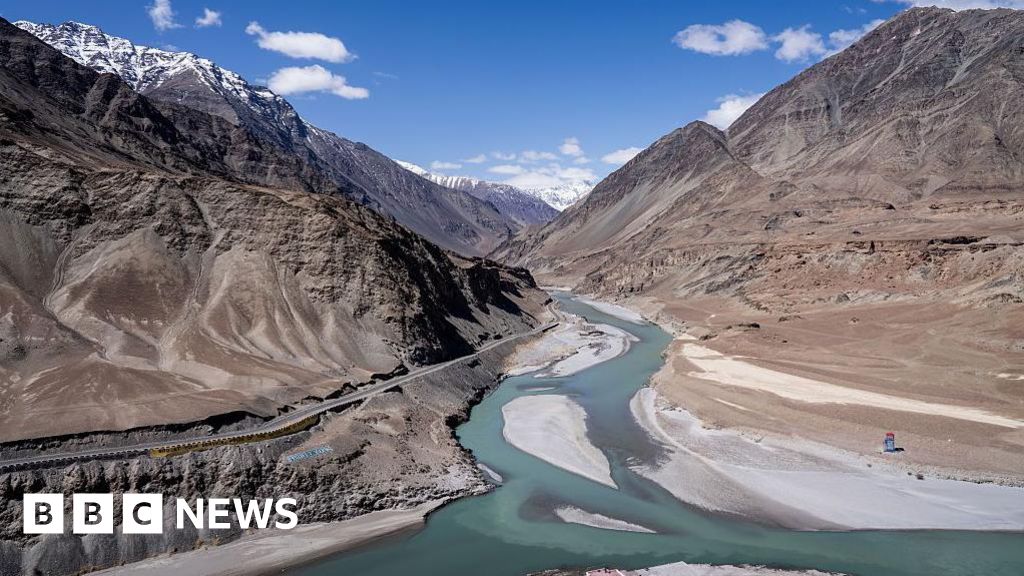
The lifeblood of South Asia’s major river systems – including the Indus, Ganges, Brahmaputra, and even extending to the Mekong, Yangtze, and Yellow River in East and Southeast Asia – is the seasonal meltwater from Himalayan snow and glaciers. As spring temperatures rise, the snow accumulated during winter gradually melts, feeding these crucial river systems. This snowmelt is an indispensable source of water for drinking, supporting vast agricultural lands through irrigation, and generating significant hydropower, which is vital for energy security across the region. A reduction in this critical input directly jeopardizes water and food security for nearly two billion people. The implications range from agricultural distress and potential crop failures to increased competition for scarce water resources and even cross-border water disputes.
Beyond water supply, the decrease in winter precipitation – both rainfall in the lowlands and snowfall on the mountains – carries other severe environmental risks. Drier conditions significantly increase the likelihood and intensity of forest fires, which can devastate delicate ecosystems, contribute to air pollution, and threaten human settlements. Moreover, the vanishing glaciers and declining snow cover have a profound impact on mountain stability. Ice and snow act as a natural "cement," holding vast rock formations together. As this natural binder disappears, mountains become more prone to geological hazards. Disasters such as rockfalls, landslides, glacial lake outburst floods (GLOFs), and devastating debris flows are already becoming more frequent and severe, posing an immediate threat to infrastructure and human lives in vulnerable mountain communities. The alteration of these cryospheric processes also impacts local biodiversity, disrupting habitats and migration patterns for species adapted to specific snow regimes.
The severity of this drop in snowfall is underscored by official meteorological data. The Indian Meteorological Department (IMD) recorded virtually no precipitation – neither rainfall nor snowfall – across almost all of northern India in December. Looking ahead, the IMD has issued a stark forecast: many parts of northwest India, including the states of Uttarakhand and Himachal Pradesh, and the federally-administered territories of Jammu and Kashmir and Ladakh, are expected to receive a staggering 86% less than their long period average (LPA) rainfall and snowfall between January and March. The LPA is a crucial metric, representing the average precipitation recorded over a region for 30 to 50 years, used to classify current weather as normal, excess, or deficient. For north India, the LPA rainfall between 1971 and 2020 was 184.3 millimeters, making the current deficit particularly alarming.
This sharp decline is not an isolated incident. Kieran Hunt, a principal research fellow in tropical meteorology at the University of Reading in the UK, notes, "There is now strong evidence across different datasets that winter precipitation in the Himalayas is indeed decreasing." A study Hunt co-authored and published in 2025, which analyzed four distinct datasets from 1980 to 2021, consistently demonstrated a decrease in precipitation across the western and central Himalayas. Further corroborating this, Hemant Singh, a research fellow with the Indian Institute of Technology in Jammu, using data from ERA-5 (European Centre for Medium-Range Weather Forecasts Reanalysis), reports that snowfall in the northwestern Himalayas has decreased by 25% in the past five years compared to the 40-year long-term average (1980-2020).
The situation is equally dire in other parts of the range. Binod Pokharel, an associate professor of meteorology at Tribhuvan University in Kathmandu, confirms that Nepal, home to the central Himalayas, has experienced "zero rainfall since October, and it seems the rest of this winter will remain largely dry. This has been the case more or less in all the winters in the last five years." While meteorologists note occasional heavy snowfalls in recent years, these are characterized as isolated, extreme events rather than the consistent, evenly distributed precipitation that defined past winters.
Another critical measure scientists use to assess snow cover is "snow persistence," which tracks how much snow accumulates on the mountains and how long it remains on the ground without melting. The 2024-2025 winter registered a 23-year record low in snow persistence, nearly 24% below normal, according to a report by the International Centre for Integrated Mountain Development (ICIMOD). This report highlighted that four of the past five winters between 2020 and 2025 saw below-normal snow persistence across the broader Hindu Kush Himalaya (HKH) region. Sravan Shrestha, a senior associate for remote sensing and geoinformation with ICIMOD, states that "This is generally understood to be consistent with decreased winter precipitation anomalies and snowfall in a significant portion of the HKH region."
A study co-authored by Hemant Singh of IIT Jammu, published in 2025, further reveals that the Himalayan region is increasingly experiencing "snow droughts"—periods where snow becomes significantly scarce, particularly between 3,000 and 6,000 meters in elevation. The ICIMOD snow update report ominously warns, "With snowmelt contributing about a fourth of the total annual runoff of 12 major river basins in the region, on average, anomalies in seasonal snow persistence affect water security of nearly two billion people across these river basins." This paints a grim picture where melting glaciers pose long-term water scarcity risks, while reduced snowfall and faster snowmelt threaten immediate and near-term water supplies.
Most meteorologists attribute the decrease in winter precipitation to the weakening of westerly disturbances. These low-pressure systems originate in the Mediterranean and travel eastward, carrying cold air and crucial moisture that historically brought significant rain and snowfall to northern India, Pakistan, and Nepal during winter. These disturbances were vital for replenishing mountain snow and supporting winter crops. While studies on changes in westerly disturbances are somewhat mixed, with some reporting shifts and others finding no significant change, their role in Himalayan winter precipitation is undeniable.
Kieran Hunt elaborates on this connection: "We know that the change in winter precipitation must be related to westerly disturbances, since they are responsible for the majority of winter precipitation across the Himalayas." He suggests two likely mechanisms: "We think two things are happening here: westerly disturbances are becoming weaker, and with less certainty, tracking slightly further northward. Both of these inhibit their ability to pick up moisture from the Arabian Sea, resulting in weaker precipitation." The Indian weather department’s labeling of the westerly disturbances experienced so far this winter in north India as "feeble," due to their inability to generate substantial rainfall and snowfall, supports this hypothesis.
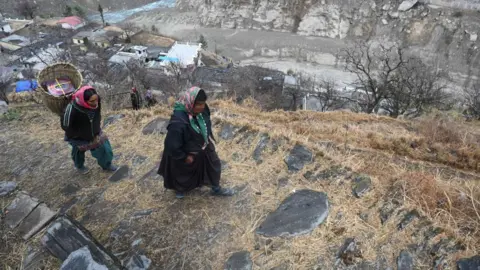
While scientists continue to unravel the precise atmospheric dynamics behind the decrease in winter precipitation, the immediate and future consequences for the Himalayan region are unequivocally clear. The "double trouble" of rapidly vanishing glaciers and dramatically reduced winter snowfall presents an existential challenge. This combination is set to unleash cascading effects on water resources, agriculture, biodiversity, disaster frequency, and the overall stability of the mountain environment. The region and the nations dependent on its life-giving waters face an urgent imperative to develop adaptive strategies, enhance water management practices, bolster disaster preparedness, and contribute to global efforts to mitigate climate change, for the future of the Himalayas and its people hangs in the balance.



 George Anjay
 Ramos Leo
 Nakalama John

 atisusanti