Nana Banana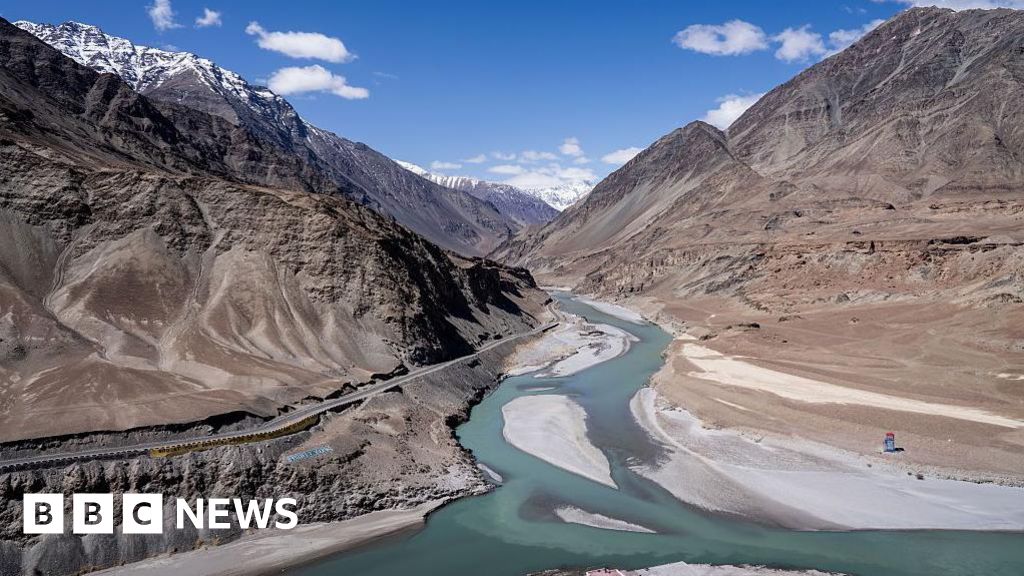
For the past five years, meteorologists have observed a significant decline in winter snowfall across the Himalayan range compared to the average recorded between 1980 and 2020. This reduction in precipitation, coupled with rapidly rising temperatures, means that what little snow does fall melts at an accelerated rate. In lower-elevation areas, the warming trend is even causing a shift from snowfall to rainfall, further diminishing the critical snowpack. Scientific reports, including those from the Intergovernmental Panel on Climate Change (IPCC), unequivocally link these changes, at least in part, to global warming.
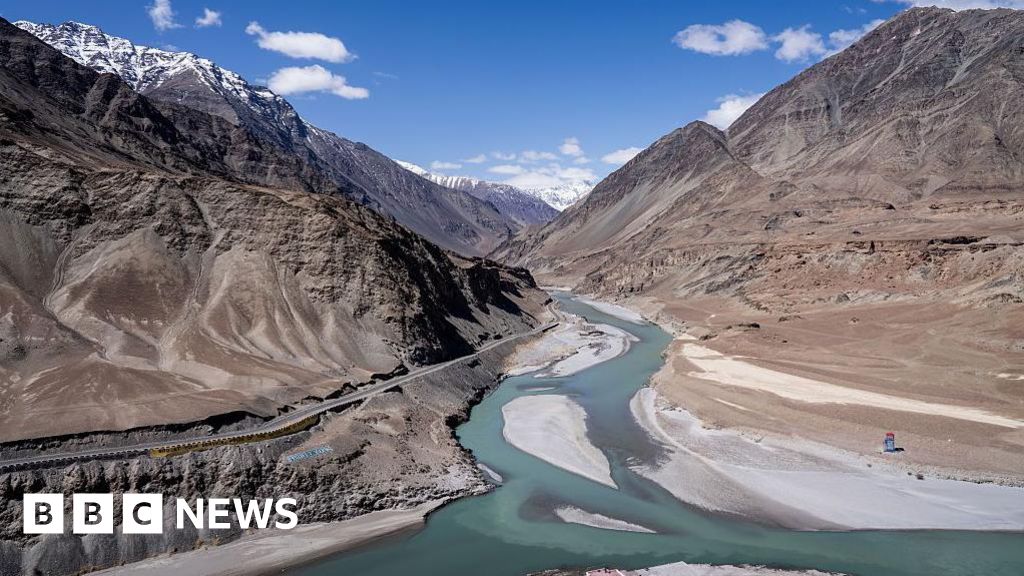
Studies have now identified the emergence of "snow drought" conditions throughout much of the Himalayan region during winter months. A snow drought occurs when there is a deficit in snowpack accumulation due to less snowfall or warmer temperatures causing premature melting, or both. This phenomenon exacerbates the long-standing crisis of accelerated glacier melting, which has already been a major concern for India’s Himalayan states and neighbouring countries. Experts warn that the combined effect of dwindling snowfall and retreating glaciers will not only drastically alter the iconic landscape of the Himalayas but also imperil the lives and livelihoods of approximately two billion people and countless fragile ecosystems.
The implications of this "double trouble" are vast and complex. One of the most critical functions of winter snow accumulation is its role in feeding the region’s colossal river systems. As spring temperatures rise, the accumulated snow melts, providing a crucial and sustained source of water for major rivers like the Indus, Ganges, Brahmaputra, Yangtze, and Mekong. These rivers are the lifelines for drinking water, agricultural irrigation, and hydroelectric power generation across vast swathes of South and Southeast Asia. A reduction in this vital snowmelt directly threatens water security, potentially leading to widespread water shortages, agricultural failures, and energy crises. Communities dependent on traditional irrigation methods, particularly in upstream regions, are already feeling the immediate pinch of reduced water flow in their streams and rivers.
Beyond water supply, the diminished winter precipitation – both rainfall in the lowlands and snowfall on the mountains – leaves the entire region vulnerable to an increased risk of devastating forest fires. Drier conditions, longer dry spells, and sparse vegetation cover create an ideal environment for wildfires to ignite and spread rapidly, causing ecological destruction, air pollution, and displacement of communities. The loss of snow and ice also profoundly impacts mountain stability. Glaciers and snowpack act as natural cement, binding rock and debris. As they vanish, mountains become increasingly destabilized, leading to more frequent and intense geohazards such as rockfalls, landslides, and glacial lake outburst floods (GLOFs), where rapidly expanding glacial lakes breach their natural dams, unleashing torrents of water and debris downstream. Such events have already become more common, posing significant threats to infrastructure, human settlements, and life.
The severity of this drop in snowfall is underscored by recent meteorological observations. The Indian Meteorological Department (IMD) reported an alarming absence of precipitation—encompassing both rainfall and snowfall—across almost all of northern India in December. Looking ahead, the IMD projects a high probability that many parts of northwest India, including the crucial states of Uttarakhand and Himachal Pradesh, along with the federally-administered territories of Jammu and Kashmir and Ladakh, will experience an astonishing 86% less than their long-period average (LPA) rainfall and snowfall between January and March. The LPA, a benchmark calculated from 30 to 50 years of data, is essential for classifying current weather as normal, excess, or deficient; for northern India, the LPA rainfall between 1971 and 2020 was 184.3 millimetres. The projected deficit is therefore extremely significant.
This sharp decline, meteorologists emphasize, is not an isolated anomaly but part of a disturbing trend. Kieran Hunt, a principal research fellow in tropical meteorology at the University of Reading in the UK, states, "There is now strong evidence across different datasets that winter precipitation in the Himalayas is indeed decreasing." Hunt co-authored a study published in 2025 that analyzed four distinct datasets covering the period from 1980 to 2021, all consistently showing a decrease in precipitation across the western and parts of the central Himalayas. Further corroborating this, Hemant Singh, a research fellow with the Indian Institute of Technology in Jammu, utilizing data from ERA-5 (European Centre for Medium-Range Weather Forecasts Reanalysis), reports that snowfall in the northwestern Himalayas has plummeted by 25% over the past five years when compared to the 40-year long-term average (1980-2020).
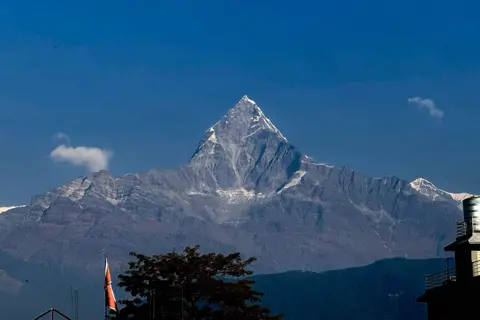
The central Himalayas, particularly within Nepal, are experiencing similar dire conditions. Binod Pokharel, an associate professor of meteorology at Tribhuvan University in Kathmandu, notes, "Nepal has seen zero rainfall since October, and it seems the rest of this winter will remain largely dry. This has been the case more or less in all the winters in the last five years." While there have been isolated instances of heavy snowfall during some recent winters, experts caution that these extreme, localized events do not compensate for the overall, widespread decline in evenly distributed precipitation that characterized past winters, which are crucial for a healthy and sustained snowpack.
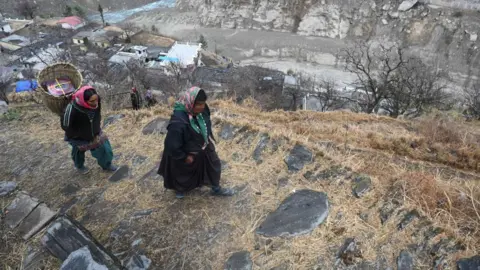
Another critical metric for assessing the health of the Himalayan snowpack is "snow persistence" – the duration for which snow remains on the ground without melting. A report by the International Centre for Integrated Mountain Development (ICIMOD) revealed that the 2024-2025 winter registered a 23-year record low in snow persistence, nearly 24% below normal. Alarmingly, four of the past five winters between 2020 and 2025 have shown below-normal snow persistence across the vast Hindu Kush Himalaya (HKH) region. Sravan Shrestha, a senior associate in remote sensing and geoinformation with ICIMOD, confirmed that this trend is "generally understood to be consistent with decreased winter precipitation anomalies and snowfall in a significant portion of the HKH region."
Hemant Singh’s co-authored 2025 study, published in Nature, further highlights that the Himalayan region is increasingly experiencing snow droughts, particularly pronounced at elevations between 3,000 and 6,000 meters. The ICIMOD snow update report ominously warns, "With snowmelt contributing about a fourth of the total annual runoff of 12 major river basins in the region, on average, anomalies in seasonal snow persistence affect water security of nearly two billion people across these river basins." This underscores the immediate and profound threat that reduced snowfall and faster snowmelt pose to near-term water supplies, compounding the long-term water scarcity risks associated with melting glaciers.
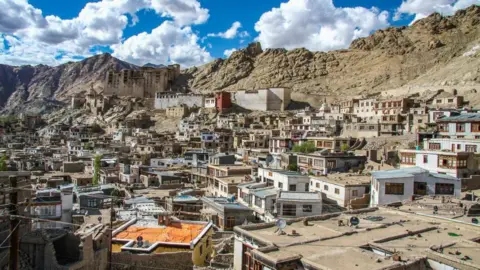
The primary driver behind this decrease in winter precipitation, according to most meteorologists, is the weakening of westerly disturbances. These low-pressure systems originate over the Mediterranean Sea, carrying cold air and moisture eastward, traditionally bringing significant rainfall to northern India, Pakistan, and Nepal, and crucially, snowfall to the higher altitudes during winter. These disturbances are vital for replenishing the snowpack and supporting winter crops. While studies on changes to westerly disturbances have yielded mixed results, some reporting shifts and others not, there is a consensus that they are intrinsically linked to the observed precipitation decline. As Hunt explains, "We know that the change in winter precipitation must be related to westerly disturbances, since they are responsible for the majority of winter precipitation across the Himalayas." He further posits that two concurrent phenomena might be at play: "westerly disturbances are becoming weaker, and with less certainty, tracking slightly further northward. Both of these inhibit their ability to pick up moisture from the Arabian Sea, resulting in weaker precipitation." The Indian weather department has already labelled the westerly disturbances experienced in north India this winter as "feeble," incapable of generating more than nominal rainfall and snowfall.
While scientists continue to unravel the precise atmospheric mechanisms behind these changes in winter precipitation, the observable reality is stark. The Himalayan region is caught in a precarious bind: its glaciers and vast icefields are shrinking at an unprecedented rate, and now, it is receiving significantly less new snow to replenish them. This dangerous combination—accelerated ice melt and diminished snow accumulation—represents a severe existential threat. Experts warn that the consequences will be enormous, altering not only the physical geography of the world’s highest mountains but also profoundly impacting the ecological balance and the lives of millions who depend on the "Water Towers of Asia" for their very survival. The time for global action to mitigate climate change and adapt to these irreversible shifts in the Himalayas is now more critical than ever.



 George Anjay
 Ramos Leo
 Nakalama John