Nana Banana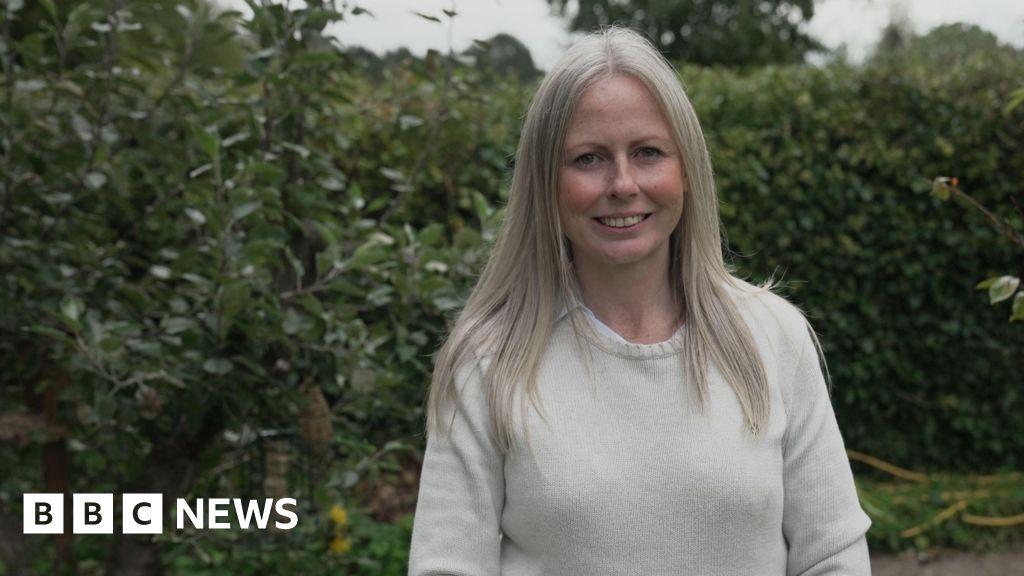
For Emily Hough, nature was, for far too long, merely a distant concept, an abstract presence "out there." It was a world entirely separate from her own, often reduced to nothing more than a blurred view from a hospital window. Years of her life were spent in and out of the sterile environments of specialist mental health units, first in Birmingham, then in London, as she grappled with anorexia, an eating disorder that had taken root when she was just 12 years old. During this isolating period, any genuine connection with the vibrant countryside or even an interest in the everyday flora and fauna around her felt utterly out of reach, overshadowed by the consuming grip of her illness.
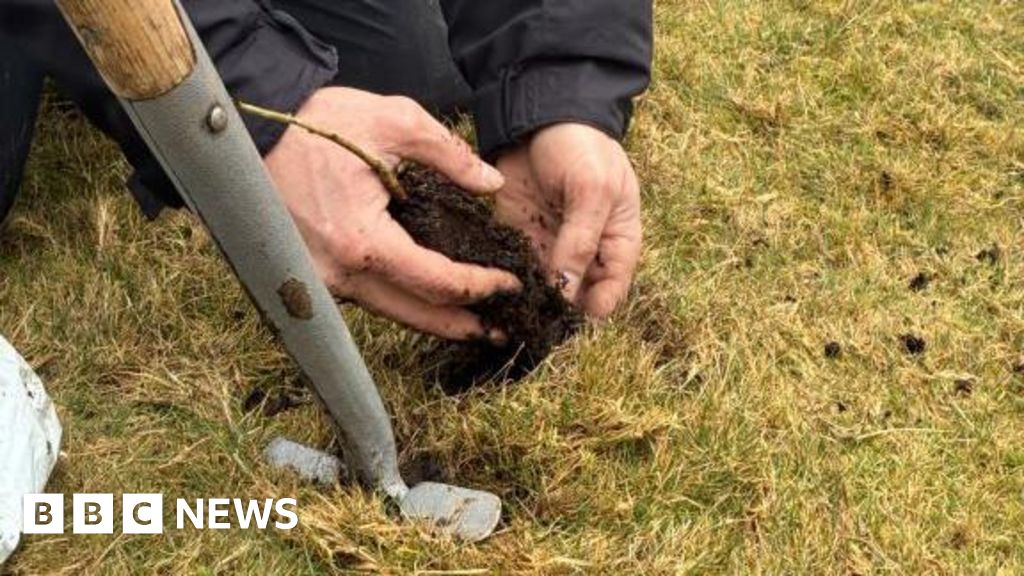
That profound disconnect began to shift five years ago, however, when a seemingly ordinary occupational therapist at one of her hospitals offered her an extraordinary, almost whimsical, prescription: "Grow a sunflower." Emily’s initial reaction was one of complete disbelief, perhaps even a touch of amusement. "I’ll be honest, I’d never planted anything in my life," Ms. Hough candidly recalled, highlighting the stark contrast between her clinical existence and the earthy task she was now assigned. Yet, she followed the instruction, planting the tiny seed, a fragile emblem of hope.
What followed was a revelation. As she tended to her nascent sunflower, a meticulous daily ritual began to unfold. She watered it, watched over it, and carefully protected its delicate sprout from excessive shade, ensuring it had the optimal conditions to thrive. In this simple, repetitive act of nurturing, something profound began to stir within Emily. "Just watching it grow," she explained, her voice likely reflecting the wonder of that period, "from me watering it and from me protecting it from the shade, helped me feel connected for the first time." This nascent connection wasn’t just to the plant itself, but to a wider, living world. It allowed her to "really be able to appreciate what was around me – and how I can make a difference to nature and what nature can actually do for me." The act of fostering life, even a small sunflower confined to a pot within a hospital, instilled in her a sense of purpose and agency that her illness had long stripped away. The growth of the plant became a tangible metaphor for the potential for growth within herself, a silent promise of recovery. "I was in a hospital at that point, so it was very limited. Fast forward five years, here we are today."

From those initial, tentative roots planted in a hospital room, Ms. Hough, now 35, embarked on a transformative journey. She wholeheartedly embraced what the NHS formally champions as "green social prescribing." This innovative approach to healthcare sees general practitioners and other health practitioners refer patients to a diverse array of organizations that offer nature-based activities. These aren’t just gentle walks; they encompass a wide spectrum of engagements, from invigorating hikes through rolling hills and patient birdwatching expeditions to fascinating rockpooling adventures along the coast, or the communal, grounding work of tending a city-based allotment. The core philosophy is that these activities serve as a vital complement to more conventional, mainstream medical treatments and psychological therapies, providing a holistic pathway to improved health and wellbeing. Indeed, green social prescribing has been recognized as a cornerstone of the government’s ambitious 10-year plan for the NHS in England, signaling a growing understanding of the inextricable link between environmental engagement and human health.
While acknowledging that such schemes may not resonate with or benefit every individual, for Emily Hough, the impact has been nothing short of life-altering. Her connection with nature deepened to such an extent that she ultimately relocated from her former home in Solihull to embrace a life immersed in the countryside. This geographical shift symbolizes a profound internal transformation, a testament to the healing power she found outdoors. No longer confined to hospital wards, Emily has emerged as a beacon of hope and advocacy. She now serves as what the NHS terms an "Expert by Experience" (EbE), a crucial role where she leverages her personal journey through illness and recovery to actively design, evaluate, and refine new health services. Her unique perspective, forged in the crucible of her own struggle, is invaluable in shaping schemes that genuinely resonate with and support patients.
The broader impact of green social prescribing is becoming increasingly evident. On a recent Friday, coinciding with World Mental Health Day, the scheme celebrated a significant milestone: the training of its 100th health professional. This expansion in trained personnel means that the program now possesses the resources and expertise to support an impressive 1,000 patients in accessing beneficial nature-based activities, extending its reach and potential for positive change across communities.
However, despite these heartening successes and the compelling personal narratives like Emily’s, the long-term future of green social prescribing remains shrouded in uncertainty. A comprehensive national pilot program, which spanned four years and concluded in March, was unequivocally judged a success. An independent evaluation of its initial two years provided robust evidence of its efficacy and positive impact. Yet, there is a palpable and growing concern that the financial onus for sustaining and expanding these vital schemes is increasingly being shifted onto the shoulders of charitable organizations.
Leading conservation and environmental groups, including The Wildlife Trusts, the Royal Society for the Protection of Birds (RSPB), and the Ocean Conservation Trust, are at the forefront of this advocacy. They are united in their call for the government to commit substantially more dedicated funding to nature prescription schemes and, crucially, to facilitate their widespread rollout beyond the initial seven trial areas where the pilot programs were conducted. Dom Higgins, head of health and education for The Wildlife Trusts, articulated this urgent plea, stating, "It is unequivocal that nature improves mental health." He emphasized that "the time for questioning the evidence is really over, and people within the system and the NHS and decision-makers get this." Higgins underscored the critical need for systemic change, asserting, "It’s just we need the mechanism to make it available everywhere. It’s time to seriously fund prevention and opportunities for people to create good health in the neighbourhoods where they live and work." His words highlight a belief that the benefits are so clear that action, rather than further deliberation, is now required.
The national pilot scheme, during its first two years alone, saw nearly 8,500 individuals receive prescriptions for nature activities. Significantly, more than half of these patients resided in socio-economically deprived areas, underscoring the scheme’s potential to address health inequalities. Professor Chris Dayson, a voluntary action, health, and wellbeing expert at Sheffield Hallam University and a key member of the evaluation team, reported that the scheme delivered "a really statistically significant increase in wellbeing" for participating patients. Beyond the individual health benefits, the evaluation also unveiled a compelling economic social return on investment, calculating an impressive £2.42 for every £1 invested. This return was attributed not least to the fact that the scheme helped many individuals transition back into employment, reducing the burden on public services and contributing to economic activity. When approached by the BBC for comment on the future funding of green social prescribing, the government refrained from offering a direct statement, indicating only that the evaluation of the second two years of the trial scheme would be published "in due course." This lack of immediate commitment fuels the concerns of charities and advocates.
Despite the compelling evidence and personal testimonies, a nuanced perspective on green social prescribing acknowledges that it is explicitly designed to complement, not replace, conventional medical treatments and therapies. However, some critics express reservations, fearing that it might be perceived as an overly simplistic solution that fails to address the deeper, systemic social health issues contributing to mental ill-health. Rob Poole, Professor of Social Psychiatry at the Centre for Mental Health and Society, articulated this concern. While not inherently opposed to green social prescribing, he characterized it as an "inadequate response to the social determinants of health, such as poor housing, poverty and deterioration in social infrastructure." Professor Poole emphasized that these profound issues "are not lifestyle choices. They cannot be addressed by time-limited interventions, no matter how much better green activity makes you feel in the short run." His argument highlights the need for a comprehensive approach that tackles both individual wellbeing and broader societal factors.
Yet, for frontline practitioners, the direct impact is undeniable. Shannon Kang, an NHS health and wellbeing coach at the University Medical Practice in Birmingham, who recently underwent training in nature prescribing through the RSPB, speaks of witnessing "dramatic results." She has observed significant reductions in patients’ anxiety and stress levels, offering tangible evidence of the immediate positive effects that nature engagement can have. Her experience reinforces the view that, while not a panacea, green social prescribing offers a powerful and accessible tool for improving mental health.

For Emily Hough, the journey from a hospital window view to a life deeply connected with the natural world has been nothing short of transformative. "I was sceptical," she admits, reflecting on her initial reservations. "For years I had walked around not appreciating nature." But the experience, starting with a single sunflower, fundamentally altered her perspective. "But I genuinely believe that nature has really helped save me. It has given me hope." Her story stands as a powerful testament to the often-underestimated, yet profound, healing capacity of the natural world, offering a tangible pathway to recovery and renewed purpose.
If you have been affected by any of the issues raised in this article, help is available via the BBC’s Action Line page.



 atisusanti
 Nakalama John
 George Anjay