Roy Suryo
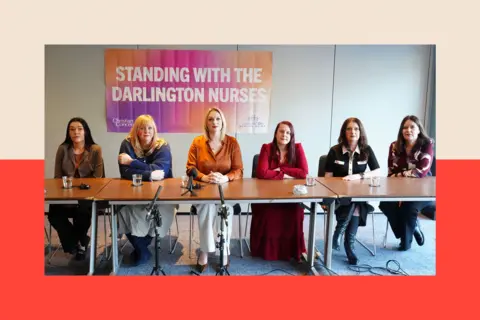
"A moment of truth." That was the verdict of a group of nurses in Darlington after a legal judgment that said NHS bosses had violated their dignity by allowing a trans woman colleague to use the female changing room. Yet in the highly contentious world of gender and trans politics, "a moment of truth" for one group can lead to anger, distress, and push-back from another. The NHS, the UK’s largest employer with 1.5 million staff in England alone, is now at the centre of this deeply divisive debate, forcing employers and staff across the nation to grapple with evolving legal interpretations and the complex realities of inclusivity and single-sex spaces.
The case that ignited this firestorm began in the summer of 2023 when Bethany Hutchison, a nurse at Darlington Memorial Hospital, encountered Rose Henderson, an operating theatre practitioner and trans woman, in the female staff changing room. Hutchison reported being "shocked" by Rose’s appearance, describing them as looking "masculine" and wearing "boxer shorts" with visible "stubble." The tribunal heard that other nurses voiced significant discomfort, with one nurse reporting flashbacks to childhood abuse triggered by Rose’s presence and conduct. Another nurse admitted to initial unease about raising concerns, fearing accusations of bigotry or transphobia.
These concerns, initially raised with the County Durham and Darlington NHS Trust in the summer of 2023, escalated by April 2024 with a formal complaint from 26 nurses. Ultimately, eight nurses took legal action against their employer, though one later paused her case due to illness. During the tribunal proceedings, Rose Henderson, who uses they/them pronouns, stated their belief in a right to use the female-only changing room. The tribunal, however, dismissed criticisms of Rose personally, finding "no improper behaviour on the part of Rose."

In a landmark ruling last week, the employment tribunal concluded that the NHS Trust had indirectly discriminated against the nurses by allowing Rose to use the female changing room. The tribunal found that the Trust bore "real accountability" for Rose’s presence, having permitted their use of the facility without offering a suitable, dignified alternative. While rejecting claims of victimisation, the tribunal found the nurses had been subjected to harassment, stating their complaints had not been taken seriously, creating a "hostile, humiliating and degrading environment." Crucially, the tribunal determined the Trust had prioritised "the perceived rights of Rose" over those of the female nurses. The NHS Trust has stated it will take time to consider the judgment. Speaking at a press conference, one of the nurses described feeling "gaslighted" by NHS managers, highlighting the deep emotional toll of the protracted dispute, which spanned two and a half years.
This case has brought into sharp focus the tension between employer policies and court rulings, particularly in light of the Supreme Court’s recent affirmation that the 2010 Equality Act defines a woman based on biological sex. While an employment tribunal judgment does not set a legal precedent, it offers a significant insight into how the law is being interpreted in practice. The Darlington tribunal found the Trust’s Transitioning in the Workplace (TIW) policy, which stated that transgender individuals were "legally allowed to use any toilet facility they prefer" and that "others do not wish to share the gender specific facilities, they should use alternative facilities," to be unlawful. This policy, mirrored in many other NHS Trusts, was withdrawn last year following the Supreme Court’s clarification.

The Supreme Court ruling underscored that both women and transgender people have protections under equality law. Dr. Michael Foran, an associate professor of law at the University of Oxford and an expert in equality and anti-discrimination law, explains that the Supreme Court’s decision provided a framework for future interpretations. He notes that if a single-sex space is deemed lawful, it is proportionate to exclude individuals of a different biological sex, thereby maintaining the space’s single-sex status.
In Darlington, where over 80% of nurses are female and only two transgender staff were identified, the tribunal acknowledged the "admirable" aim of the TIW policy to foster an inclusive workplace. However, it found no legislation supporting a "positive ‘right’" for a trans woman to use a female changing room. The tribunal suggested that Rose’s rights could have been adequately protected by offering an alternative changing facility. The gender-critical women’s campaign group, Sex Matters, welcomed the ruling, calling it "common sense." Conversely, trans rights campaigners Translucent describe the debate as "excruciatingly difficult," emphasizing that such cases are rare and require proportionate handling when rights "clash."
The situation leaves employers navigating a complex legal landscape, attempting to reconcile the conflicting interpretations emerging from various tribunals. Translucent points to two other recent employment tribunals in Scotland that, while offering slightly different nuances, appear consistent with the Darlington ruling in highlighting employers’ duties to accommodate both transgender and gender-critical individuals. One case involved Sandie Peggie, a nurse who complained about a trans woman doctor using the female changing room. While initially permitting the doctor’s use, NHS Fife was advised to revoke permission once Peggie complained of her rights being infringed, though this did not happen, leading to a finding of harassment. Peggie is appealing this ruling. Another tribunal in Edinburgh dismissed harassment and discrimination claims by engineer Maria Kelly, who objected to trans women using female toilets at Leonardo UK. The tribunal found Kelly had alternative facilities and was not treated unfavourably, noting the company had received legal advice obligating them to allow transgender colleagues to use facilities of their choice. Kelly is also planning an appeal.
Dr. Foran believes the two NHS cases have the most significant legal impact, suggesting that the NHS policy of allowing self-identification into single-sex spaces has been deemed unlawful harassment of women based on sex. He warns that continuing with such a policy would be "foolish" from a legal standpoint. However, he also points out that the Peggie judgment may have overstepped by proposing case-by-case decisions, potentially introducing a complex test involving factors like passing as one’s lived gender or having undergone surgery.

With multiple tribunal judgments facing appeal and further cases anticipated, a definitive legal resolution on the rights of women and transgender people in single-sex spaces remains distant. In the interim, businesses and service providers are left to interpret evolving legal signals. Joanne Moseley, an employment law solicitor, notes that employers are increasingly concerned about their exposure to claims, particularly as employees begin to challenge policies that allow staff to use facilities where they feel most comfortable. Companies lacking fully enclosed, lockable facilities are exploring options such as providing gender-neutral spaces alongside separate-sex facilities and improving signage to clarify access rights.
Guidance from the Equality and Human Rights Commission (EHRC) is eagerly awaited. The EHRC submitted updated guidance to ministers in September 2025, following the Supreme Court ruling. A leaked draft suggested that single-sex spaces should be reserved for individuals of the same biological sex, and that it could be proportionate to question transgender individuals about their use of facilities based on appearance or behaviour. Ministers have indicated they will take their time to ensure the guidance is accurate, but no timeline has been provided.

The ongoing legal cases amplify the pressure on the government to publish the EHRC guidance or provide a clear rationale for its rejection. Moseley stresses that while the Darlington ruling appears to align with the Supreme Court’s judgment, the absence of official guidance is creating significant confusion. She cautions that employers cannot rely on waiting for guidance as a defence against legal action.
Ultimately, workplaces, including the NHS, strive for an environment where all staff feel included and welcome. However, in this highly charged debate, the lack of clear guidance makes achieving that balance increasingly difficult. When courts are forced to provide direction on the organisation of changing rooms, toilets, and other single-sex spaces, it can be corrosive, pitting colleagues against each other. This leads to significant financial costs for employers and, more profoundly, a substantial emotional toll on both women and transgender individuals who feel compelled to fight for their voices to be heard.



 Ramos Leo
 Nakalama John
 George Anjay