George Anjay
Hungary has formally granted political asylum to Poland’s former Minister of Justice, Zbigniew Ziobro, a move that has ignited controversy and further strained relations within the European Union. Ziobro, a prominent figure in the former right-wing Law and Justice (PiS) government, faces a raft of serious charges in Poland, including embezzlement, abuse of power, and illicit use of state funds. The decision by Budapest to offer refuge to a politician from a fellow EU member state, particularly one accused of significant financial impropriety and abuse of office, flies in the face of established EU norms and expectations regarding judicial cooperation and the rule of law.
The charges against Ziobro are substantial and multi-faceted. He is accused of no fewer than 26 offenses, primarily centered around the alleged misappropriation of funds from the State Fund for the Post-Penitentiary Assistance of Convicted Persons. This fund, ostensibly dedicated to supporting crime victims and aiding in the rehabilitation of ex-offenders, is at the heart of the accusations. Prosecutors allege that Ziobro, during his tenure as Justice Minister from 2015 to 2023, authorized the purchase of sophisticated Israeli-made Pegasus spyware. This controversial surveillance technology, as detailed by a European Parliament investigative team and confirmed by Poland’s current coalition government, is alleged to have been used to illegally monitor the communications of political adversaries. Both current Foreign Minister Radoslaw Sikorski and Prime Minister Donald Tusk have publicly stated that their phones, and in Tusk’s case, those of his wife and daughter, were compromised by this spyware, underscoring the gravity of the alleged misuse of state resources for political espionage.
Beyond the spyware procurement, Ziobro is also accused of directing grants from the Justice Fund to entities such as fire stations and women’s associations. Critics contend that these grants were awarded without transparent or competitive bidding processes, effectively serving as a means to cultivate political loyalty and bolster support for the PiS government among specific constituencies. The financial scale of the alleged embezzlement is significant, with the purchase of Pegasus spyware alone reported to have cost approximately 25 million zloty, equivalent to roughly $7 million or £5.15 million. If convicted of these charges, Ziobro could face a maximum prison sentence of up to 25 years, a stark prospect for the former minister.
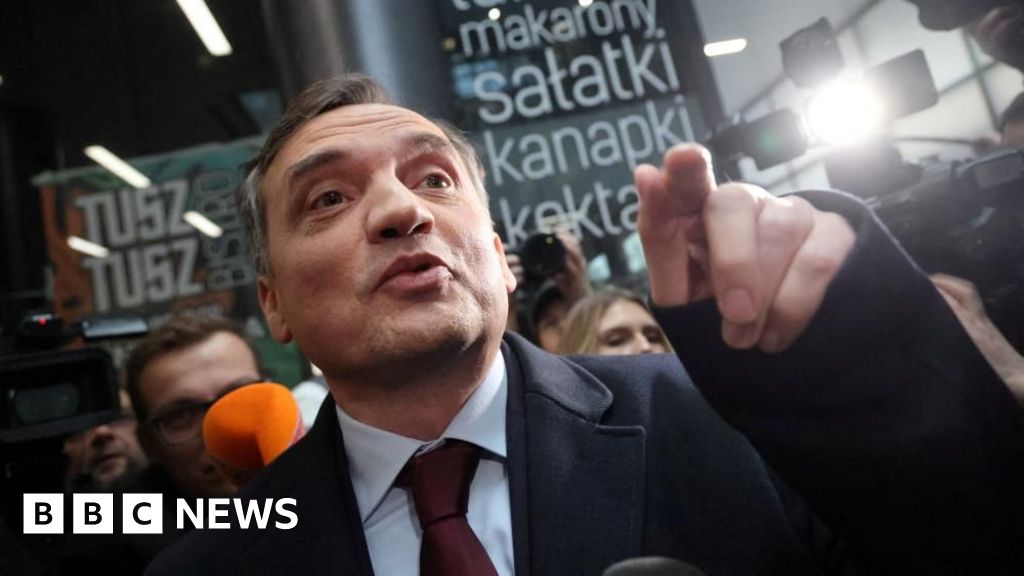
Zbigniew Ziobro himself has vehemently denied all accusations, framing himself as the victim of a politically motivated persecution orchestrated by the new Polish government. In a statement posted on X (formerly Twitter), Ziobro declared, "I have decided to accept the asylum granted to me by the government of Hungary due to the political persecution in Poland." He further elaborated on his stance, stating, "I have chosen to fight against political banditry and lawlessness. I stand in opposition to a creeping dictatorship," directly accusing Prime Minister Donald Tusk of initiating a "vendetta" against him. This rhetoric aligns with the broader narrative espoused by the PiS, which has consistently portrayed itself as being unfairly targeted by the new administration.
The granting of asylum to Ziobro is not an isolated incident. He is the second high-profile politician from the former PiS government to seek and receive refuge in Hungary. Last year, Marcin Romanowski, Ziobro’s former deputy, also fled to Budapest to avoid prosecution and was subsequently granted asylum. Both men are accused of corruption and abusing their positions, with the Statecontrolled Justice Fund being a central element in the allegations against them. The pattern suggests a deliberate strategy by Hungary to shield former allies of the PiS government from legal accountability in Poland.
This development is particularly significant given the close political alignment between Hungarian Prime Minister Viktor Orbán and the PiS. Both leaders have frequently championed nationalist agendas and have been vocal critics of what they perceive as overreach by Brussels and liberal democratic norms. Ziobro, as Justice Minister, was a key architect of the judicial reforms implemented under the PiS government. These reforms, which drastically altered the composition and independence of Poland’s judiciary, sparked a prolonged and acrimonious conflict with the European Union. The EU consistently argued that these changes undermined the rule of law and judicial independence, leading to the freezing of substantial EU funds earmarked for Poland and resulting in multiple adverse rulings from the European Court of Justice. Orbán’s government faced similar criticisms regarding its own actions on judicial independence, and both he and the PiS vehemently rejected the EU’s pronouncements, asserting that they infringed upon national sovereignty and represented an unwarranted intrusion into domestic affairs.
The decision by Hungary to grant asylum to Zbigniew Ziobro represents a significant escalation of tensions between Warsaw and Budapest, and more broadly, between Hungary and the EU. It highlights the widening chasm in democratic values and adherence to the rule of law among member states. While Hungary has maintained its right to grant asylum, this move is seen by many as an act of defiance against EU principles and a deliberate effort to obstruct Poland’s efforts to hold its former officials accountable. The implications for future EU cooperation and the integrity of the European legal framework are profound, raising serious questions about the effectiveness of EU mechanisms for enforcing its core values. The case of Zbigniew Ziobro is poised to become a focal point in the ongoing debate about the future direction of the European Union and the commitment of its member states to the principles of democracy and justice.



 Ramos Leo
 Nakalama John

 atisusanti