
 Roy Suryo
Guts have become a source of immense fascination. Social media influencers promote unproven supplements said to boost gut health, whilst milk and kombucha brands promise to nourish them with "good bacteria". Some have dismissed the gut-obsession as a passing fad – however, many doctors believe that our gut microbiome might affect a whole spectrum of things, from mental health to the likelihood of contracting certain cancers. But there’s another medical possibility that I’m particularly interested in: how our gut impacts how well (or badly) we age.
Which is why, a few months ago, I found myself at St Mary’s Hospital in London, famous for the discovery of penicillin, preparing to receive a nerve-wracking insight into my own gut health. I was there to meet Dr James Kinross, a professor in surgery at Imperial College London and a practising colorectal surgeon – but perhaps the most colourful part of his job is that he analyses people’s poo.
Weeks earlier, I’d sent my own stool sample to a laboratory. Tests like these can provide insights into our gut microbiome – the trillions of microbes that live inside our stomach (including mostly bacteria, but also viruses and fungi). "I’m a microbiome evangelist," he says. "[It’s] so deeply ingrained in all aspects of our health." He believes the gut may play a crucial role in the ageing process – with consequences for how long we live, and how physically strong we remain in our elderly years. Some experts think that the importance of the gut microbiome in the ageing process has been overhyped, and everyone I speak to thinks that more research is needed. Now that I am in my 60s and recently became a grandparent, it seems a good time to find out what my own gut tells me about how I will fare in coming decades. And the answer to the bigger question: if gut health really can affect ageing, what, if anything, can we do to improve it?

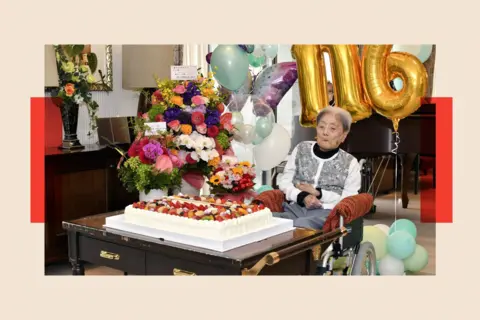
Maria Branyas Morera, the world’s oldest person, died in northern Spain in 2024 at the age of 117. After her passing, scientists took samples from her stool, blood, saliva, and urine and compared them with those of 75 other women from the Iberian peninsula. They noted that she enjoyed a broadly healthy lifestyle: she lived in the countryside, walked for an hour daily, and ate an oil-rich Mediterranean diet. However, what truly set her apart was the fact that she consumed three servings of yoghurt each day. Dr Manel Esteller, a geneticist at the University of Barcelona who co-wrote the study, believes Morera’s yoghurt habit may have contributed to a high level of beneficial bacteria that can reduce inflammation. "She had cells that seemed younger than her age," Esteller states.
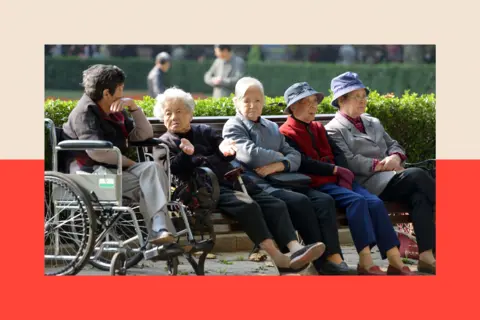
There have been other studies of centenarians – the superheroes of the longevity world. Again and again, scientists have examined the guts of this exceptionally long-lived population and found an impressive array of bacteria. In another study, published in 2022 in the journal Nature, researchers in Jiaoling County, southeastern China, took stool samples from 18 centenarians and discovered a high diversity of bacteria when compared to younger adults.
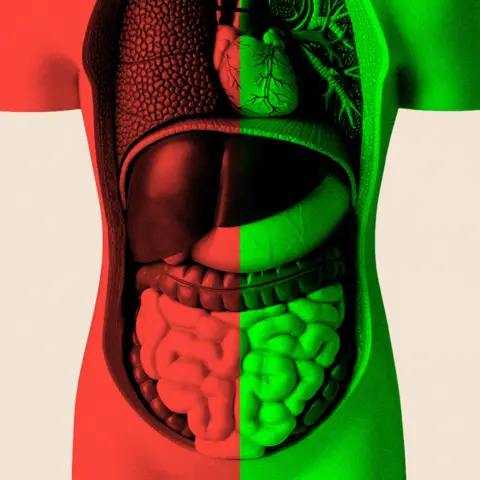
This makes sense to Dr Mary Ni Lochlainn, a clinical lecturer in geriatric medicine at King’s College London. She suggests thinking of our gut microbiome like a garden: we want it to be as diverse as possible. "If you go into a garden where there are no plants and it just looks barren, that’s a low-diversity garden," she explains. "What you want is lots of flowers, colour, seeds." The challenge is that as we age, the diversity of our microbiome drops significantly, with some beneficial bacteria disappearing from our guts. However, elderly individuals who defy this trend – and who retain their beneficial bacteria well into their eighties and nineties – have been shown to live longer, healthier lives. For Ni Lochlainn, these studies are proof of a link between our gut and ageing. "We know that centenarians… have a more diverse microbiome." She adds, "There’s something about those people who are kind of superior beings, in a way. They’ve managed to keep their diversity."
And it’s not just about how long someone lives – it’s also about how well they live during their later years. Kinross notes a connection between gut bacteria and frailty, or an elderly person’s capacity to recover from illness or injury.
Back in the lab at St Mary’s Hospital, Kinross announces his verdict: I have good "gut diversity in the microbiome." It is "broadly healthy," which is positive news. However, from his tone, I detect some reservations. Duly, they emerge. First, he explains there are a couple of "players in the gut" that might increase the risk of cardiovascular disease. Rather alarmingly, some potentially harmful bugs are also present, such as E. coli and C. difficile, which is not unusual. (Antibiotic use or a previous bout of gastroenteritis might have caused their presence.) But then we get to the age question.
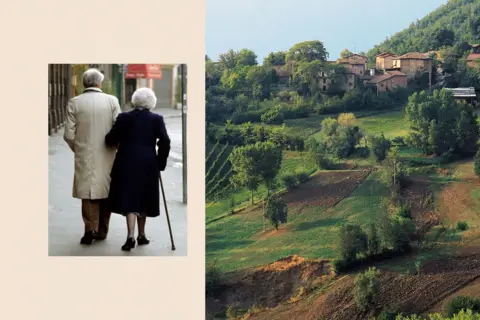
Kinross informs me that my gut biome is roughly equivalent to that of an Italian man five years older than me. He has deduced this by comparing my results to a study of 62 individuals in northern Italy. In that study – the only one of its kind – researchers analysed stool samples from people of various ages, ranging from 22 to 109, allowing them to map out what a person’s gut profile looks like at different life stages. The verdict makes me reflect, with a pang of guilt, about those years of ready meals and snacking. Intense work schedules covering the 2008 banking crisis and the Covid-19 pandemic resulted in too many cakes and treats grabbed on the hoof. Living in London on and off since my mid-20s meant being exposed to traffic fumes, rather than the fresher air of northern Italy. No wonder my gut is deemed five years older than I am.
Kinross must have seen the colour draining from my panicked face because he immediately reassures me that the Italian men may have all been on Mediterranean diets or living in rural areas unspoiled by urban pollution. Plus, it was a small sample size. He further reassures me by saying "all the machinery for healthy ageing" is present and just needs to be optimised. In other words, if I get to grips with my diet, there is still time for improvement.
As to whether people can truly improve their ageing process via their diet, Esteller is optimistic. He stresses that some "uncertainty" remains about the link between gut health and ageing, but states that the evidence is now fairly clear that what we put on our plate can affect both our "morbidity and our mortality." In other words, how long we live and how likely we are to remain in strong health during our senior years. "Even in the same city, [among] people with high income, people who eat better live longer," he says. He recommends consuming olive oil, which contains bacteria-boosting polyphenols; and bluefish meat, a sharp-toothed marine food that contains fatty acids and is popular in Japan, a country that enjoys one of the highest life expectancies in the world (84.5), according to the World Health Organisation. Bluefish is hard to come by in most UK supermarkets, though; it tends to be found only in specialised fishmongers or restaurants. He also recommends avoiding refined white sugars and ultra-processed foods where possible, as they can damage the diversity of bacteria in our gut. But Esteller points out that some people will have better luck than others trying to "hack" their gut – and genetics play a role. Kinross cautions that research on how the microbiome functions in different population groups is in its infancy. For now, he says, each patient should be assessed individually.
Armed with the report, I arrange an appointment with Raquel Britzke, a dietitian, who reviews the findings and devises a menu plan designed to boost the diversity of my gut bacteria, in the hope that it will help me age better. Her plan is tailored to my specific results. For the first few days of the week, she suggests I prepare a breakfast bowl of flax seeds, chia seeds, kefir, blueberries, kiwi, or pomegranate. (This isn’t a million miles from my usual bowl of low-sugar granola and yoghurt.) For lunch, she recommends a green salad with beans or lentils, broccoli, asparagus, or beetroot, and grilled chicken without skin. This feels a bit trickier – the ingredients aren’t always easy to find when grabbing a quick bite between news assignments. And for the evening meal, it’s salmon, asparagus, and brown rice. With a raised eyebrow, my wife casts doubt on my ability to stick to that every evening.
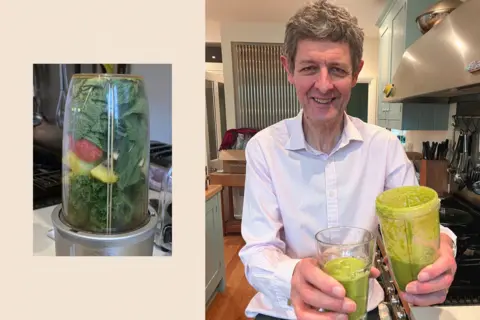
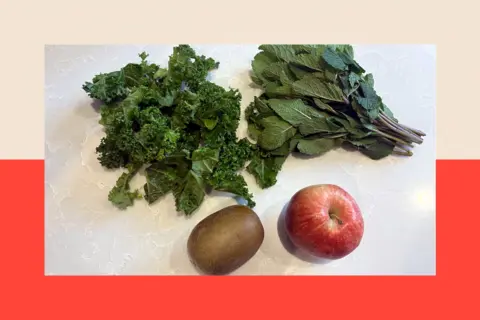
As for drinks, I’m recommended juices. On day one, I diligently blend some mint, apple, kiwi, kale, lemon juice, sunflower seeds, and water to make a green juice. But the mint flavour ends up crowding out the others. Kefir and kombucha (bacteria-rich, fermented drinks) are also recommended and go down better. Both now have their place in my fridge. Raquel Britzke also suggests I take probiotics, Omega-3, and Vitamin D3. They don’t come cheap.
Kinross tells me that nutritional change needs to be "significant" to make a difference to ageing. If I rigorously follow my new diet plan, he says, I could see a change to my gut biome "within a few weeks." But he warns that more "modest" changes to diets – for example, if you do it one day and not the next – then the biome won’t see much benefit. And by extension, any improvement to ageing prospects are less likely too. I still have time, he tells me. But there does come a "tipping point" for older people when the gut biome deteriorates.
There’s another conundrum, though – one that Ni Lochlainn calls the "chicken or the egg" problem. That is: does a more diverse gut make us stronger in old age, or does the fact that we’re stronger in old age mean we have a more diverse gut? Historically, it’s been difficult to determine which is causing the other. But even that question may have now been answered, thanks in part to faecal transplant research – where faeces are taken from a human or animal and given to an animal (usually a mouse) via a capsule or a tube into their stomach.

In one such study, published in 2020, scientists in the US examined two groups of 11 healthy mice. The first group received faeces from old mice; the second group received them from young mice. Within three months, the mice that received old faeces began to exhibit depressive-like behaviour. Their short-term memory deteriorated, as did their spatial awareness. In effect, their bodies became older. Ni Lochlainn accepts that to many people this sounds unpleasant – but these studies are important because they suggest a direct line of causation: from a gut microbiome to the age of a body.
Not everyone is as excited about the power of our gut to control ageing. Prof Kamila Hawthorne, chair of the Royal College of GPs, says research into the gut microbiome is "exciting" and "has certainly piqued the public’s interest" – but, she adds, "it’s important to remember, especially as research in the area is still emerging, that ‘gut health’ is likely just one piece of a much bigger picture. Good health is not determined by any single factor."
Ultimately, scientists say it is possible to improve the ageing process via your diet – though they caution that food is not everything. Esteller estimates that diet probably determines about one-third of your ageing outcome. The rest is a mix of genetics and other lifestyle factors, such as exercise and avoiding smoking cigarettes. As for my own gut health, it’s still early days on my new diet. My appetite is sated, and I am not tempted by snacks, other than the recommended apples, grapes, and nuts. But in a busy lifestyle with unpredictable hours, sticking to this sort of meticulous plan will be challenging – and I’m doubtful of my ability to pull it off. Still, the tests and the journey have been a wake-up call about my own gut – and my future health.


 Ramos Leo
 Nakalama John

 atisusanti

 George Anjay