
 atisusanti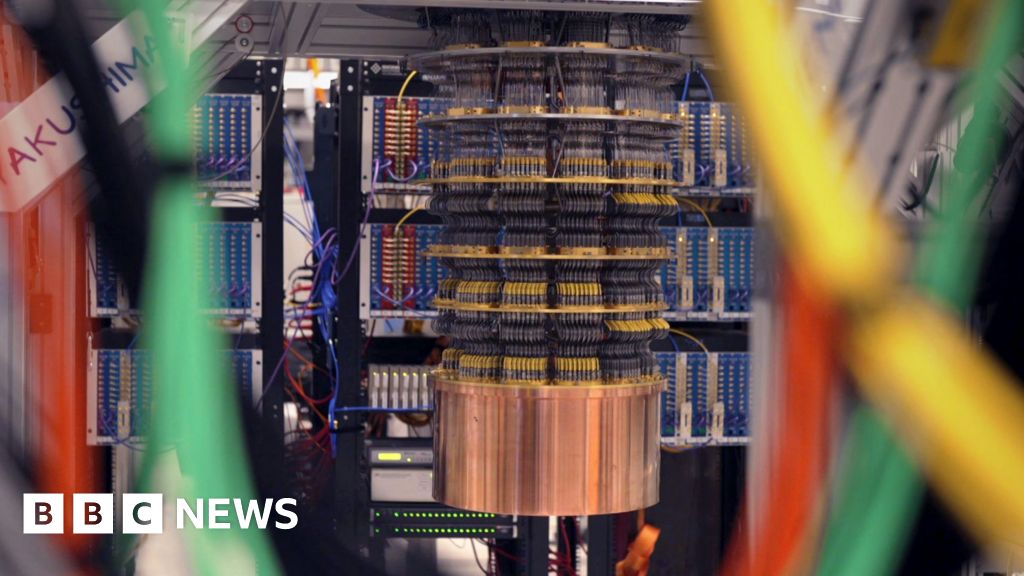
It resembles a gleaming golden chandelier, a celestial spectacle suspended within the coldest known environment in the universe. This is not merely the world’s most potent computational engine, but a groundbreaking technology poised to redefine the very foundations of financial security, the integrity of cryptocurrencies like Bitcoin, the safeguarding of government secrets, and the intricate dynamics of the global economy. Quantum computing holds the decisive key to determining which nations and corporations will triumph – and which will falter – throughout the remainder of the 21st century.
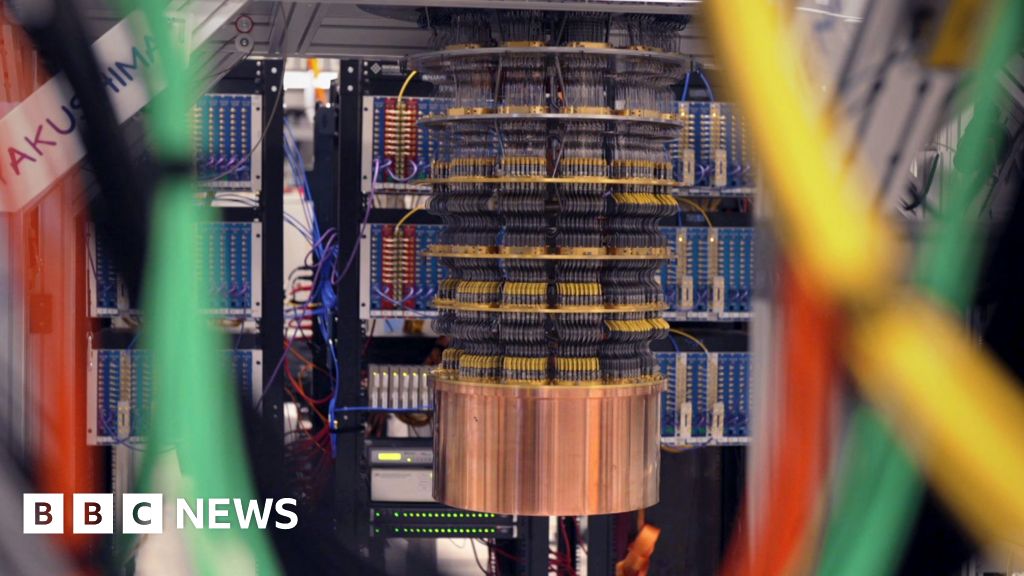
Before me, suspended a meter above the ground in a Google facility in Santa Barbara, California, is "Willow." To be frank, it defies expectations. There are no glowing screens, no tactile keyboards, and certainly no futuristic holographic head-mounted displays or mind-reading chips. Willow is an imposing structure, roughly the size of an oil barrel, composed of a series of meticulously crafted circular discs. These are intricately connected by hundreds of slender black control wires that descend into a resplendent bronze bath of liquid helium, meticulously maintained at a temperature just one-thousandth of a degree above absolute zero. The entire apparatus, with its metallic and wire "jellyfish" aesthetic, possesses a distinctively retro, almost 1980s feel. Yet, should quantum computing fulfill its immense potential, this seemingly anachronistic structure will fundamentally transform our world in myriad ways.
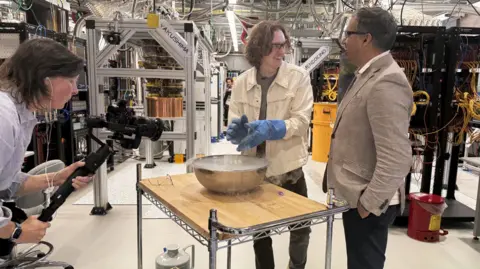
"Welcome to our Quantum AI lab," announces Hartmut Neven, Google’s formidable Quantum AI chief, as we pass through a highly secured entryway. Neven is a figure of considerable renown, a blend of technological visionary and passionate techno music aficionado, whose attire suggests a recent, impromptu arrival straight from the Burning Man music festival – an event for which he designs elaborate art installations. One can almost envision him having traversed from a parallel universe to be here, a notion we will explore further. His profound mission is to transmute the abstract principles of theoretical physics into tangible, functional quantum computers, designed "to solve problems that are otherwise intractable." While acknowledging his inherent bias, Neven confidently asserts that these "chandeliers" represent the pinnacle of performance in the global quantum computing arena.
This highly restricted laboratory, a veritable secret temple of high science, hums with an undercurrent of intense activity, much of which is deliberately kept from public view and camera. The critical nature of this technology subjects it to stringent export controls and pervasive secrecy, placing it at the epicenter of a fierce global competition for commercial and economic dominance. Even the minutest advantage, from the subtle nuances in component design to the strategic positioning of companies within global supply chains, can confer significant leverage.
Despite the austere scientific purpose, a palpable Californian aesthetic permeates this sanctuary of advanced science, evident in its artistic flourishes and vibrant color palettes. Each quantum computer is bestowed with a unique moniker, such as "Yakushima" or "Mendocino," and is adorned with a piece of contemporary artwork. Furthermore, the walls are embellished with a variety of striking graffiti-style murals, artfully illuminated by the bright California winter sun.
Neven proudly presents Willow, Google’s most advanced quantum chip, which has recently achieved two pivotal milestones. He emphatically stated that Willow has definitively settled the long-standing debate regarding whether quantum computers are capable of performing tasks that lie beyond the reach of classical computers. Willow achieved this by solving a benchmark problem in mere minutes – a task that would have required an estimated 10 septillion years (more than a trillion trillion, or a number with 25 zeros) for the world’s most powerful conventional supercomputer, a duration exceeding the age of the universe itself. This theoretical breakthrough has already found practical application in the Quantum Echoes algorithm, a complex computational process that conventional computers cannot execute. This algorithm aids in deciphering the intricate molecular structures of substances, utilizing technology analogous to that employed in MRI machines.
Neven eloquently elaborates on the transformative potential he envisions for the Willow quantum chip, predicting its application to "many problems that humankind faces today." He foresees its role in "discovering medicines more efficiently," enhancing "food production," optimizing "energy production, transportation, and storage," and ultimately contributing to the solutions for "climate change and human hunger." He explains, "It allows us to understand nature much better, and then unlock its secrets to build technologies that make life more pleasant for all of us." Some researchers posit that truly advanced Artificial Intelligence will only become feasible with the advent of quantum computing. Notably, members of the Google team involved in the research have recently been honored with the Nobel Prize for their foundational work on "superconducting qubits," the very technology underpinning Willow.
Willow currently boasts 105 qubits. In contrast, Microsoft’s quantum computing endeavor, utilizing a different approach, currently operates with 8 qubits. The global race is intensely focused on achieving the milestone of 1 million qubits to enable a "utility-scale machine" capable of performing complex quantum chemistry and drug design calculations with absolute accuracy. The inherent fragility of this technology necessitates an ongoing battle against errors.
The advancements taking place within this facility are being scrutinized with intense interest worldwide. Professor Sir Peter Knight, Chair of the National Quantum Technology Programmes Strategy Advisory Board, commends Willow for breaking new ground. He acknowledges that, "All the machines are really still at the toy model stage; they make mistakes. They need error correction. Willow was the first to demonstrate that you could do error correction, through repeated rounds of repairs, which improve." This crucial demonstration positions the technology on a trajectory to achieve an astonishing trillion operations with accuracy, potentially within the next seven to eight years, significantly accelerating previous projections of two decades. If the initial quarter of this century was defined by the ascendance of the internet and subsequently Artificial Intelligence, the next 25 years are undeniably poised to usher in the dawn of the quantum era.
The fundamental principle behind quantum computing can be visualized through an analogy: imagine searching for a single tennis ball within a thousand closed drawers. A conventional computer would systematically open each drawer one by one. A quantum computer, however, possesses the remarkable ability to examine all the drawers simultaneously. Similarly, instead of requiring a hundred distinct keys to unlock a hundred individual doors in traditional computing, quantum computing offers the potential to unlock all one hundred doors with a single "key," instantaneously.
These powerful machines will not be ubiquitous personal devices; they will not shrink to fit into smartphones, augmented reality glasses, or laptops. Their significance lies in their exponentially growing computational power, a capability that is attracting widespread investment and development across the globe. When questioned about the potential threat to his company’s model of providing specialized chips for AI, Nvidia CEO Jensen Huang responded affirmatively, stating, "No, a quantum processor will be added to a computer in the future." Furthermore, a leading figure in the UK’s quantum research sector highlights the profound implications of this technology, emphasizing its eventual capacity to decrypt virtually any form of encrypted data, from sensitive state secrets to the digital ledger of Bitcoin. "All of cryptocurrency will also have to be re-examined because of the quantum computing threat," Sir Peter warns. A prominent partner of Nvidia last year indicated that while Bitcoin has a few years of relative security remaining, the technology necessitates a transition to a more robust blockchain by the end of the decade. Industry insiders refer to a concerning practice known as "Harvest Now, Decrypt Later," whereby state agencies are believed to be meticulously accumulating vast quantities of encrypted data, both domestically and internationally, with the expectation that future generations of quantum computers will be able to decipher it.
The global landscape is characterized by an intense race for quantum supremacy. China’s approach diverges significantly from the commercialized endeavors in the United States and the West. With an estimated investment of around $15 billion (£11 billion), China’s total commitment to quantum technology may rival that of all other global government programs combined, according to Sir Peter. Since 2022, China has surpassed other nations in publishing scientific papers on quantum research, a testament to the leadership of pioneering physicist Pan Jianwei. This initiative is a cornerstone of Beijing’s 14th five-year plan. China has strategically opted to centralize its quantum research efforts, halting independent development by tech giants such as Baidu and Alibaba, and consolidating personnel and infrastructure into a state-run enterprise. Beijing’s primary focus lies in achieving a decisive edge in quantum communications and satellite technology. Last year, Pan’s team developed and tested the Zuchongzhi 3.0 quantum computer, employing a methodology similar to Willow’s, albeit with a different approach, and claiming comparable results. In the autumn, it was made accessible for commercial utilization. This entire global pursuit evokes parallels with the World War Two Manhattan Project for the development of nuclear weapons, or the Space Race of the 21st century.
The United Kingdom stands as a significant hub for quantum research, with a British scientist credited with the foundational research on superconducting qubits. The nation boasts numerous companies and cutting-edge research institutions in this field. The government is poised to announce substantial investments in quantum technology in the coming weeks, recognizing its vital importance for economic growth, national security, and geopolitical standing. There is a palpable aspiration for the UK to emerge as a leading power in this transformative domain.
Within the Willow lab, profound, almost existential questions are being contemplated. Last year, Neven proposed that Willow’s unprecedented computational speed could lend credence to certain theories concerning the existence of a multiverse. Specifically, he suggested that this remarkable speed might be attributable to Willow tapping into parallel universes for its computational power. This hypothesis, however, has not been universally embraced by the scientific community. "There is still a spirited debate," Neven confides. "As you have learned in your lab visit, the reason quantum computers are so powerful is that within one clock cycle, it can touch two to the 105 combinations simultaneously. It makes you question where are these different things?… There’s a version of quantum mechanics to think about – the many worlds formulation – parallel universes or parallel reality." Neven was careful to clarify that Willow has not definitively proven this theory but rather has provided "suggestions that we should take this idea seriously." This represents the absolute frontier of technological advancement, global growth, and potentially, our understanding of reality itself. The British government’s forthcoming investment of hundreds of millions of pounds aims to bridge the gap with leading entities like Willow and China’s burgeoning quantum capabilities. What sounds like science fiction is rapidly solidifying into economic reality.



 Ramos Leo
 Nakalama John
 George Anjay

 Roy Suryo