
 Nana Banana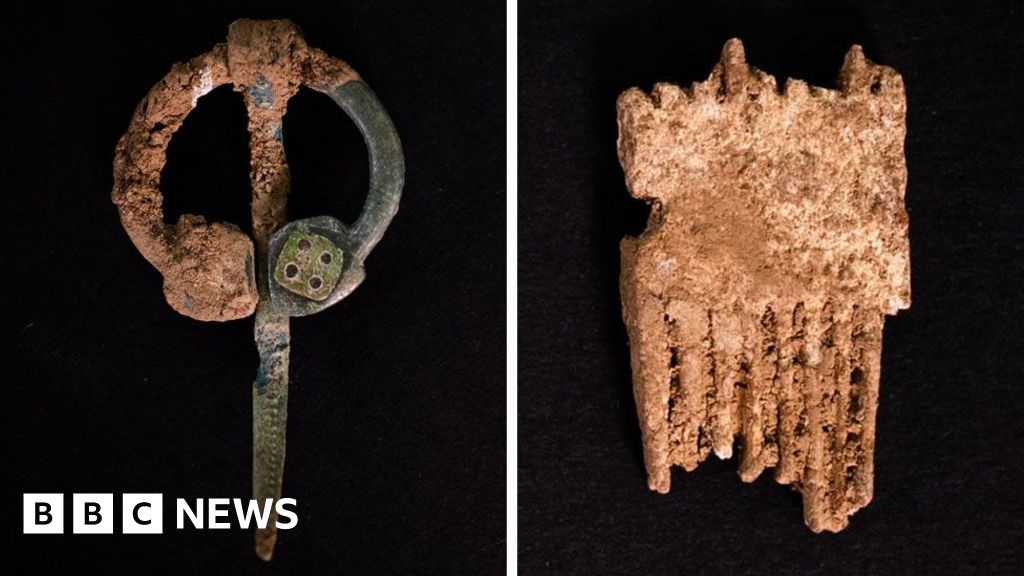
Intriguing new discoveries in a medieval cemetery in Wales have brought archaeologists significantly closer to solving the enduring mystery surrounding the women buried there, offering a rare glimpse into a pivotal, yet poorly understood, period of early Welsh history. For years, the unusual demographic of this ancient burial ground has puzzled experts: an overwhelming majority of the 58 skeletons unearthed so far, dating back to the 6th or 7th Century, belong to women. The latest finds – including the outline of what appears to be a small building and a trove of domestic and decorative artefacts, most notably exquisite coloured glass beads – are adding compelling weight to the growing evidence that this was not merely a burial ground, but an active, early female religious community.
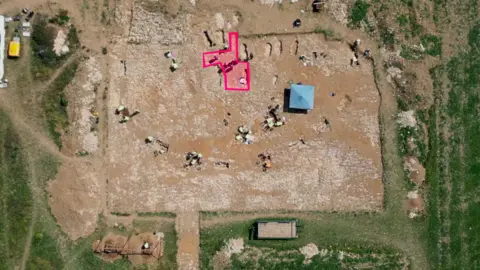
The archaeological team has spent the last four years meticulously excavating the site, nestled within the picturesque grounds of Fonmon Castle, remarkably close to the bustling flight path of Cardiff Airport. This juxtaposition of ancient sanctity and modern infrastructure adds a unique layer of intrigue to the discovery. The deceased were laid to rest in shallow graves, carefully carved into the region’s characteristic limestone bedrock. This geological feature has played a crucial role in the remarkable preservation of the 1,500-year-old skeletons, their bones and teeth remaining largely intact, offering an invaluable window into their lives. While initial bioarchaeological analyses indicate that these women lived demanding, often hard lives, marked by physical exertion and possibly periods of scarcity, the objects found alongside their remains tell a contrasting tale of unexpected wealth and luxury.
The team had long been grappling with the fundamental question of who these women were and what brought them together in such a unique concentration. Now, the latest phase of excavation has provided a major clue: the discernible outline of what Dr. Andy Seaman, the Cardiff University archaeologist leading the dig, believes could be a small building. "It’s producing fragments of building stone, so it might be structural," explains Dr. Seaman, his voice tinged with excitement. "We might be thinking of a small shrine or a chapel." This potential structure is central to his evolving hypothesis: "I do think that we have a site which may be an early religious community."

The significance of this possible building cannot be overstated. It is strategically located at the very heart of the cemetery, with graves clustered densely around it. This spatial arrangement strongly suggests that proximity to this feature was highly desired by the community. People evidently wished to be buried as close as possible to what they perceived as a sacred focal point. So strong was this desire, notes Cardiff University archaeologist Tudur Davies, that some of these graves show evidence of multiple interments. "It’s a highly desired location for people to be buried in," he elaborates. "Sometimes two, three, four individuals have been buried on the same spot, again and again. There doesn’t appear to be as much of a taboo over putting bodies in the same place and just moving those still there to one side." This practice not only underscores the spiritual importance of the central structure but also hints at a close-knit community, perhaps one with limited consecrated burial space, or a profound reverence for the continuity of the sacred ground and those interred within it.
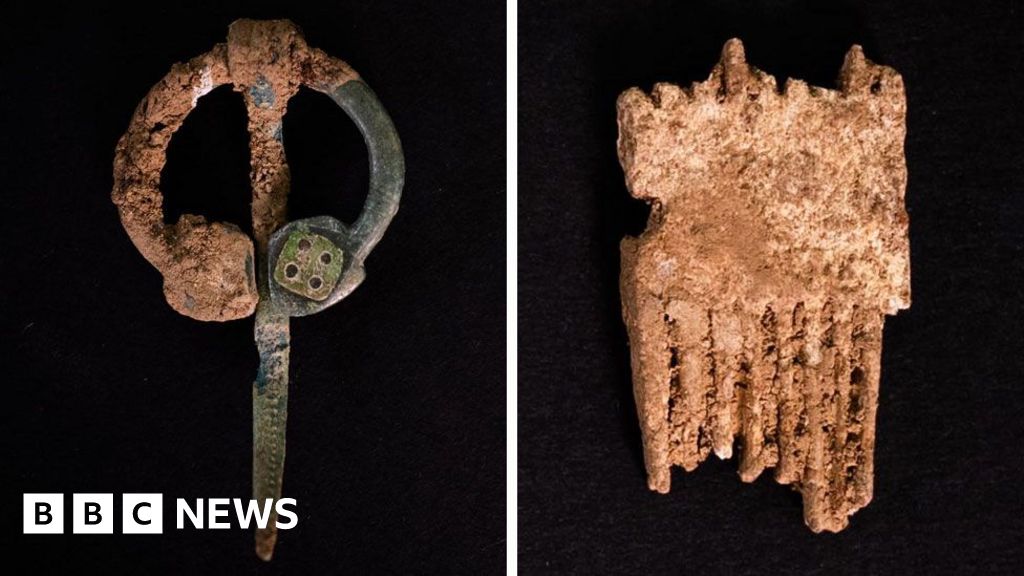
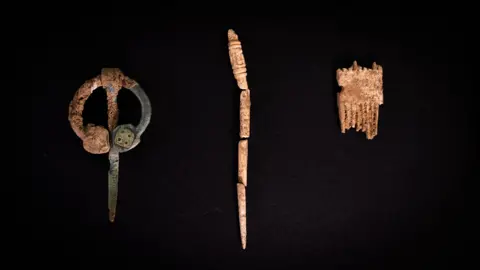
Beyond the architectural evidence, the array of artefacts recovered from the site is proving instrumental in piecing together a more detailed picture of these medieval women. Each object, painstakingly cleaned and analyzed in Cardiff University’s lab, tells a story. Conservator Nicola Emmerson, for instance, has been meticulously working on an ornate copper brooch. "We’d have to do some more analysis, but it’s probably bronze," she explains, carefully removing centuries of encrusted dirt. "Also, we think it was possibly gilded, which would be a coating of gold over the top." The terminals of the brooch, she adds, were adorned with vibrant green enamel. "This would have been a very decorative brooch. I think it’s a very special find for the site." Such an item, combining precious metal, gold gilding, and colourful enamel, speaks volumes about the wearer’s status or the community’s resources and connections. It wasn’t merely a functional garment fastener but a statement piece, possibly indicating a position of authority or wealth within the religious order.

Alongside this remarkable piece of "medieval bling," the team has also unearthed other personal items that offer insights into daily life and aesthetics. A delicate pin crafted from bone, featuring a detailed, intricate pattern, points to the community’s engagement with fine craftsmanship or access to such skilled artisans. Similarly, a comb, carved with precision from antler, provides a tangible link to personal grooming and the utilization of natural resources. However, it is the discovery of exquisite, multicoloured glass beads that truly captivates. Measuring a mere 3mm across, each bead is a miniature testament to the glassblower’s art, demonstrating advanced technical skill and access to diverse raw materials. These tiny treasures were likely not just decorative but could have been stitched onto clothing, perhaps as part of a habit or ceremonial attire, or incorporated into jewellery, signifying identity, devotion, or even trade links with regions where such glasswork was produced, possibly as far afield as the Anglo-Saxon kingdoms or even the Continent.
Crucially, the archaeological inventory extends beyond personal adornments to include objects that speak volumes about the everyday existence of a "living community" at the site. "We have a quern stone for grinding flour for bread. We’ve got pottery and glass for eating and drinking," Dr. Andy Seaman points out. The presence of a quern stone is a strong indicator of domestic activity and a degree of self-sufficiency in food preparation. These women were not simply interred here; they lived and worked here. The fragments of pottery and, significantly, glassware used for daily meals and beverages further solidify the picture of an active settlement. Glassware, often a luxury item in this period, once again hints at a community that was not entirely isolated from external trade networks or one that enjoyed a certain level of prosperity or patronage.
Dr. Seaman’s hypothesis, therefore, posits that this was an "enclosed" community, one that intentionally lived apart from the wider secular society, situated directly adjacent to the cemetery. This separation would have allowed them to dedicate themselves to a religious life, whether as an early form of a nunnery, a proto-monastic settlement, or a community of devout laywomen. Such enclosed communities were a feature of early Celtic Christianity, emphasizing asceticism, prayer, and manual labour. Little is known about the specifics of these early religious communities in Wales, making the Fonmon Castle site a potentially groundbreaking discovery for understanding the roles of women in the nascent Welsh Church.
Despite the significant strides made, the medieval puzzle still presents several intriguing questions. The most pressing involves the presence of a few male skeletons and some children among the predominantly female burials. Who were these men? Were they spiritual leaders, benefactors, male relatives, or perhaps even skilled labourers supporting the community? And the children – were they young novices, orphans taken in by the community, or perhaps the offspring of women who joined the order, or of lay staff? Further analysis, potentially including ancient DNA studies, might one day illuminate these familial and social connections.
Perhaps the most unsettling and perplexing discovery relates to two women who were found buried in stark contrast to the careful interments of their peers. These two individuals were "tossed in a ditch," one with her hands and feet tied. This treatment stands in stark opposition to the "great care" afforded to the majority of the deceased and raises a multitude of difficult questions. What transgression could have led to such a harsh and ignominious burial? Were they excommunicated, deemed criminals, or perhaps victims of violence from outside the community? This grim finding complicates the idyllic image of a serene religious community, hinting at the complex social dynamics, strictures, and potential punishments that existed even within sacred enclosures of the medieval period.
The team is now diligently working to determine if this unique site represents an example of very early Christianity in Wales. "It’s a period where the history is not yet written," Dr. Seaman emphasizes. "We don’t really understand early church sites… how they functioned, what they looked like, how they were organised." He explains that while much is known about later medieval religious institutions, the formative years of Christianity in Wales, during the 6th and 7th centuries, remain largely shrouded in mystery. This makes the Fonmon Castle discovery an "exciting opportunity" to shed light on the very origins and evolution of religious life in the region, particularly the previously under-explored role of women. The archaeologists, driven by these profound questions and the promise of further revelations, are eagerly anticipating the continuation of their excavations later this year, hoping to unearth more clues and perhaps even rewrite a chapter of early Welsh history.

 Ramos Leo
 atisusanti
 Nakalama John
 George Anjay
 Roy Suryo