George Anjay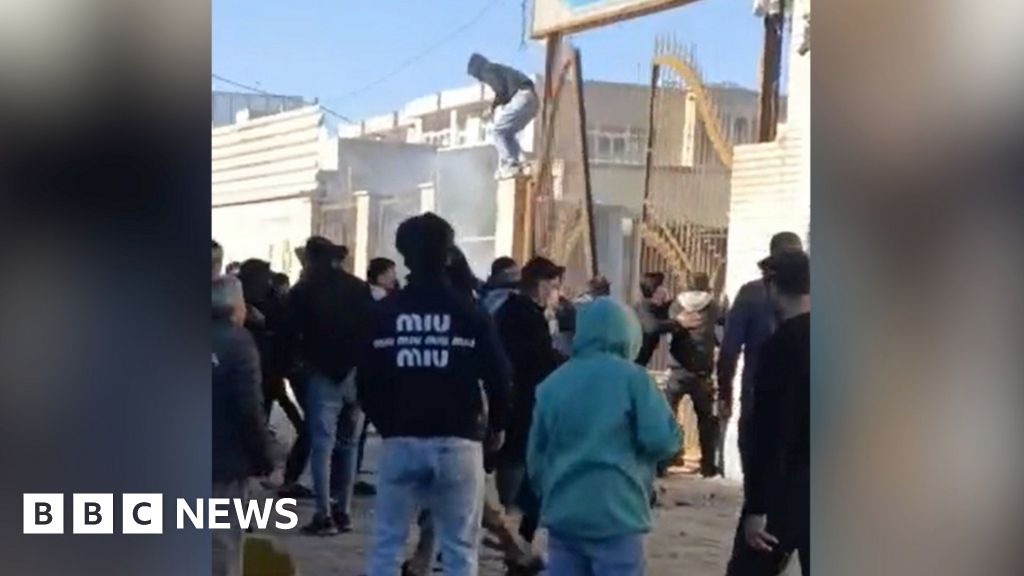
A member of Iran’s security forces has been killed amid a fourth day of widespread protests gripping the nation, ignited by a severe currency collapse and economic hardship, according to the semi-official Fars news agency. The incident, which occurred in the city of Kouhdasht in the western Lorestan province, also resulted in injuries to several other members of the security forces, as reported by regional official Said Pourali. Compelling footage, independently verified by BBC Persian, appears to capture security forces firing upon demonstrators in Kouhdasht on the same day as the fatality. Confrontations were also reported in the southern province of Fars and the western provinces of Hamedan and Lorestan on Thursday, indicating a broadening scope of the unrest.
In an apparent bid to mitigate the escalating public discontent, which began in the capital, Tehran, on Sunday, authorities declared Wednesday a bank holiday. This move, widely interpreted by Iranians as an effort to contain the burgeoning protests, saw schools, universities, and public institutions shuttered across the country. Ostensibly framed as an energy-saving measure due to cold weather, the holiday was met with skepticism and seen as a direct response to the popular anger.
The Fars report specifically identified the deceased as a 21-year-old member of the Basij, a paramilitary force closely affiliated with Iran’s elite Revolutionary Guards. He was reportedly killed during a violent confrontation in Kouhdasht. The agency also stated that thirteen police officers and Basij members sustained injuries from thrown stones during the clashes. The unrest, however, was not confined to Kouhdasht, with other cities also experiencing significant disturbances.
In the southern province of Fars, protesters attempted to breach a local government building in the city of Fasa. Officials reported that three police officers were injured in this incident, and four individuals were subsequently arrested. Social media videos, corroborated by the BBC, show a large crowd breaking through the gate of the governor’s office in Fasa. Subsequent footage depicts security personnel responding with gunfire, and plumes of tear gas rising against a backdrop of shuttered shops, painting a grim picture of the escalating tensions.
The protests, which initially erupted in Tehran among shopkeepers incensed by another precipitous decline in the value of the Iranian rial against the US dollar on the open market, have gained momentum and broadened in participation. By Tuesday, university students had joined the demonstrations, and the unrest had spread to multiple cities. Chants against the country’s clerical leadership have become a prominent feature of these public gatherings.
While these protests represent the most widespread public dissent since the 2022 uprising triggered by the death of Mahsa Amini in custody – who was accused by morality police of improperly wearing her headscarf – they have not yet reached the same scale of national mobilization. Nevertheless, the current wave of unrest has prompted a significant security response. Tight security measures have reportedly been implemented in the areas of Tehran where the demonstrations initially commenced, in an effort to prevent further escalation.
In response to the unfolding crisis, President Masoud Pezeshkian has publicly stated that his government is prepared to listen to the "legitimate demands" of the protesters. However, this conciliatory tone has been tempered by a stark warning from the prosecutor general, Mohammad Movahedi-Azad, who has declared that any attempts to create instability will be met with what he termed a "decisive response." This dual approach of acknowledging grievances while threatening firm action highlights the delicate balancing act the Iranian authorities are attempting to navigate amidst the growing public anger.
The underlying causes of these protests are deeply rooted in Iran’s persistent economic woes. The rial has been on a downward spiral for months, exacerbated by international sanctions and domestic mismanagement. Inflation has soared, eroding purchasing power and deepening the economic hardship faced by ordinary Iranians. This economic distress has created fertile ground for widespread discontent, which has now manifested in the streets. The government’s inability to effectively address these economic challenges has fueled public frustration and contributed significantly to the current wave of unrest.
The role of the Basij militia in these confrontations is particularly noteworthy. As a force deeply intertwined with the ideology and security apparatus of the Islamic Republic, their presence and actions during protests often signal the state’s determination to maintain control. The reported killing of a Basij member underscores the dangerous and volatile nature of these street confrontations, highlighting the risks faced by both security personnel and demonstrators.
Furthermore, the protests are occurring against a backdrop of broader regional and international dynamics. The ongoing geopolitical tensions, including Iran’s nuclear program and its involvement in regional conflicts, continue to shape its economic and political landscape. The sanctions imposed by the United States and other Western nations have had a tangible impact on Iran’s economy, contributing to the currency devaluation and economic hardship that are now fueling the protests. The government’s response to these internal pressures will likely be influenced by its broader foreign policy objectives and its relationship with international powers.
The government’s declaration of a bank holiday, while ostensibly for energy conservation, has been widely seen as a tactic to disrupt and disperse potential protest gatherings. This strategy, however, has proven insufficient to quell the public anger, as evidenced by the continued reports of demonstrations and confrontations in various cities. The government’s ability to regain public trust and address the root causes of the discontent will be crucial in determining the future trajectory of these protests and the stability of the nation.
The protests also raise questions about the effectiveness of the government’s communication strategies and its willingness to engage in genuine dialogue with its citizens. While President Pezeshkian’s statement about listening to legitimate demands is a positive step, the prosecutor general’s threat of a "decisive response" suggests a continued reliance on a security-first approach. The long-term resolution of these issues will likely require a more comprehensive and inclusive strategy that addresses the economic grievances and political aspirations of the Iranian people.
The verified footage of security forces firing at protesters, coupled with the reports of injuries and fatalities, paints a disturbing picture of the state’s response to dissent. The use of tear gas and the evident confrontations highlight the severity of the clashes. The government’s challenge lies in finding a path that de-escalates the situation, addresses the underlying economic issues, and allows for the expression of public grievances without resorting to excessive force. The international community will undoubtedly be watching closely as this situation unfolds, given the significant implications for regional stability and human rights. The coming days and weeks will likely reveal the extent to which the Iranian authorities are willing to engage in meaningful reforms and address the deep-seated frustrations of their population. The echoes of the 2022 protests, while not yet replicated in scale, serve as a potent reminder of the potential for widespread public anger to challenge the established order.

 Ramos Leo
 Roy Suryo
 atisusanti
 Nakalama John