
 George Anjay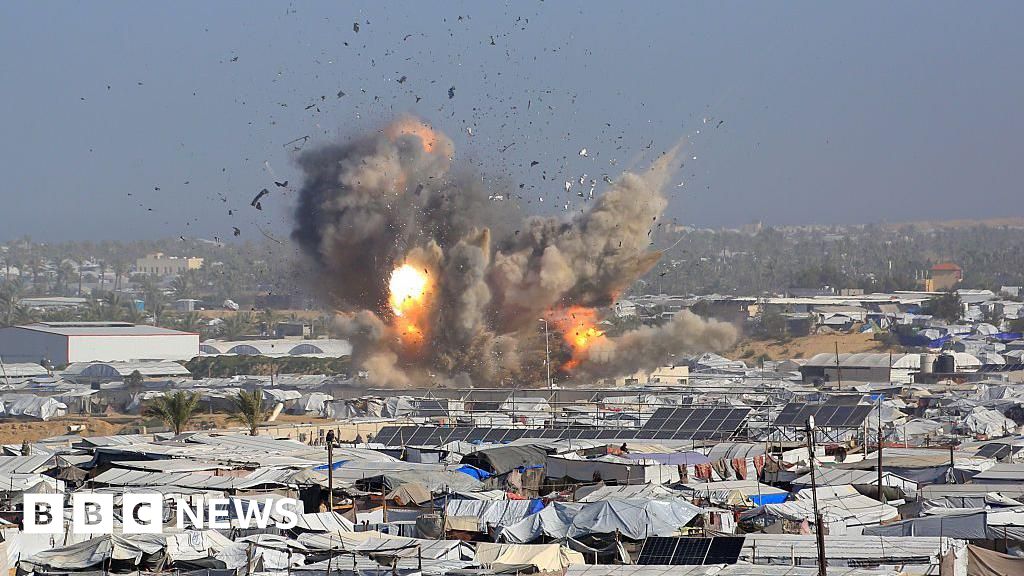
At least 32 Palestinians, including women and children, have been killed in a severe escalation of Israeli air strikes across the Gaza Strip on Saturday, according to local authorities and rescue officials. The Gaza Civil Defence, an agency operated by Hamas, reported that helicopter gunships targeted a tent sheltering displaced individuals in the southern city of Khan Younis, resulting in multiple casualties. These attacks are described by Palestinians as the most intense since the second phase of a ceasefire, brokered by President Trump in October, came into effect earlier this month.
The Israeli military has acknowledged carrying out a series of strikes, stating they were a direct response to what they allege was a Hamas violation of the agreement on Friday. This exchange of accusations regarding truce violations has become a recurring theme since the ceasefire’s inception last year. The Israel Defense Forces (IDF) issued a statement detailing their operations, asserting that "eight terrorists were identified exiting the underground terror infrastructure in eastern Rafah," an area within Gaza where Israeli forces are reportedly deployed under the terms of the October agreement.
In coordination with the Israel Security Agency (ISA), the IDF claims to have targeted multiple sites. These strikes reportedly neutralized "four commanders and additional terrorists," alongside the destruction of a weapons storage facility, a weapons manufacturing site, and "two launch sites belonging to Hamas in the central Gaza Strip." These actions underscore the ongoing, heavily contested nature of the conflict and the differing narratives surrounding its triggers and justifications.
Hamas has vehemently condemned the Israeli strikes, characterizing them as further evidence of the Israeli government’s "brutal war of genocide against the strip." The group has called for immediate action from the United States, highlighting what they term "ongoing violations" of the ceasefire. Hamas officials reported that seven victims from a single displaced family in Khan Younis were among those killed. A spokesperson for the Civil Defence elaborated that the strikes impacted residential apartments, makeshift tents, shelters, and a police station.
Further compounding the tragedy, officials at Gaza City’s Shifa hospital reported that an air strike on a residential apartment resulted in the deaths of three children and two women. The profound human cost of these attacks was poignantly captured by Samer al-Atbash, an uncle of three of the child victims. According to Reuters, he expressed his anguish, stating, "We found my three little nieces in the street. They say ‘ceasefire’ and all. What did those children do? What did we do?" His words encapsulate the desperation and bewilderment felt by many in Gaza amidst the relentless violence.
Visual evidence emerging from Gaza paints a grim picture of the aftermath. Video footage and photographs circulating from across the Strip show bodies being recovered from rubble and significant structural damage to numerous buildings. The destruction of civilian infrastructure, including a police station in Gaza City, has been confirmed by local authorities, with at least 12 fatalities reported in that specific incident alone.
The international community has reacted with concern and condemnation. Egypt’s foreign ministry, in a statement obtained by AFP news agency, denounced the strikes and issued an urgent plea for "all parties to exercise the utmost restraint." Qatar, a significant mediator in the ongoing ceasefire negotiations, also voiced its strong disapproval of the "repeated Israeli violations," as stated by its foreign ministry.
The current conflict has its roots in the Hamas-led attack on southern Israel on October 7, 2023, which resulted in the deaths of approximately 1,200 people and the abduction of 251 individuals taken hostage. Israel’s subsequent military campaign in Gaza, launched in retaliation, has led to a devastating humanitarian crisis. According to the Hamas-run health ministry, over 71,660 Palestinians have been killed since the commencement of Israel’s offensive.
The situation remains volatile, with significant casualties reported even during periods designated for a ceasefire. The Hamas-run health ministry claims that at least 509 Palestinians have been killed since the ceasefire began on October 10, 2025. Tragically, four Israeli soldiers have also lost their lives during this period. The figures provided by the health ministry have consistently been recognized as reliable by the United Nations and numerous human rights organizations, and are widely cited by international media outlets. It is important to note that Israel maintains restrictions on foreign news organizations, including the BBC, preventing independent reporting from within Gaza. This information blackout further complicates the ability to independently verify events on the ground, leaving many accounts reliant on information provided by local authorities and humanitarian organizations operating within the besieged territory. The ongoing cycle of violence and accusation highlights the deeply entrenched complexities of the Israeli-Palestinian conflict, with the civilian population of Gaza bearing the brunt of the escalating hostilities. The international community continues to grapple with finding a sustainable path toward de-escalation and a lasting resolution.


 atisusanti
 Nakalama John