 George Anjay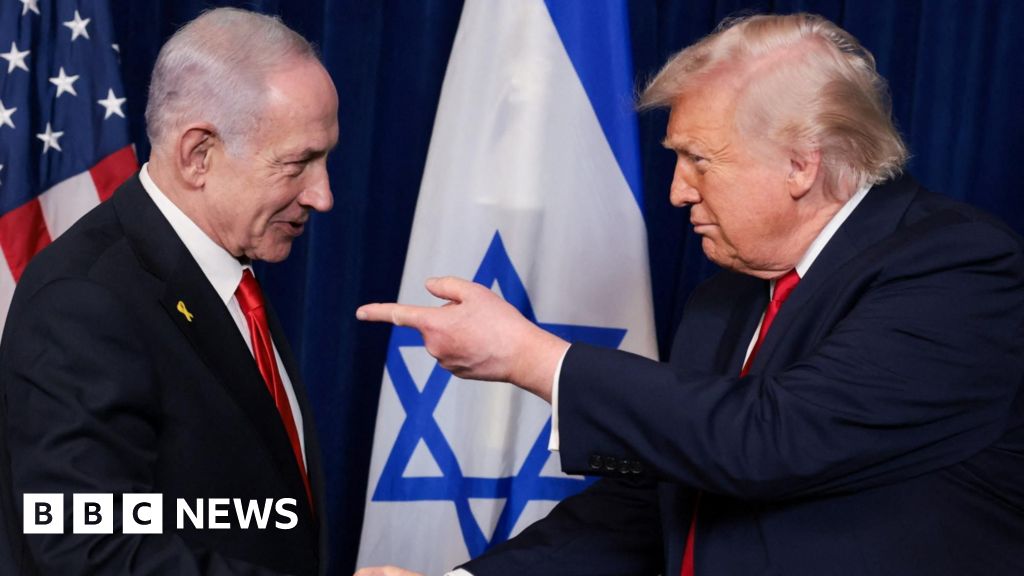
Israeli Prime Minister Benjamin Netanyahu has accepted an invitation to join former US President Donald Trump’s newly established "Board of Peace," a significant development that could reshape international diplomacy and reconstruction efforts in conflict zones, particularly in the Gaza Strip. A statement released by Netanyahu’s office confirmed his membership, indicating the board is intended to be comprised of global leaders committed to fostering stability and resolving protracted conflicts. While initially perceived as a mechanism to facilitate an end to the protracted war between Israel and Hamas in Gaza and oversee its subsequent reconstruction, the proposed charter for the Board of Peace has revealed a broader scope, notably omitting specific mention of the Palestinian territory and appearing to chart a course that could potentially supersede the functions of existing United Nations bodies. This ambitious initiative, spearheaded by the former US President, has already garnered commitments from a diverse group of nations, including the United Arab Emirates and Bahrain, along with Albania, Armenia, Azerbaijan, Belarus, Hungary, Kazakhstan, Morocco, and Vietnam. However, the proposed structure and objectives have also elicited reservations from several other countries, highlighting the complexities and varying perspectives surrounding such a high-level diplomatic undertaking.
The exact number of countries extended invitations to participate in Trump’s new body remains undisclosed, adding a layer of ambiguity to its potential reach and influence. Prominent global powers such as Canada, Russia, Turkey, and the United Kingdom are among those who have been approached but have yet to publicly announce their stance, leaving their involvement uncertain. Norway has definitively stated its refusal to join, citing a significant number of unanswered questions regarding the current proposal, while France and Sweden have indicated a similar inclination to abstain. This cautious approach from some nations underscores the delicate geopolitical landscape and the need for clarity and consensus on the board’s mandates and operational framework.
A leaked copy of the Board of Peace’s charter has provided critical insights into its operational design and membership criteria. Under the proposed charter, member states would be granted a renewable three-year term. However, a pathway to permanent membership exists for those nations willing to contribute a substantial $1 billion in funding to the board. This financial incentive suggests a model that relies heavily on the direct financial contributions of its members to sustain its operations and initiatives. The document outlines the Board of Peace’s overarching mission: to function as an international organization dedicated to promoting stability, restoring dependable and lawful governance, and securing enduring peace in regions affected or threatened by conflict. It explicitly states an intention to "undertake such peace-building functions in accordance with international law," a clause that will undoubtedly be scrutinized by international legal experts and human rights organizations.
Donald Trump is slated to serve as the chairman of the Board of Peace, a position he will hold concurrently with his role as the representative of the United States. A US official clarified that Trump’s chairmanship is not time-bound and can be maintained "until he resigns it," with the caveat that a future US president would have the prerogative to appoint a new representative for the United States. In his capacity as chairman, Trump will possess "exclusive authority to create, modify or dissolve subsidiary entities as necessary or appropriate to fulfil the Board of Peace’s mission," granting him significant control over the board’s structure and operational arms. Furthermore, he will be empowered to select "leaders of global stature" to serve two-year terms on an Executive Board, which will be instrumental in executing the Board of Peace’s objectives, according to US officials.
The foundational Executive Board, comprising seven members, was announced by the White House last Friday. This distinguished group includes key figures such as US Secretary of State Marco Rubio, Middle East special envoy Steve Witkoff, Trump’s son-in-law Jared Kushner, and former British Prime Minister Tony Blair. Their inclusion signals a strong emphasis on individuals with deep experience in foreign policy, Middle East affairs, and strategic negotiations.
In a pivotal appointment for the Gaza component of Trump’s peace plan, Nickolay Mladenov, a seasoned Bulgarian politician and former UN Middle East envoy, has been named as the Board of Peace’s representative on the ground in Gaza. Mladenov’s role is designated for "phase two" of Trump’s peace initiative, which envisions the reconstruction and demilitarization of the territory. This phase includes the disarmament of Hamas, a comprehensive withdrawal of Israeli forces, and the establishment of a Palestinian technocratic government. Mladenov is expected to act as a crucial liaison with this future Palestinian administration, facilitating the restoration of essential public services, the rebuilding of civil institutions, and the stabilization of daily life for the residents of Gaza. The White House has also indicated that a separate Gaza Executive Board will be established to provide support to this technocratic government.
The composition of this Gaza Executive Board is slated to include Witkoff, Kushner, and Blair, alongside Rowan, Mladenov, Turkish Foreign Minister Hakan Fidan, Egyptian intelligence chief Hassan Rashad, Qatari strategic affairs minister Ali al-Thawadi, UAE minister of state for international co-operation Reem al-Hashimy, Israeli billionaire real estate developer Yakir Gabay, and Sigrid Kaag, a Dutch politician and UN special coordinator for the Middle East peace process. This diverse representation suggests an effort to incorporate a wide range of regional and international expertise.
However, the announcement of the Gaza Executive Board’s composition has already met with a significant challenge from Israel. Netanyahu’s office issued a statement on Saturday asserting that the board’s makeup "was not co-ordinated with Israel and runs contrary to its policy." Israeli media reports further indicated that the decision to include representatives from Turkey and Qatar, countries that played a crucial role in brokering the ceasefire that took effect in October alongside Egypt and the United States, was made "over Israel’s head." This lack of prior consultation has evidently caused friction and raised concerns within the Israeli government regarding the autonomy and alignment of the board’s actions with Israeli policy.
The current fragile ceasefire, established under phase one of the peace plan, involved an agreement for a ceasefire, an exchange of Israeli hostages held in Gaza for Palestinian prisoners, a partial Israeli withdrawal, and an increase in humanitarian aid deliveries. Phase two of the plan, however, confronts substantial obstacles. Hamas has historically refused to relinquish its weapons without the establishment of an independent Palestinian state, a demand that Israel has not yet committed to fulfilling, particularly regarding a full withdrawal from Gaza.
The fragility of the current situation is underscored by ongoing violence. Since the ceasefire’s implementation, more than 460 Palestinians have been killed in Israeli strikes, according to Gaza’s Hamas-run health ministry. Simultaneously, the Israeli military reports the deaths of three of its soldiers in Palestinian attacks during the same period. The conflict was ignited by the Hamas-led attack on southern Israel on October 7, 2023, which resulted in the deaths of approximately 1,200 people and the abduction of 251 hostages. Israel’s subsequent military campaign in Gaza has led to a devastating humanitarian crisis, with the territory’s health ministry reporting over 71,550 fatalities. The establishment of Trump’s Board of Peace, and Israel’s participation in it, introduces a new dynamic to these complex and deeply entrenched geopolitical realities.


 Ramos Leo
 Nakalama John