Ramos Leo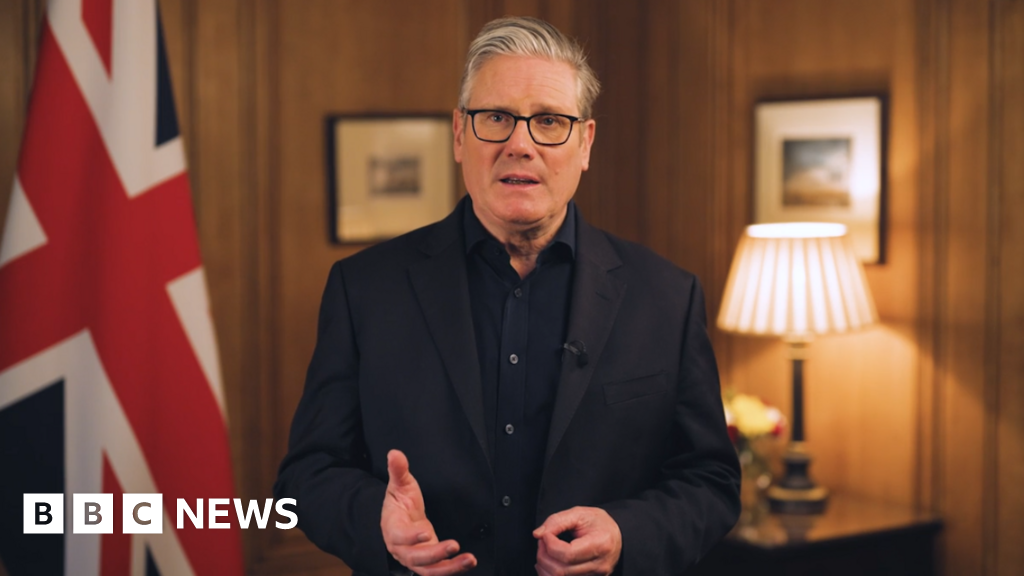
Acknowledging the widespread sentiment that "things have been tough in Britain for a while," Sir Keir promised that the concerted efforts of his government were on the cusp of yielding discernible improvements. These, he contended, would manifest as lower household bills, a noticeable increase in police presence on the streets, and the emergence of new, accessible health hubs across the country. The message served as a crucial opportunity for the Labour leader to articulate his vision for national renewal, following a period marked by significant challenges to his premiership.
The past year, 2025, proved to be particularly demanding for Sir Keir. His administration navigated a landscape of slowing economic growth, which saw inflation remain stubbornly high and interest rates exert pressure on mortgages and business investments. Public approval, reflected in consistently poor poll ratings, underscored a national impatience for progress. Adding to the internal pressures, speculation around a potential leadership challenge occasionally surfaced, hinting at discontent within certain factions of his party regarding the pace and direction of reform. These internal and external pressures made his new year message a critical moment to reassert authority and articulate a clear path forward.
In stark contrast, Conservative leader Kemi Badenoch used her own new year message to launch a blistering critique of the government’s performance. She painted a bleak picture of 2025, characterised by "no growth, higher taxes and record unemployment," directly challenging the Prime Minister’s narrative of impending improvement. Badenoch argued that the current trajectory was unsustainable, leading to a weakening of the nation’s economic foundations. However, she tempered her criticism with a message of hope, insisting that Britain was "not destined for decline." Her party’s alternative, she explained, was a robust plan designed to "back business and fix our economy." This economic revival, she claimed, was essential to adequately fund vital public services such as the armed forces, police, schools, and the National Health Service, ultimately building a country "that we feel proud of." Her message aimed to position the Conservatives as the guardians of economic prosperity and national strength, offering a distinct ideological alternative to the incumbent Labour government.
Sir Keir, aware of public impatience, candidly admitted that he shared "frustration about the pace of change." He contextualised the government’s efforts by reminding the electorate that "the challenges we face were decades in the making, and renewal is not an overnight job." This statement served to manage expectations while simultaneously reaffirming the long-term commitment of his administration. He reiterated his core belief that "By staying the course, we will defeat the decline and division offered by others," positioning his government’s steadfast approach against what he implied were short-term, divisive alternatives proposed by political rivals.
Looking ahead to 2026, the Prime Minister offered concrete examples of how life would "start to feel easier" for ordinary Britons. He highlighted measures such as frozen rail fares, which would alleviate pressure on commuters; a freeze on prescription charges, easing the burden on those requiring regular medication; and the continued freeze on fuel duty, providing relief at the pumps. Furthermore, he pointed to planned increases in the minimum wage, promising a boost in living standards for the lowest paid workers. "In 2026," Sir Keir declared with conviction, "the choices we’ve made will mean more people will begin to feel positive change in your bills, your communities and your health service." Beyond these tangible benefits, he expressed a deeper aspiration: "But even more people will feel once again a sense of hope, a belief that things can and will get better, feel that the promise of renewal can become a reality, and my government will make it that reality." His address, set against the backdrop of a Union Jack, projected an image of national unity and purpose under his leadership, seeking to galvanise public confidence in his long-term vision.
Meanwhile, other prominent political parties used their new year messages to set their sights on the crucial local elections scheduled for May. Both the Liberal Democrats and Reform UK expressed optimism about making significant inroads in these polls, which encompass contests for the Scottish Parliament, the Welsh Senedd, thousands of council seats across England, and a number of directly elected mayoralties. These elections are often seen as a barometer of national sentiment and a key test of public support ahead of a future general election.
Liberal Democrat leader Sir Ed Davey expressed confidence that his party could "win again in 2026," building on what he described as "our record-breaking success" in the previous local elections. He articulated a clear political stance, vowing to "stop Trump’s America becoming Farage’s Britain," a strong rhetorical flourish designed to position the Lib Dems as a bulwark against populist nationalism and a champion of more centrist, internationalist values. Sir Ed concluded his message by reaffirming his party’s commitment to "change our country for the better," promising to tackle issues like the NHS crisis, the cost of living, and environmental degradation with progressive policies.
Reform UK leader Nigel Farage, whose party has seen a remarkable surge in national opinion polls, consistently leading since last spring, also presented a message of "hope" and "change." He predicted that May’s elections would be "the single most important set of elections between now and the next general election," underscoring the strategic importance his party places on these contests. Farage painted a stark picture of a country that was getting "gloomier" and "poorer," citing higher unemployment figures and national debt "running completely out of control." He sharply criticised both the Labour and Conservative parties for what he perceived as their failure to grasp the realities of the "new world" of cryptocurrencies, artificial intelligence, and digital assets. These, he argued, were "the technologies of growth" that the established parties were neglecting, leaving Britain behind in the global race for innovation and prosperity. Farage’s message aimed to capitalise on public disillusionment with mainstream politics, positioning Reform UK as the only party capable of understanding and harnessing future economic drivers.
In Scotland, First Minister and SNP leader John Swinney reflected on a "difficult" past year, acknowledging the "conflict and upheaval" experienced across the world, which undoubtedly had repercussions at home. His message, however, also sought to inject a dose of national pride and optimism. Swinney expressed his intention to be "toasting Scotland’s famous win against Denmark" to qualify for the World Cup, a significant sporting achievement that brought widespread joy. He also looked forward with anticipation to the World Cup competition itself over the summer, as well as the Commonwealth Games scheduled to take place in Glasgow. These sporting events, he suggested, offered moments of national unity and celebration, providing a welcome respite from political and economic challenges. The messages from across the political spectrum underscored a common thread of acknowledgement of national difficulties, yet each leader sought to frame their party as the sole credible solution for a more prosperous and unified 2026.

 Roy Suryo
 atisusanti
 Nakalama John
 Nana Banana