
 Nana Banana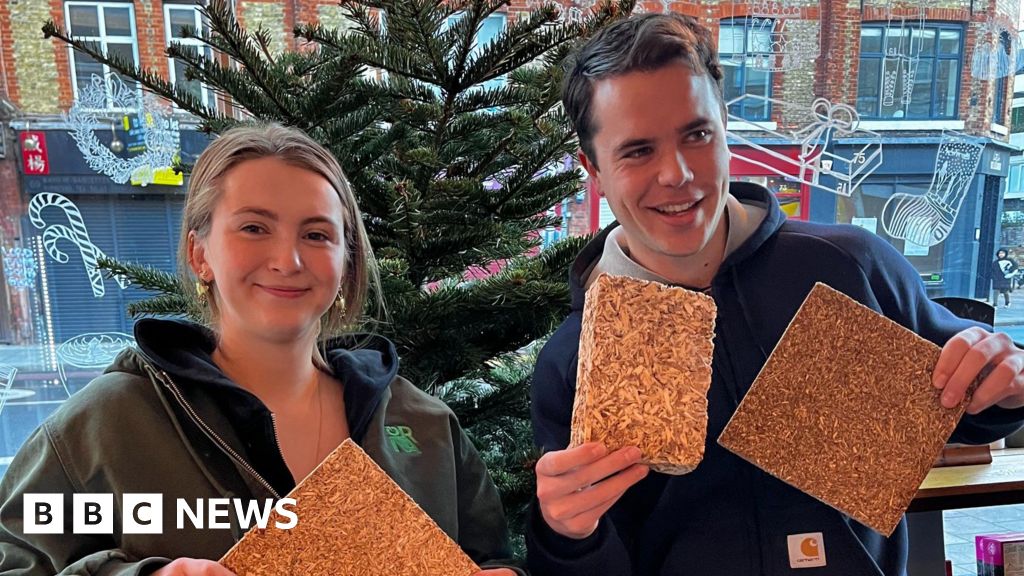
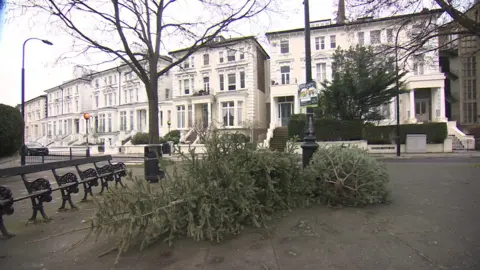
As the festive sparkle fades and Londoners begin the annual ritual of dismantling their Christmas decorations, the capital’s streets are once again set to be adorned, not with tinsel, but with the somber sight of discarded real trees. These once vibrant symbols of holiday cheer, now stripped of their baubles and lights, lie waiting for council workers, prompting urgent questions about their environmental impact and the pressing need for more sustainable solutions to reduce post-holiday waste.
The scale of the problem is significant. Industry estimates paint a stark picture, revealing that a staggering seven million Christmas trees across the UK ultimately meet their end in landfill sites each year. This colossal volume of organic material, when left to decompose in anaerobic conditions, contributes significantly to greenhouse gas emissions, primarily in the form of methane – a potent greenhouse gas far more damaging than carbon dioxide in the short term. The environmental burden extends beyond emissions, encompassing the resources used to grow, transport, and then dispose of these trees.
In response to this looming ecological challenge, a growing number of innovative schemes are taking root across the capital, offering Londoners more sustainable and environmentally conscious alternatives to simply discarding their Christmas trees. These initiatives aim to divert trees from landfill, giving them a meaningful "new lease of life" whether through re-planting, repurposing, or recycling into valuable new materials.
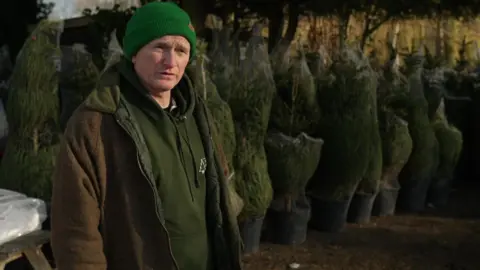
One particularly charming and increasingly popular option is the concept of renting a living Christmas tree, rather than purchasing a cut one destined for a single festive season. At London Christmas Tree Rental, a pioneering company founded on principles of sustainability and circularity, all the trees are carefully cultivated in pots. After gracing homes and offices throughout the festive period, they are lovingly returned to the company to be grown on, nurtured, and made available for reuse the following year.
"It’s just simply: rent, water, return," explains Jonathan Mearns, the visionary founder of London Christmas Tree Rental, simplifying a process that holds profound environmental benefits. "You can rent via our website, pick your dates, come along to one of the hubs to choose your tree, water it diligently throughout the holidays, bring it back to us, and then it grows on for another year."
The logistical framework of this sustainable model is robust. London Christmas Tree Rental operates from four convenient hubs strategically located across London, including a popular collection and drop-off point in Dulwich, south-east London. From these hubs, the potted trees embark on their seasonal journey to homes, and once Christmas is over, they are carefully transported back to a dedicated farm, where they continue their growth cycle, sequestering carbon and contributing to healthy ecosystems.
What truly resonates with customers is the unique opportunity to forge a connection with their festive fir. Many are delighted to be reunited with the very same tree they hosted the previous year, witnessing its growth and vitality firsthand. "Sometimes people come back and say, ‘is that really my tree?’" Mearns recounts with a smile. "We get pictures and we’ll compare, and they’ll say actually it is, it’s just grown a little bit, so people love it. It creates a sense of continuity and a personal stake in the tree’s well-being."
This sentiment was echoed by a loyal customer speaking to BBC London: "We’ve been doing it about four years now. I just like the idea; it’s more environmentally friendly. It feels good knowing our tree isn’t just ending up in the bin, but actually gets to live on." This growing community of conscious consumers highlights a shift in public perception, valuing sustainability and ecological responsibility over traditional convenience. The environmental advantages are clear: each rented tree avoids landfill, continues to absorb carbon dioxide, and supports biodiversity, embodying a truly circular economy for festive décor.
Complementing the rental model, a separate and equally innovative scheme is flourishing in Peckham, also in south-east London, focusing on an entirely different aspect of resource recovery: repurposing trees once their decorative life is truly over. The ORNA Group, a forward-thinking start-up, is pioneering efforts to transform discarded Christmas trees into valuable construction materials, tackling the waste problem from another angle.
Hugo Knox, one of ORNA Group’s co-founders, explains that the genesis of the idea stemmed directly from his own first-hand experience in the Christmas tree industry. "Back in November 2019, I left my first job coming out of university," he recalls. "I rang up one of my close friends, Max. I said, look, ‘it’s Christmas, Christmas trees, shall we give it a go?’" The pair initially embarked on a grassroots venture, going door-to-door in Camberwell, offering fresh trees and installation services, which quickly blossomed into a successful seasonal business. "But from that, I learned a lot about Christmas tree waste and saw all of the waste first-hand in the streets of London, and that’s what led to ORNA Group," he explains. Witnessing mountains of discarded trees sparked the realization that this waste was a resource waiting to be transformed.
The environmental impact of discarded trees is a critical consideration, as highlighted by expert analysis from the Carbon Trust. Their research indicates that, on average, a real Christmas tree that is properly recycled or composted produces approximately 3.5kg of carbon dioxide emissions over its lifecycle. However, the picture drastically changes for a 2m tree sent to landfill without its roots, where anaerobic decomposition dramatically increases its carbon footprint to an alarming 16kg of CO2 equivalent. This significant difference underscores the urgency of finding alternative disposal methods. The trust also notes that an artificial tree, if used consistently over many years (typically more than 10-20 uses), can ultimately create lower emission levels overall compared to annually purchased and landfilled real trees. This complex comparison emphasizes that responsible end-of-life management for real trees is paramount for their environmental credentials.
Fortunately, most London boroughs have established robust schemes where residents can have their real trees collected and recycled, effectively diverting them from landfill. These council-run initiatives often involve chipping the trees for use as mulch in parks and green spaces, composting, or even biomass for energy generation. Comprehensive information on your local council’s scheme can typically be found through resources like London Recycles, which provides guidance on waste reduction and recycling practices throughout the Christmas period.
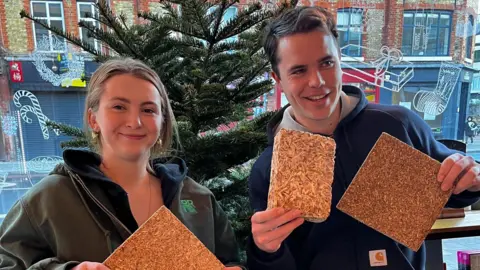
At the bustling ORNA workshop, a hub of sustainable innovation, the journey of a discarded Christmas tree takes a truly remarkable turn. Real trees, collected from homes and businesses across the capital, are meticulously processed. First, they are chipped into a fine consistency, then combined with carefully selected natural binders to create entirely new, versatile construction materials.
"When it arrives here, it’s mostly unprocessed," explains material scientist Caelo Dineen Vanstone, another of the start-up’s co-founders, describing the raw state of the incoming trees. "The trees have come straight out of houses or businesses in different forms, but it comes here chipped up into the right consistency for our process." She elaborates on the intricate transformation: "The process involves cooking and modifying natural ingredients before combining them with the tree waste to create a homogenous wet material. This material can then be pressed, molded, and dried into various forms, demonstrating incredible potential for sustainable building." ORNA envisions these materials being used in everything from acoustic panels and insulation to decorative finishes, proving that festive waste can indeed become a foundation for future structures.
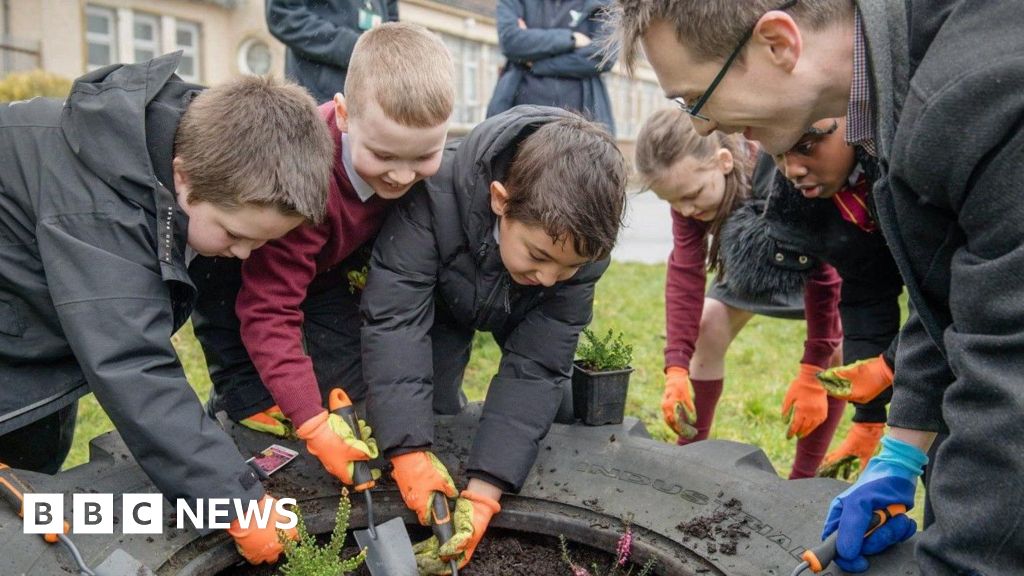
Beyond their groundbreaking material science, the ORNA Group is also deeply committed to community engagement, particularly with young people. They actively collaborate with schools and local groups to demonstrate how seemingly small actions, like recycling a Christmas tree, can contribute to a much larger positive impact on the environment. This educational outreach aims to inspire the next generation of innovators and conscious citizens.
"We’re not trying to change the world quite yet," Dineen Vanstone humbly states, acknowledging the incremental nature of their work. "But it’s just about trying to make our street corner a little bit nicer and trying to do something positive rather than doing something that’s going to impact our future generations in a negative way." This philosophy underscores a localized, tangible approach to environmental stewardship, where every recycled tree contributes to a healthier planet.
The initiatives by London Christmas Tree Rental and The ORNA Group represent a growing movement within the capital to embrace circular economy principles and redefine waste. They offer tangible solutions to a seasonal problem, demonstrating that with creativity and commitment, London’s Christmas trees can indeed find a vibrant new purpose beyond the festive season. From living trees returning to their farms to shredded branches becoming sustainable building blocks, these innovative enterprises are paving the way for a greener, more responsible festive future for London. They embody a collective spirit of ingenuity, turning what was once a symbol of fleeting joy into a lasting testament to sustainability, truly giving London’s Christmas trees a new lease of life.


 Ramos Leo
 Nakalama John

 atisusanti

 George Anjay